


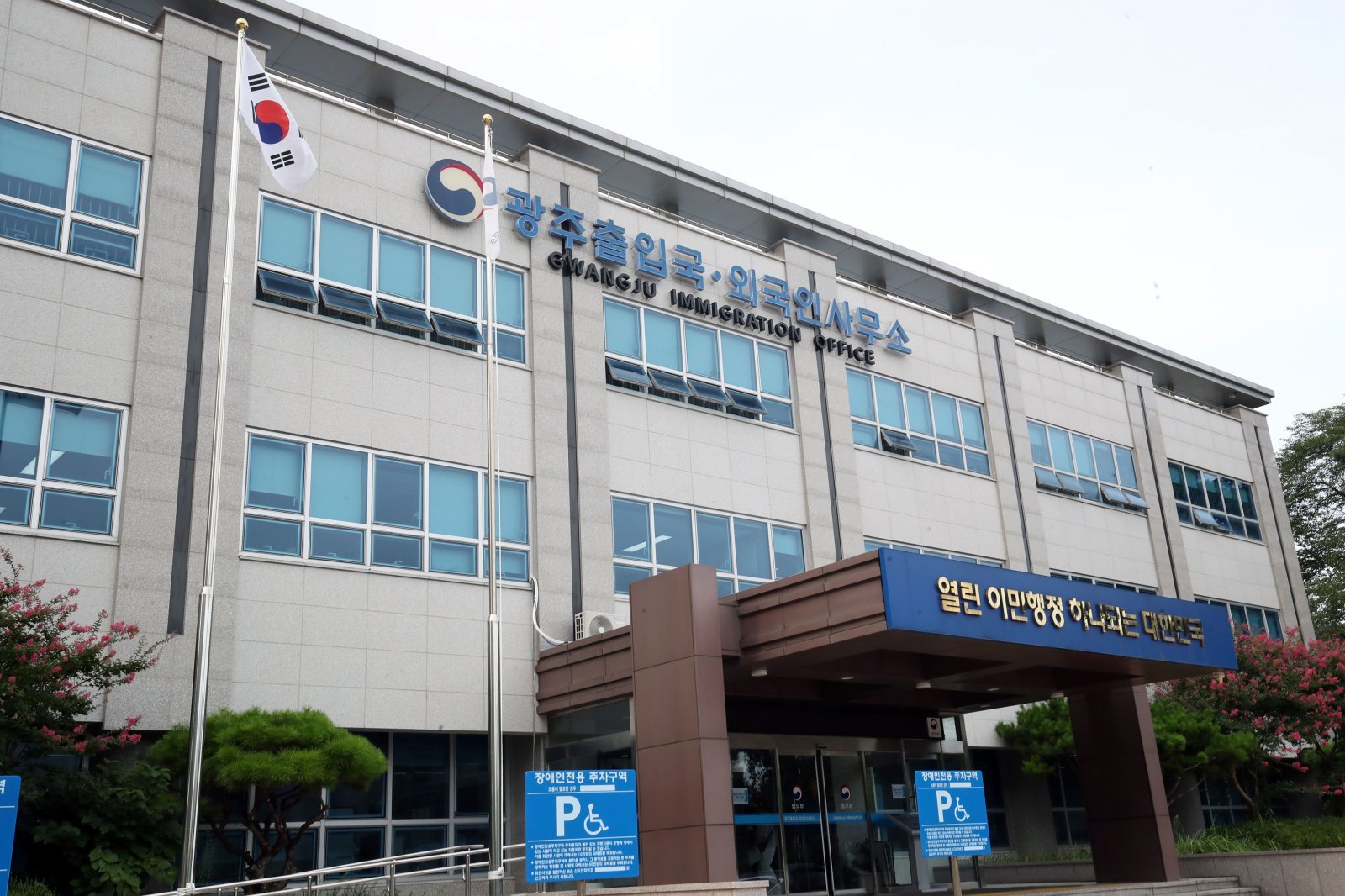
Gwangju Immigration Office Under Fire for Alleged Collusion in Foreign Rider Crackdown
Translated from Korean and summarized by DistantNews. Read the original for the full story.
At a glance
News
From a news agency
Under investigation
- An official at the Gwangju Immigration and Foreigners Office is being investigated for allegedly accepting information on undocumented foreign riders in exchange for leniency towards specific delivery companies.
- Human rights organizations have condemned the practice, calling it "human trafficking-like" for focusing on foreign workers while neglecting to prosecute employers who facilitate illegal employment.
- The Gwangju office is accused of failing to investigate employers, citing a lack of direct employment relationships, despite other immigration offices having prosecuted employers for similar offenses.
An official from the Gwangju Immigration and Foreigners Office is under investigation for allegedly engaging in corrupt practices during crackdowns on foreign riders. The official is accused of accepting information about undocumented foreign workers in exchange for excluding certain delivery companies from enforcement actions, a practice human rights groups have decried as "human trafficking-like."
The Gwangju Immigration and Foreigners Office reportedly relies heavily on tips and reports for its enforcement activities, citing staff shortages as a primary reason. However, critics argue this reliance has led to a "convenient" approach where the focus shifts to merely meeting performance targets rather than thorough investigation. The alleged collusion involves an official receiving information on foreign riders and, in return, exempting specific delivery companies from being targeted.
Staff shortages are severe. During intensive crackdown periods, other incidents occurred, and all personnel were deployed there. To punish employers, we need to establish an employment relationship, but it is very difficult under the current circumstances.
Human rights advocates are particularly critical of the office's failure to prosecute employers. While the Gwangju office claims a lack of direct employment relationships prevents them from taking action against companies, this stance contradicts actions taken by immigration authorities in other major cities like Seoul, Incheon, and Daejeon. These offices have successfully prosecuted employers for illegal hiring practices, including the use of account rentals and identity theft to employ foreign workers, recognizing these as forms of employment relationships.
The controversy highlights a broader issue within the immigration enforcement system, where a focus on apprehending foreign nationals may overshadow the accountability of employers who exploit loopholes. The Ministry of Justice has announced plans to review enforcement procedures nationwide, improve tip management, and strengthen oversight. However, local labor groups argue that a fundamental shift in the performance-driven culture is necessary to prevent such abuses from recurring.
The corruption surrounding the crackdown on foreign riders has been revealed... Focusing solely on cracking down on foreign riders has led to this misconduct at the Gwangju Immigration and Foreigners Office. The prevailing culture of simply needing to achieve performance targets must change.
About this summary
Originally published by Dong-A Ilbo in Korean. Translated, summarized, and contextualized automatically by DistantNews, with a note on how the source frames the story. Not individually reviewed before publishing. How this works.
More Stories


From Our Blog

What Gets Lost (and Found) When News Is Translated

The Critical Role of Diaspora Media in Global News

What Travellers Should Know About Countries with Restricted Press

A Digital Nomad's Guide to Following Local News

How the Same Story Looks Different in Different Countries
