


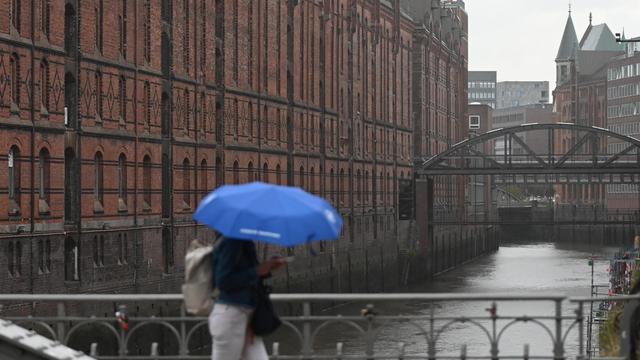
Hamburg's climate adaptation strategy faces criticism amid Elbtower uncertainty
Translated from German, summarized and contextualized by DistantNews.
At a glance
News
Sources not specified
Context piece
- Hamburg's climate adaptation strategy, decided in February 2025, faces criticism for potentially worsening heat island effects due to new construction.
- Environmental group BUND Hamburg urges strategic and widespread area de-sealing to combat this.
- The city plans a podcast live recording on Oct. 6 to discuss future urban living in a changing climate.
Hamburg's gray, rainy weather, once a point of gentle mockery from southern Germans, now appears more attractive as the city grapples with climate change. While the city adopted a climate adaptation strategy in February 2025, its implementation is questioned. Environmental group BUND Hamburg criticizes new construction for potentially exacerbating the "heat island" effect and calls for strategic de-sealing of areas. The city acknowledges the need for more trees, green spaces, and climate-resilient buildings, but the speed of action remains a concern. A live podcast recording on October 6 will explore how to ensure good urban living in Hamburg amidst a changing climate, focusing on housing solutions. Meanwhile, the planned move of the Natural History Museum into the Elbtower appears unlikely, with SPD parliamentary group leader Dirk Kienscherf deeming the probability "low."
We do not reproduce a heritage; we bring it to life. Each generation of Breguet tourbillons seeks to provide a new answer to the same quest: that of precision, while magnifying this moving mechanical art.
DistantNews Editorial
Originally published by Die Zeit in German. Translated, summarized, and contextualized by our editorial team with added local perspective. Read our editorial standards.
More Stories

From Our Blog

What Gets Lost (and Found) When News Is Translated

How the Same Story Looks Different in Different Countries

The Critical Role of Diaspora Media in Global News

What Travellers Should Know About Countries with Restricted Press

A Digital Nomad's Guide to Following Local News
