


Headscarf diplomacy: Who can sit at the table, who can’t?
Summarized and contextualized by DistantNews.
At a glance
In-depth
Sources not specified
Context piece
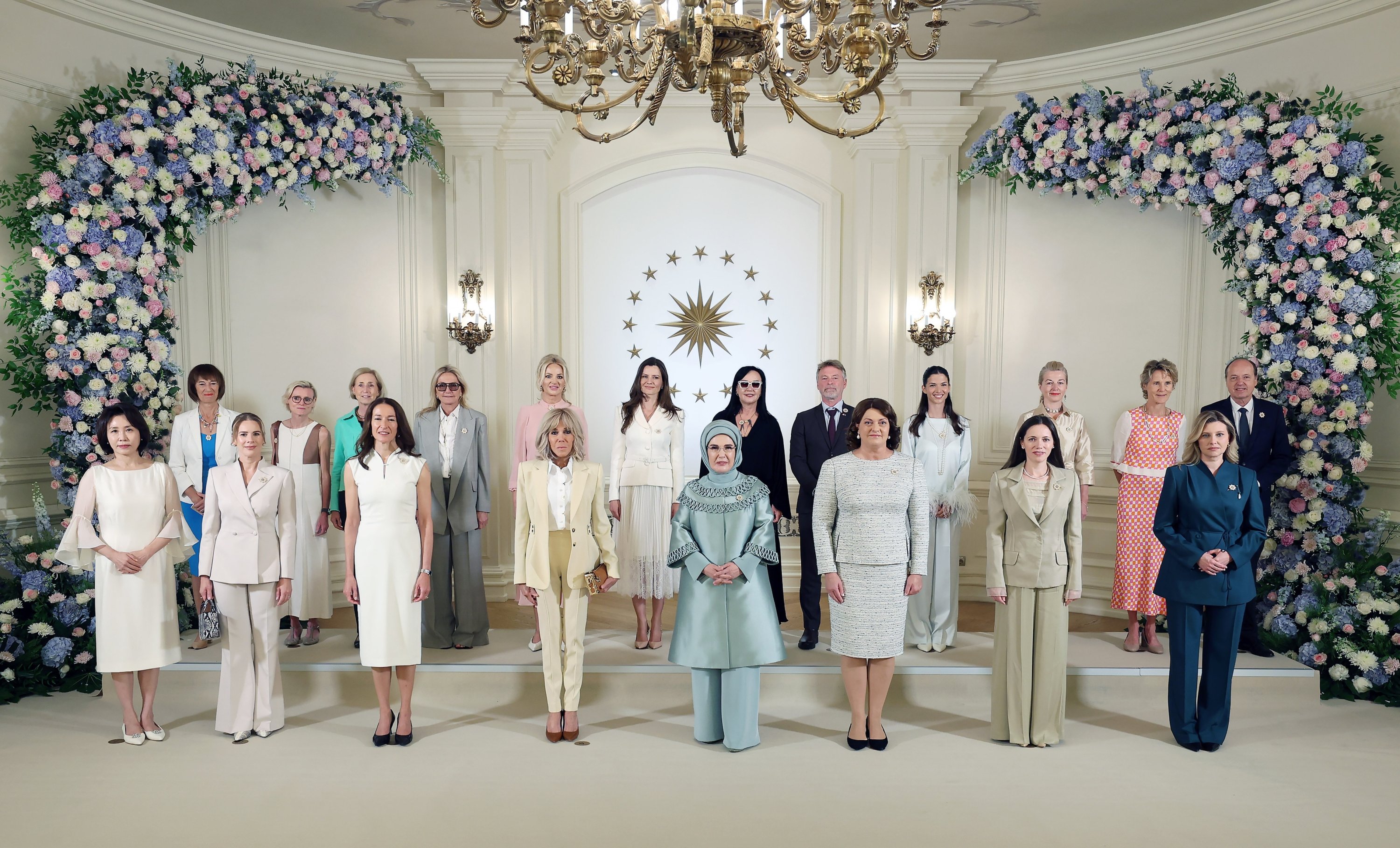
- Türkiye's first lady hosted 32 heads of state and government spouses at a NATO summit, contrasting with a 2004 incident where the then-prime minister's wife was excluded due to her headscarf.
- The event highlights a broader international debate on religion's visibility in public life, mirroring tensions seen in countries like France, which has implemented bans on religious symbols in schools and public spaces.
- This shift in protocol reflects evolving attitudes towards religious expression in public spheres, moving beyond personal vindication to a wider international framework.
Twenty-two years ago, Emine Erdoğan, wife of Türkiye's then-Prime Minister Recep Tayyip Erdoğan, was not invited to an official NATO summit dinner in Istanbul due to her headscarf. Last week, the same summit convened in Ankara, and this time, First Lady Emine Erdoğan hosted 32 spouses of heads of state and government. This stark contrast serves as a powerful before-and-after narrative, marking a significant shift in protocol and perception.
Protocol is usually treated as a secondary detail in the literature of diplomacy. Yet, how states host one another, who is admitted to the table and who is left outside, often carries more political information than official communiques do.
While the personal vindication of the first lady is a notable aspect, the story's significance extends far beyond a single family. It sits within a broader international framework concerning the visibility of religion in public life. Protocol, often seen as a minor diplomatic detail, frequently carries substantial political weight, dictating who is included and excluded from key events.
The 2004 incident was initially framed as a uniquely Turkish issue. However, it foreshadowed a tension that many secular democracies still grapple with: defining the boundaries of religious expression in public spaces. This is particularly evident in France, a nation that champions secularism. While Türkiye has gradually eased headscarf restrictions, France has moved in the opposite direction, enacting laws banning religious symbols in public schools and face coverings in public spaces. Most recently, the abaya was banned from schools, leading to hundreds of students being sent home.
In fact, it was an early instance of a tension that much of the secular democratic world has still not fully resolved today: where does the visibility of religion in public life begin, and where does it end?
The evolving stance on headscarves in public life, from diplomatic dinners to school grounds, underscores a global conversation about religious freedom, national identity, and the role of secularism in diverse societies. The Ankara summit's embrace of the first lady, headscarf and all, signifies a notable shift, reflecting changing international norms and Türkiye's own evolving approach to religious expression.
While Türkiye was gradually lifting its headscarf restrictions, France was moving in exactly the opposite direction.
DistantNews Editorial
Originally published by Daily Sabah. Summarized and contextualized by our editorial team with added local perspective. Read our editorial standards.
More Stories


From Our Blog

What Gets Lost (and Found) When News Is Translated

The Critical Role of Diaspora Media in Global News

What Travellers Should Know About Countries with Restricted Press

A Digital Nomad's Guide to Following Local News

How the Same Story Looks Different in Different Countries
