

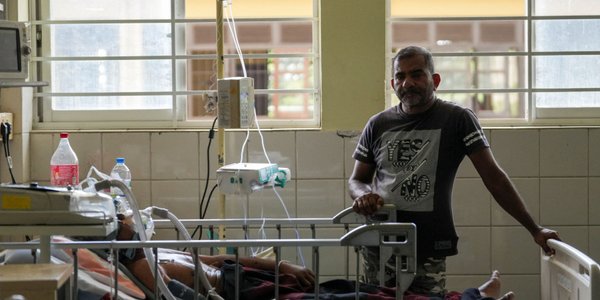

Healthcare: An Investment in National Resilience
Translated from Polish, summarized and contextualized by DistantNews.
At a glance
News
Sources not specified
Context piece
- Health should be viewed as an investment in national resilience, not just a cost, according to a report by EFPIA and WifOR.
- Innovative treatments in Europe have generated over 66 billion euros in socio-economic value, with Poland seeing a return of 8.8 euros for every euro spent.
- Shifting focus from treating illness to managing health throughout life, emphasizing prevention, early diagnosis, and modern therapies, is crucial for sustainable healthcare systems.
Viewing healthcare solely through the lens of funding misses its critical role as an investment in a nation's social and economic resilience. A joint report by EFPIA and the WifOR Institute highlights that innovative medicines across 29 European countries have generated more than 66 billion euros in measurable socio-economic value. Poland experienced a particularly strong return, with each additional euro invested in innovative treatments yielding 8.8 euros in socio-economic value.
Europe faces a civilizational shift: longer lifespans are accompanied by a rising prevalence of chronic diseases. Nearly one-third of Europeans over 50 live with at least two chronic conditions, and non-communicable diseases account for nearly 90% of all deaths in Europe, posing a significant challenge to healthcare systems and economies.
This reality necessitates a paradigm shift from treating the consequences of illness to proactively managing health across the entire human lifespan. The focus must move towards prevention, early diagnostics, and advanced therapeutic solutions. Data indicates that the adoption of newer medications in Europe has reduced premature life-years lost and cut hospitalization days by nearly 21 million, demonstrating that innovation directly translates to longer, healthier, and more independent lives while easing the burden on healthcare systems.
Innovation plays a pivotal role, transforming patient outcomes over the past two decades. It now encompasses not only new technologies and therapies but also novel approaches to care organization, diagnostics, and patient monitoring. The greatest value is realized when modern solutions reach patients early and are integrated into well-structured systems. Therefore, healthcare must be assessed by its long-term health and social effects, not just the cost of individual services. Conditions like multiple sclerosis, which typically affects young adults, exemplify this, where early diagnosis and effective treatment can preserve quality of life and productivity.
DistantNews Editorial
Originally published by Rzeczpospolita in Polish. Translated, summarized, and contextualized by our editorial team with added local perspective. Read our editorial standards.
More Stories


From Our Blog

What Gets Lost (and Found) When News Is Translated

The Critical Role of Diaspora Media in Global News

What Travellers Should Know About Countries with Restricted Press

A Digital Nomad's Guide to Following Local News

How the Same Story Looks Different in Different Countries
