


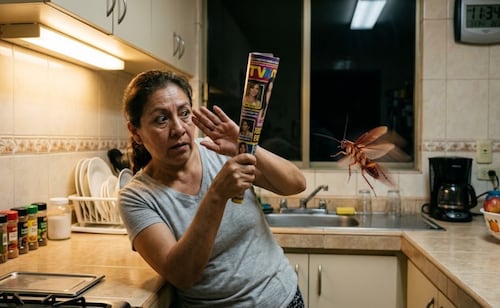
 Image: Imagen creada con IA.
Heat, humidity and pests: How to deal with flying cockroaches at home
Translated from Spanish and summarized by DistantNews. Read the original for the full story.
At a glance
Explainer
Named sources
Context piece
- Hot, rainy conditions in Mexico City can drive cockroaches from damp drains and sewers into kitchens and bathrooms.
- The American cockroach can fly short distances, while oriental and German cockroaches generally do not use their wings to fly.
- Recommended measures include sealing cracks and drains, reducing food and moisture, using adhesive traps and seeking professional treatment for daytime sightings.
In Mexico City, heat and heavy rain can push cockroaches from damp sewer and drainage systems into homes, particularly kitchens and bathrooms. Humidity gives the insects reasons to seek shelter, food and shade indoors.
The American cockroach, or Periplaneta americana, can grow to about four centimeters and has developed wings that allow short flights. The oriental cockroach is dark and winged but cannot fly, while the smaller German cockroach usually keeps its wings unused. Cockroaches can enter homes through wall cracks, unscreened windows, uncovered ventilation grilles and contaminated cardboard packaging.
Household hygiene guidance recommends sealing cracks, installing window screens and covering drains. Residents are also advised to remove crumbs, keep rubbish in airtight containers and ventilate bathrooms. Adhesive strips placed near appliances can help monitor infestations without synthetic pesticides, while diluted white vinegar and baking soda are cited as common cleaning remedies.
The guidance recommends specialized pest-control treatment when cockroaches appear during daylight hours.
About this summary
Originally published by El Universal in Spanish. Translated, summarized, and contextualized automatically by DistantNews, with a note on how the source frames the story. Not individually reviewed before publishing. How this works.
More Stories

From Our Blog

What Press Freedom Means for the News You Read

What Gets Lost (and Found) When News Is Translated

The Critical Role of Diaspora Media in Global News

What Travellers Should Know About Countries with Restricted Press

A Digital Nomad's Guide to Following Local News
