

Helicopter Airlifts Critically Ill Patient from Offshore Platform to Mainland Hospital
Translated from Vietnamese, summarized and contextualized by DistantNews.
At a glance
News
Sources not specified
Outcome reported
- A critically ill patient at the DK1/12 offshore platform was airlifted to a military hospital in Ho Chi Minh City for emergency treatment.
- The patient, a 47-year-old medical staff member, experienced severe chest pain and difficulty breathing, suspected to be a heart attack.
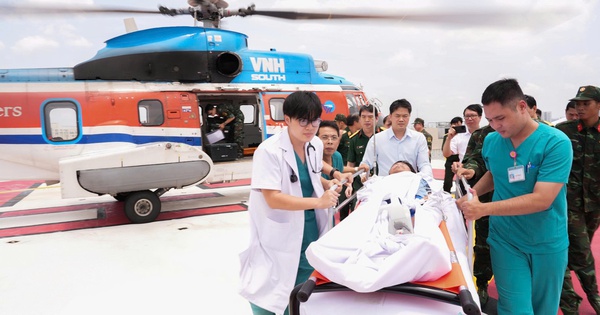
- A Super Puma L2 helicopter transported the patient, who received continuous medical care during the flight.
A critically ill patient stationed at the DK1/12 offshore platform received urgent medical evacuation to the mainland on June 19. The 47-year-old medical staff member, identified as Đ.X.D., suffered from severe chest pain radiating to his left arm and shortness of breath.
Following an online consultation with doctors at Military Hospital 175, the patient was diagnosed with a suspected myocardial infarction and potential stroke, indicating a critical condition. Medical professionals determined that immediate transfer to the mainland was necessary for life-saving treatment.
A Super Puma L2 helicopter from the 18th Air Force Brigade, accompanied by a medical team from Military Hospital 175, departed from Tan Son Nhat Airport. The team successfully landed at DK1/12, stabilized the patient, and began specialized care during the flight back. The helicopter landed at Military Hospital 175 at 12:15 PM the same day.
During the transport, the patient experienced cardiac issues, reduced organ perfusion, and altered consciousness. Medical personnel administered cardiac support medication, stabilized his blood pressure, and provided mild sedatives to ensure his safety. The medical team was prepared for interventions such as temporary cardiac pacing if needed. The patient is now undergoing further tests and consultations at the hospital to determine the best course of treatment.
We always monitored the patient's condition and prepared contingency plans for temporary transvenous cardiac pacing or other arrhythmia treatments if necessary. Additionally, the team used mild sedatives to reduce patient agitation and ensure safety throughout the transport.
DistantNews Editorial
Originally published by Thanh Niên in Vietnamese. Translated, summarized, and contextualized by our editorial team with added local perspective. Read our editorial standards.
More Stories



From Our Blog

What Gets Lost (and Found) When News Is Translated

The Critical Role of Diaspora Media in Global News

What Travellers Should Know About Countries with Restricted Press

A Digital Nomad's Guide to Following Local News

How the Same Story Looks Different in Different Countries
