


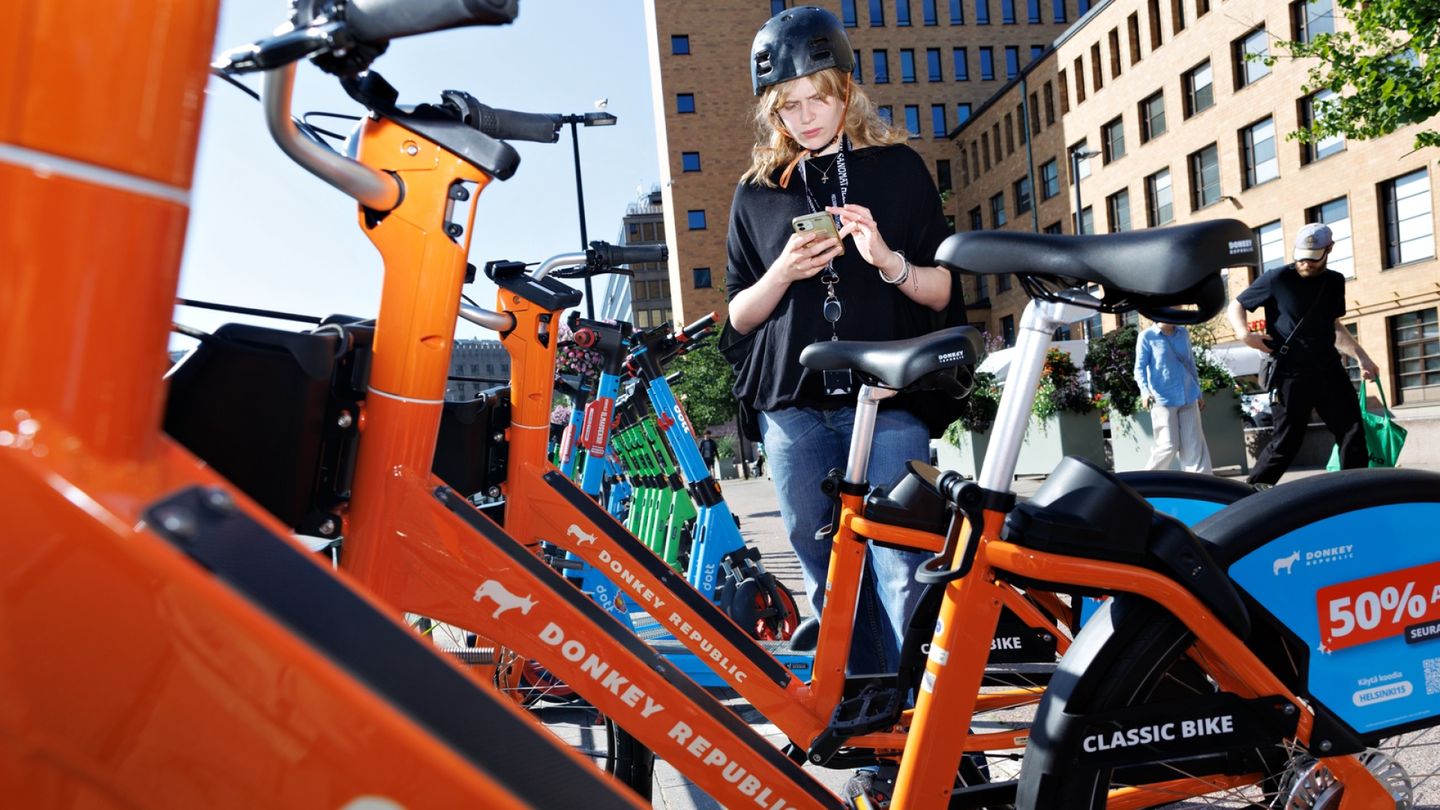
Helsinki's New Bike-Sharing Competitor: Donkey Republic Tested
Translated from Finnish, summarized and contextualized by DistantNews.
At a glance
In-depth
Sources not specified
Context piece
- A new bike-sharing service, Donkey Republic, has launched in Helsinki, introducing approximately 700 pedal-powered orange bikes.
- The service competes with the existing Alepa-fillari system and numerous electric scooter companies.
- Donkey Republic's pricing is significantly higher than Alepa-fillari, with a 30-minute ride costing three euros.
Helsinki's streets now feature a new competitor in the urban mobility landscape: Donkey Republic. Since late July, approximately 700 pedal-powered orange bicycles from the international service have joined the city's existing Alepa-fillari bike-sharing system. Donkey Republic, which operates in over 50 European cities, partnered with Finnish company Kaakau Oy for its Helsinki expansion, citing the city as a leading European cycling hub.
The new service enters a crowded market, directly challenging Alepa-fillari and a multitude of electric scooter providers. Helsingin Sanomat tested the new bikes and examined their pricing structure. The process of using the bikes is designed to be quick and easy. Users locate bikes in designated areas, download a dedicated app, create an account, and book a bike, a process that takes about a minute. The bike's lock is then opened via Bluetooth through the phone.
Donkey Republic's pricing model is notably higher than that of Alepa-fillari. Users can opt for single rides, priced per minute, or purchase day passes. A 30-minute ride costs three euros. Monthly passes are also available, ranging from one week to one month. In comparison, an Alepa-fillari monthly pass costs around 10 euros, while Donkey Republic's monthly option is nearly 20 euros.
Each Donkey Republic bike is uniquely named, a feature that aids in identification when multiple bikes are parked together. During testing, the bike's ride quality was generally good, with a comfortable saddle and a stable, smooth ride, even when navigating city streets. The three-gear system performed unobtrusively. However, the testing revealed some drawbacks. The bike's bell was found to be stiff and difficult to operate smoothly, potentially posing a challenge in busy traffic. Additionally, the front basket is attached to the frame rather than the handlebars, meaning it does not turn with the rider, which could affect maneuverability in turns.
DistantNews Editorial
Originally published by Helsingin Sanomat in Finnish. Translated, summarized, and contextualized by our editorial team with added local perspective. Read our editorial standards.
More Stories


From Our Blog

What Gets Lost (and Found) When News Is Translated

The Critical Role of Diaspora Media in Global News

What Travellers Should Know About Countries with Restricted Press

A Digital Nomad's Guide to Following Local News

How the Same Story Looks Different in Different Countries
