


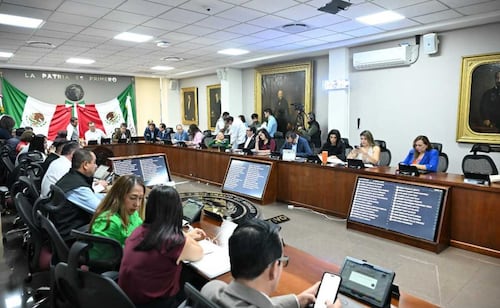
Hidalgo lawmakers propose new crimes, tougher penalties for abuse
Translated from Spanish, summarized and contextualized by DistantNews.
At a glance
News
Sources not specified
New plan
- Legislators in Hidalgo, Mexico, are proposing to add stalking and forced cohabitation to the state's penal code.
- The reforms also aim to strengthen penalties for sexual abuse and conversion therapy.
- Penalties would increase if victims are minors or vulnerable individuals.
Lawmakers in Hidalgo, Mexico, are pushing for significant updates to the state's penal code, proposing the inclusion of stalking and forced cohabitation as distinct crimes. The proposed reforms also seek to enhance existing penalties for sexual abuse and prohibit conversion therapies.
The First Permanent Commission of Security and Justice has drafted a proposal that includes defining stalking as a crime punishable by three months to two years in prison and fines. This behavior encompasses persistent pursuit, surveillance, harassment, or unwanted communication that instills fear in the victim. The penalties would be doubled if the victim is a minor or considered vulnerable, or if there is a pre-existing relationship of authority or dependency.
Furthermore, the proposed legislation targets conversion therapies, which aim to change an individual's sexual orientation or gender identity. Those found guilty of performing, administering, or promoting such practices could face one to three years in prison and substantial fines. The penalties would be further increased if the victim is a minor, elderly, or vulnerable.
Forced cohabitation, defined as compelling or deceiving someone, particularly a minor or someone unable to comprehend the situation, into a marital-like union, would carry penalties of five to nine years in prison. Additionally, the reforms address sexual abuse, proposing two to four years in prison for sexual acts without consent, clarifying that silence or passivity cannot be interpreted as consent. Penalties for sexual abuse would also increase under aggravating circumstances, such as violence or a relationship of trust with the aggressor.
DistantNews Editorial
Originally published by El Universal in Spanish. Translated, summarized, and contextualized by our editorial team with added local perspective. Read our editorial standards.
More Stories


From Our Blog

What Press Freedom Means for the News You Read

What Gets Lost (and Found) When News Is Translated

The Critical Role of Diaspora Media in Global News

What Travellers Should Know About Countries with Restricted Press

A Digital Nomad's Guide to Following Local News
