


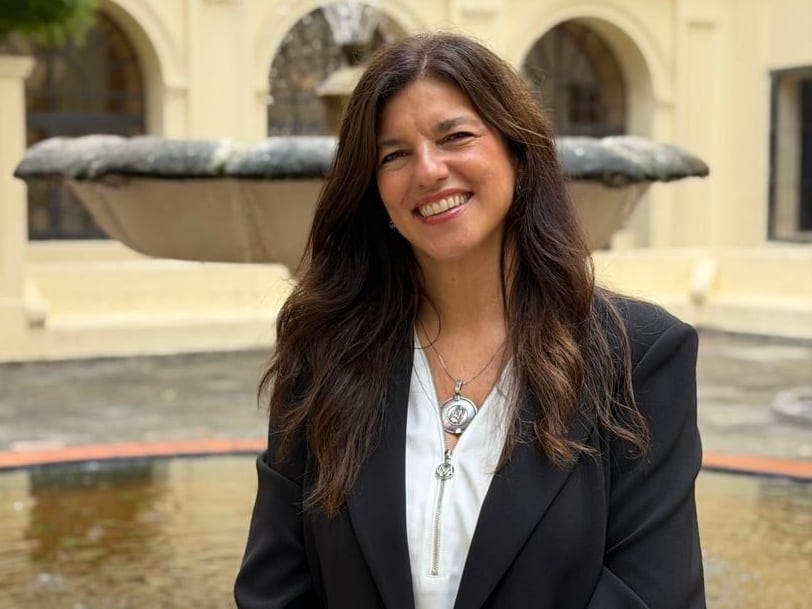
Historic Argentine College to Get First Female Leader After 340 Years
Translated from Spanish, summarized and contextualized by DistantNews.
At a glance
News
Named sources
Outcome reported
- María José Alcázar will become the first woman to lead the historic Colegio Nacional de Monserrat in Córdoba, founded in 1687.
- Alcázar won 62.9% of the vote in an election involving students, faculty, staff, and alumni.
- The college, a UNESCO World Heritage site, opened to women in 1998 after a contentious debate.
For the first time in its nearly 340-year history, Córdoba's prestigious Colegio Nacional de Monserrat will be led by a woman. María José Alcázar, heading the "Ser Más Monserrat" list, secured 62.9% of the vote in an election that included students, faculty, staff, and alumni.
Alcázar, a professor of English and former academic secretary at the school, ran on a platform of pedagogical innovation, professional development for teachers, institutional strengthening, and internationalization through exchange programs. She also emphasized fostering a stronger sense of community and belonging.
She noted that women's access to management roles has been expanding, citing Adriana Verdi, the first academic director in 2010, as a trailblazer. Alcázar believes her leadership will bring a firm yet empathetic approach, with a distinct sensitivity and a greater focus on consensus-building within the community.
The Colegio Monserrat, founded in 1687 by the Jesuits and part of the Jesuit Block UNESCO World Heritage site, is the oldest continuously operating school in Argentina. It was exclusively for boys until 1998, when it opened its doors to female students after significant public debate and protests. The decision to admit women was approved by the National University of Córdoba's Superior Council in 1997, overcoming resistance based on tradition and concerns about coeducation.
It is a good moment for there to be a woman director. Perhaps it is the contribution of firm but empathetic leadership, with a different sensitivity and a greater search for consensus in the community.
DistantNews Editorial
Originally published by La Nación in Spanish. Translated, summarized, and contextualized by our editorial team with added local perspective. Read our editorial standards.
More Stories



From Our Blog

What Gets Lost (and Found) When News Is Translated

The Critical Role of Diaspora Media in Global News

What Travellers Should Know About Countries with Restricted Press

A Digital Nomad's Guide to Following Local News

How the Same Story Looks Different in Different Countries
