


Hittite Capital Yields Clues: Sacrifice Traces Found in L-Shaped Rooms
Translated from Turkish, summarized and contextualized by DistantNews.
At a glance
News
Named sources
Context piece
- Archaeologists in Turkey's ancient Hittite city of Şapinuva discovered an L-shaped room containing animal remains, possibly from a sacrifice.
- The 3,400-year-old monumental structure is being investigated for its purpose, with experts from various fields collaborating.
- Excavations at Şapinuva, a significant Hittite center, have been ongoing since 1990, aiming to uncover previously unknown aspects of the civilization.
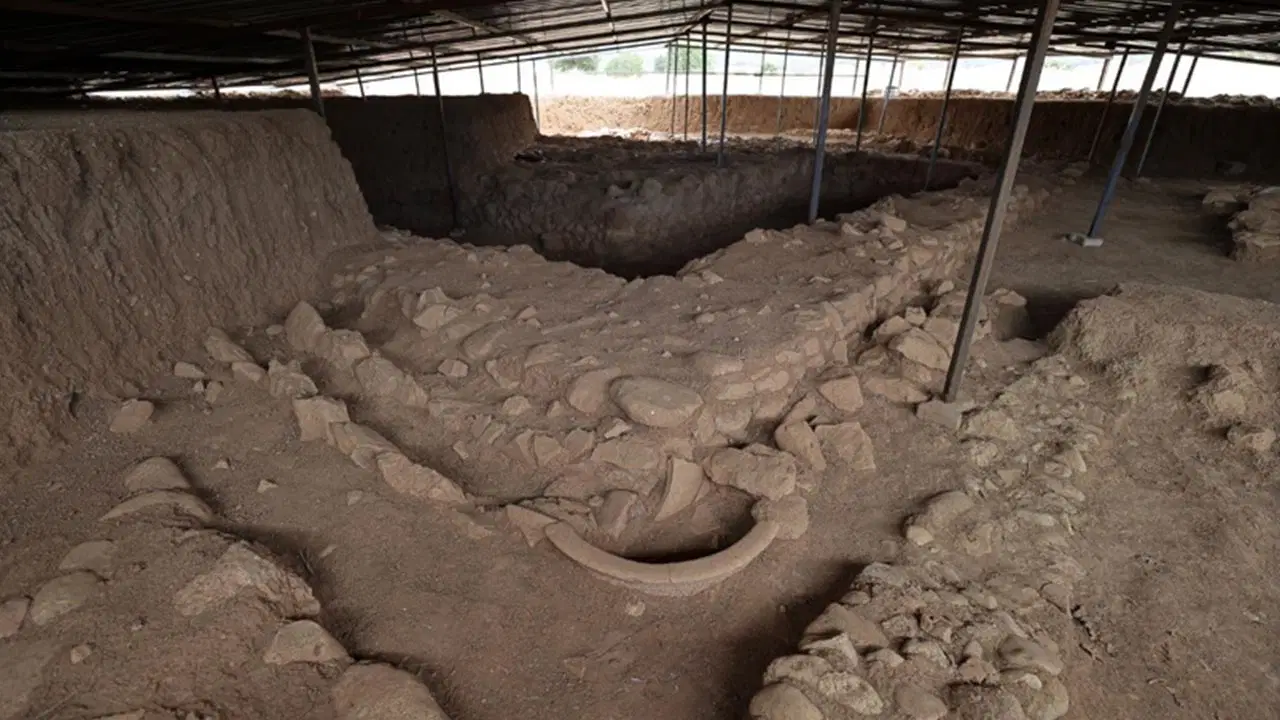
Archaeologists excavating the ancient Hittite city of Şapinuva in Turkey's Ortaköy district have uncovered an L-shaped room within a 3,400-year-old monumental structure, revealing potential evidence of animal sacrifice.
The ongoing investigation aims to determine the purpose of this significant building, which is believed to have been constructed around 1380 BCE. The site of Şapinuva, a crucial Hittite settlement after Hattusa, has been the subject of continuous archaeological digs since 1990. These excavations have already yielded approximately 4,000 tablets, offering insights into the administrative structure, daily life, and cultural practices of the Hittite state 3,500 years ago.
Led by Önder İpek from Hitit University, the current phase of the excavation involves a multidisciplinary team of philologists, restoration experts, geologists, and archaeozoologists. In 2024, geophysical surveys identified a large underground structure, and initial excavations revealed about 20% of it. This year, the team has entered the interior rooms, including the L-shaped spaces where an animal skeleton, identified as a lamb or goat, was found near the floor. Further analysis is underway to confirm the animal's species and the room's function.
"We will learn the function of this building through the studies we conduct in the inner rooms," İpek stated. "The archaeological material we find here will provide data about the building's function. We cannot yet say whether this building was a public structure, a temple, or an administrative building." The discovery adds another layer of mystery to Şapinuva, a city known to have hosted Hittite King Tudhaliya II and served as the Hittite capital for a period.
We will learn the function of this building through the studies we conduct in the inner rooms. The archaeological material we find here will provide data about the building's function. We cannot yet say whether this building was a public structure, a temple, or an administrative building.
DistantNews Editorial
Originally published by Cumhuriyet in Turkish. Translated, summarized, and contextualized by our editorial team with added local perspective. Read our editorial standards.
More Stories



From Our Blog

What Gets Lost (and Found) When News Is Translated

The Critical Role of Diaspora Media in Global News

What Travellers Should Know About Countries with Restricted Press

A Digital Nomad's Guide to Following Local News

How the Same Story Looks Different in Different Countries
