

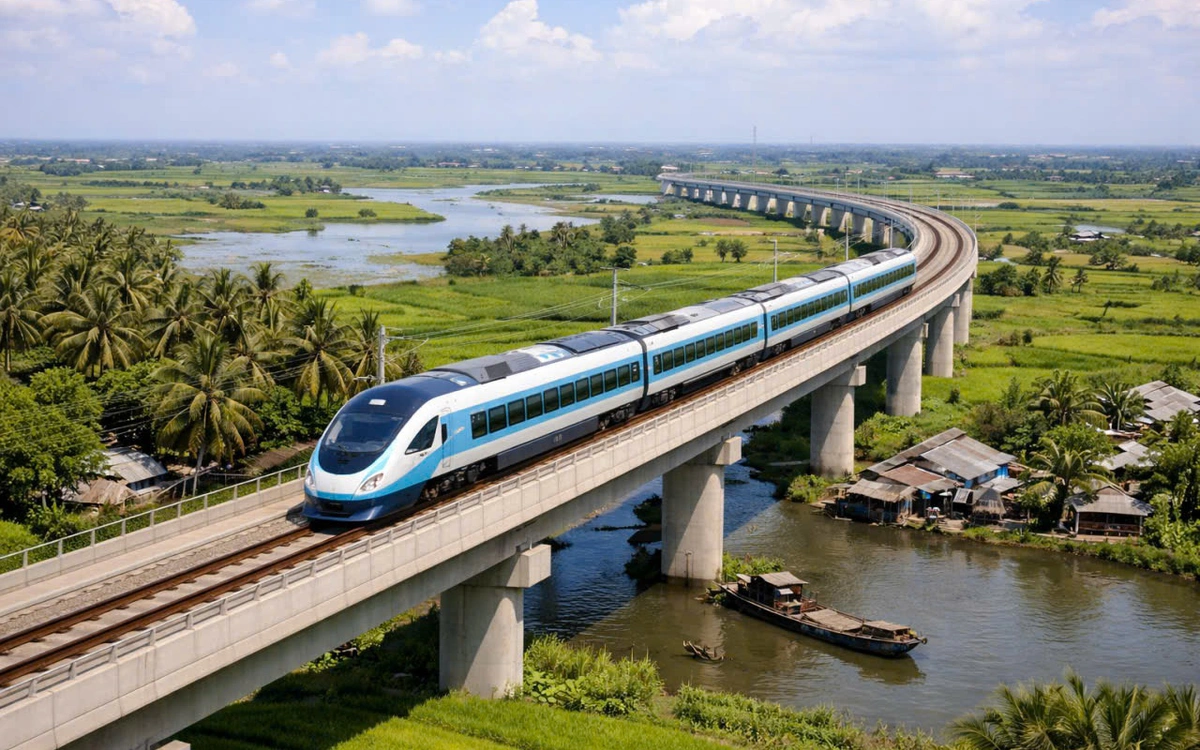
Ho Chi Minh City-Can Tho railway phase 1 to feature single track at 160 km/h
Translated from Vietnamese, summarized and contextualized by DistantNews.
At a glance
News
Sources not specified
Ongoing story
- The first phase of the Ho Chi Minh City - Can Tho railway project will feature a single track with a design speed of 160 km/h.
- Approximately 56% of the 175.2 km route will be elevated to minimize environmental impact and road crossings.
- The project, estimated to cost around $6.47 billion to $6.61 billion, is planned for public investment, with key approvals expected by August 2026.
A feasibility study for the Ho Chi Minh City - Can Tho railway project proposes a single-track line for its first phase, designed to accommodate speeds of 160 km/h. The 175.2-kilometer route will connect Ho Chi Minh City to Can Tho, passing through five provinces: Tay Ninh, Dong Thap, Vinh Long, and Can Tho.
To mitigate environmental disruption and road intersections, a significant portion of the line, about 56%, is planned to be elevated. The remaining 44% will run at ground level through less populated areas, minimizing flood impact. The project includes 12 stations and 3 depots. The decision for a single track in the first phase is based on projected transport demand, with a double track planned for phase two. Building a double track initially would increase costs by approximately 15.984 trillion VND (about $600 million USD).
The total investment is preliminarily estimated between 171.3 trillion VND ($6.47 billion USD) and 175.11 trillion VND ($6.61 billion USD). These figures depend on whether the railway shares bridges with road traffic, particularly over the Hau River. The project requires significant land acquisition, with about 801.5 hectares needed, including 479.13 hectares of agricultural land. Approximately 11,437 households will require relocation.
Given the scale of the project and the need to mobilize capital, consultants recommend public investment. The proposed timeline includes seeking parliamentary approval for the investment policy in August 2026 and completing the overall technical design by the first quarter of 2028. Land acquisition is slated to begin in the first quarter of 2027.
DistantNews Editorial
Originally published by Tuổi Trẻ in Vietnamese. Translated, summarized, and contextualized by our editorial team with added local perspective. Read our editorial standards.
More Stories
From Our Blog

What Gets Lost (and Found) When News Is Translated

The Critical Role of Diaspora Media in Global News

What Travellers Should Know About Countries with Restricted Press

A Digital Nomad's Guide to Following Local News

How the Same Story Looks Different in Different Countries
