


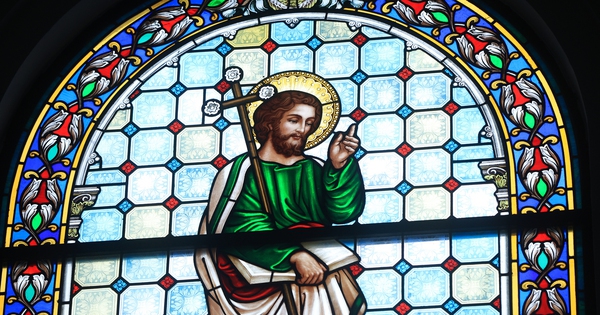
Ho Chi Minh City Street Hosts Five Catholic Churches from Northern Migrants
Translated from Vietnamese, summarized and contextualized by DistantNews.
At a glance
In-depth
Named sources
Context piece
- A 1 km stretch of Thong Nhat Street in Ho Chi Minh City, Vietnam, is home to five Catholic churches.
- These churches were established by North Vietnamese migrants who moved south in 1954, creating a unique religious neighborhood.
- Despite their proximity, the parishes maintain strong relationships, collaborating on religious services and pastoral activities.
Thong Nhat Street in Ho Chi Minh City, Vietnam, boasts an unusual concentration of five Catholic churches within a kilometer, forming a distinctive "church neighborhood." This area, known as Xom Moi, is primarily populated by descendants of North Vietnamese migrants who settled in the South in 1954.
The churches, including Bac Dung, Tu Dinh, Hanoi, Ha Dong, and Thai Binh, are part of the Archdiocese of Ho Chi Minh City. While each community established its own parish to preserve their religious practices, they maintain close ties. The close proximity of their bell towers does not create distance; instead, the parishes frequently interact, support each other, and organize joint religious services and pastoral events.
The majority of parishioners here are from the North. Each community gradually established its own parish to maintain Catholic faith practices.
Bac Dung Church, established in 1954, features a simple white facade and serves around 3,000 parishioners, most with Northern roots. Its current structure is the result of extensive renovations, with the latest consecration in May 2016. Nearby, Tu Dinh Church, founded in 1955, began as a simple structure and was rebuilt in 1989. Hanoi Church, dedicated to Our Lady of the Immaculate Conception, has undergone three constructions since its founding in 1954, with its current modern design completed in 2002, featuring a prominent 35-meter bell tower.
Ha Dong Church, located at 564 Thong Nhat, primarily serves parishioners from Tụy Hiền, Thanh Hà, and Hà Đông in Northern Vietnam. The foundation stone for its current building was laid in 1972. These churches, with their distinct histories and architectural styles, contribute to the unique character of the Xom Moi area, showcasing a vibrant religious community shaped by migration and shared faith.
The bell towers standing close together do not create distance. On the contrary, the parishes frequently interact, help each other, unite in organizing masses, and accompany each other in many pastoral activities.
DistantNews Editorial
Originally published by Thanh Niên in Vietnamese. Translated, summarized, and contextualized by our editorial team with added local perspective. Read our editorial standards.
More Stories


From Our Blog

What Gets Lost (and Found) When News Is Translated

The Critical Role of Diaspora Media in Global News

What Travellers Should Know About Countries with Restricted Press

A Digital Nomad's Guide to Following Local News

How the Same Story Looks Different in Different Countries
