


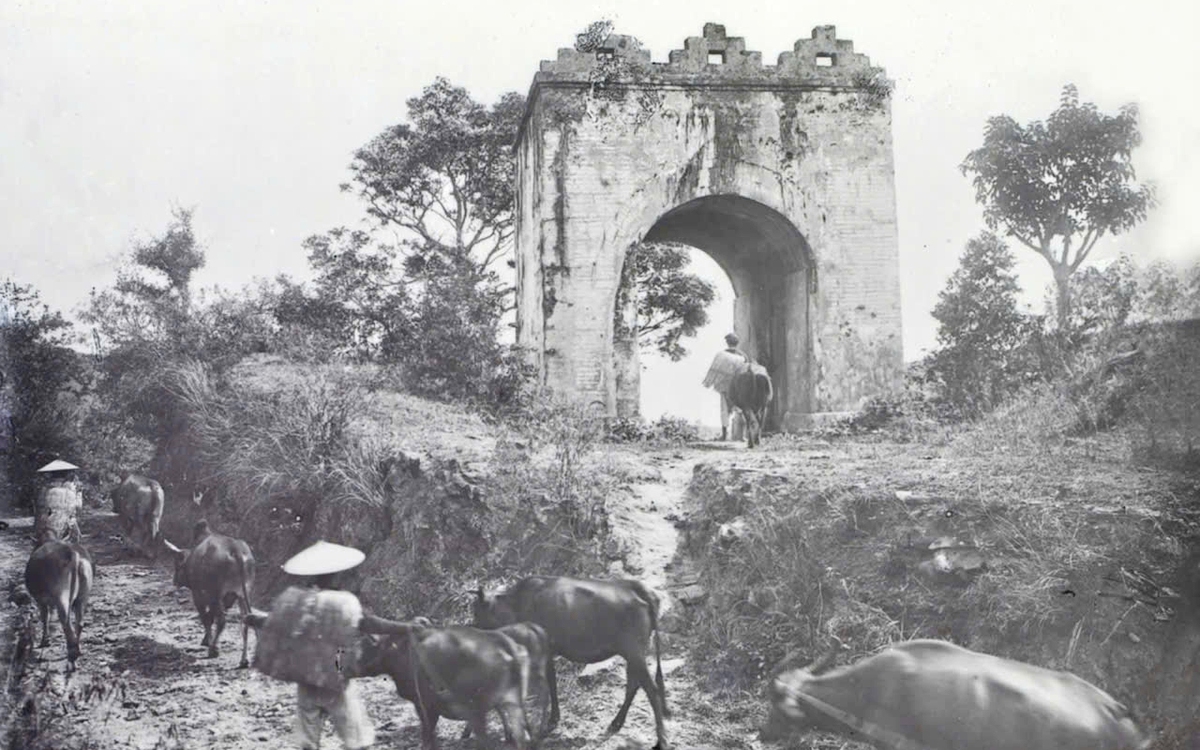
Hoành Sơn Pass: A Mountain Range Tied to a Dynasty's Fate
Translated from Vietnamese, summarized and contextualized by DistantNews.
At a glance
In-depth
Sources not specified
Context piece
- The Hoành Sơn mountain range played a pivotal role in the political destiny of the Nguyễn dynasty, serving as a strategic natural barrier.
- The prophecy "Hoành Sơn nhất đái, vạn đại dung thân" by Nguyễn Bỉnh Khiêm guided Nguyễn Hoàng to establish his power base in the south, transforming the mountain range into a symbol of survival and ambition.
- The Hoành Sơn pass became a critical strategic point, witnessing over a century of civil war between the Trịnh and Nguyễn lords.
The Hoành Sơn mountain range holds a unique place in Vietnamese history, deeply intertwined with the political fate of a dynasty. As TS Trần Đình Hằng, deputy director of the Center for Culture, Arts, Sports, and Tourism in the Central region, noted, few mountain ranges in Vietnamese history are as profoundly linked to the political destiny of a dynasty as Hoành Sơn.
The famous prophecy by Nguyễn Bỉnh Khiêm, "Hoành Sơn nhất đái, vạn đại dung thân" (A horizontal mountain range can provide refuge for ten thousand generations), was more than a mere prediction. It reflected a sharp geopolitical vision concerning the Thuận Quảng region. This prophecy became a key to understanding how the Nguyễn lords would change the course of their lineage.
In 1545, after the assassination of the renowned general Nguyễn Kim, the Lê dynasty's administration fell under the control of Lord Trịnh Kiểm. Amidst a climate of purges, Nguyễn Uông, the eldest son of Nguyễn Kim, was reportedly killed, placing his younger brother, Đoan Quận công Nguyễn Hoàng, in extreme danger. Legend has it that during this dire period, Nguyễn Hoàng secretly sought advice from Nguyễn Bỉnh Khiêm. The Đại Nam thực lục (Veritable Records of Đại Nam) records that Nguyễn Hoàng, hearing of Bỉnh Khiêm's reputation for divination, sent an envoy. Bỉnh Khiêm, gazing at a model mountain in his courtyard, recited the prophecy. The envoy reported this back, and Nguyễn Hoàng understood the hidden meaning.
In Vietnamese history, few mountain ranges are as deeply associated with the political destiny of a dynasty as Hoành Sơn. The famous prophecy 'Hoành Sơn nhất đái, vạn đại dung thân' not only carries prophetic meaning but also reflects a sharp geopolitical vision of the Thuận Quảng region.
Interpreting the prophecy, Nguyễn Hoàng, with the help of his sister Ngọc Bảo, persuaded her husband Trịnh Kiểm to allow him to govern Thuận Hóa, a region then considered a "harsh land." In 1558, when Nguyễn Hoàng led his troops across the Ngang Pass to the south, he transformed this geographical boundary into a launchpad for a new era. Hoành Sơn thus became not just a mountain, but a symbol of survival and the ambition of the Nguyễn family.
TS Phan Tiến Dũng, Chairman of the Huế City Historical Science Association, commented that Trạng Trình's prophecy was a profound political message with strategic foresight from a scholar of the North at that time. He added that its predictive nature has been largely validated by the Nguyễn lords' efforts in territorial expansion and state-building in the South.
The rise of the Nguyễn family led to over a century of civil war between the Trịnh and Nguyễn lords. The Ngang Pass, with its strategic "throat" position on the main north-south route, became a true "hot zone." Historical records indicate that this area was frequently contested, with control shifting between the Trịnh and Nguyễn armies. Scholars have paid particular attention to the remnants of fortifications mentioned in ancient texts, such as Lũy Ông Ninh and Lũy Ông Nang, now commonly referred to as the Kỳ Anh fortifications, located southwest of the Hoành Sơn range.
The prophecy is a profound political message with strategic foresight from a scholar of the North at that time. In the historical process, it has been partially verified through the career of territorial expansion and state-building of the Nguyễn lords in the South.
DistantNews Editorial
Originally published by Tuổi Trẻ in Vietnamese. Translated, summarized, and contextualized by our editorial team with added local perspective. Read our editorial standards.
More Stories


From Our Blog

What Gets Lost (and Found) When News Is Translated

The Critical Role of Diaspora Media in Global News

What Travellers Should Know About Countries with Restricted Press

A Digital Nomad's Guide to Following Local News

How the Same Story Looks Different in Different Countries
