


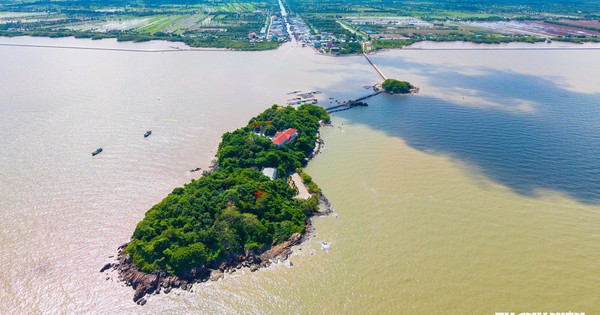
Hòn Đá Bạc: Vietnam's Southern Isle of Granite, Legends, and Espionage History
Translated from Vietnamese, summarized and contextualized by DistantNews.
At a glance
In-depth
Sources not specified
Outcome reported
- Hòn Đá Bạc, a scenic island in Cà Mau, Vietnam, is known for its unique granite rock formations and mangrove ecosystems.
- The island holds historical significance as a former military base and the command center for the CM12 counter-espionage operation in the 1980s.
- Recognized as a national historical relic, Hòn Đá Bạc is now a tourist destination blending natural beauty with revolutionary history.
Hòn Đá Bạc, located about 50 km from Cà Mau city in Vietnam's southernmost province, captivates visitors with its raw beauty. Millions of years of wave and wind action have sculpted unique granite formations, set against a backdrop of mangrove forests. The island is also steeped in legend, with sites like Giếng Tiên (Fairy Well) and Bàn Chân Tiên (Fairy Footprint) linked to ancient tales.
Dominating the highest point is Lăng Ông Nam Hải, a shrine housing a 13-meter-long whale skeleton. Local fishermen revere whales as divine protectors and hold an annual Nghinh Ông festival on the 23rd day of the fifth lunar month to pray for safety at sea.
Beyond its natural and spiritual allure, Hòn Đá Bạc served as a critical historical site. It was a base for a 105mm artillery unit during the unification war and, more notably, the command center for the CM12 counter-espionage operation from 1981 to 1984. This operation successfully thwarted attempts by hostile forces to infiltrate and overthrow the government. In recognition of this feat, the Ministry of Culture, Sports and Tourism designated Hòn Đá Bạc a national historical relic on June 22, 2009. Today, the site features the CM12 Victory Monument, a museum, and a Ho Chi Minh shrine, serving as an educational site for revolutionary history.
Now a popular tourist spot, Hòn Đá Bạc symbolizes Vietnam's natural splendor, historical depth, and commitment to safeguarding its sovereignty at the nation's southern tip. Its blend of majestic natural landscapes and significant historical events makes it an increasingly attractive destination for those exploring Vietnam's remote southern reaches.
DistantNews Editorial
Originally published by Thanh Niên in Vietnamese. Translated, summarized, and contextualized by our editorial team with added local perspective. Read our editorial standards.
More Stories


From Our Blog

What Gets Lost (and Found) When News Is Translated

The Critical Role of Diaspora Media in Global News

What Travellers Should Know About Countries with Restricted Press

A Digital Nomad's Guide to Following Local News

How the Same Story Looks Different in Different Countries
