


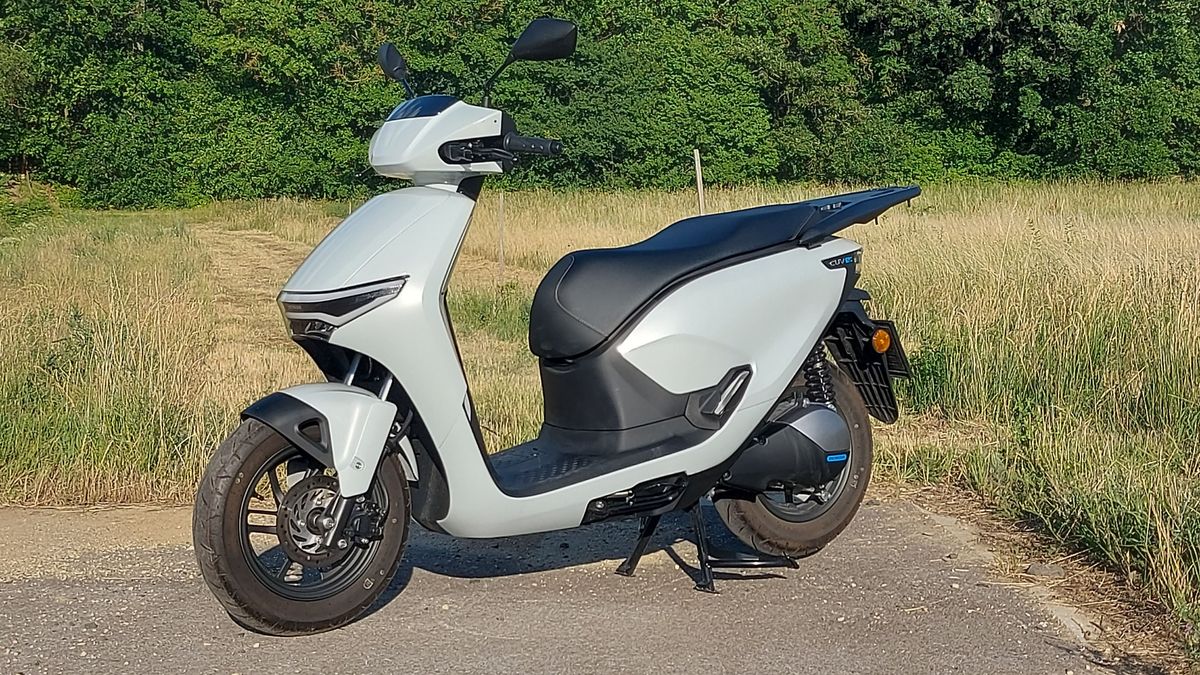
Honda CUV e: review: A Japanese-style cuvée, good even without soda?
Translated from Hungarian, summarized and contextualized by DistantNews.
At a glance
News
Named sources
Context piece
- The Honda CUV e: electric scooter features a simple design with a stable chassis, but struggles with bumps and has a limited top speed of 95 km/h.
- Its real-world range is around 50-60 km, significantly less than the advertised 70 km, and charging the removable 10kg batteries takes six hours.
- The scooter's price of 1.96 million forints makes it a questionable value proposition compared to cheaper gasoline-powered alternatives like the PCX.
The Honda CUV e: electric scooter presents a mixed bag of innovative features and practical limitations, making its value proposition questionable for the average consumer.
Egyszerű felépítése dacára a stabil futómű hamar bizalmat ébreszt a pilótában, a jó néhány riválisból ismert villanymotor-zúgás sem útitársunk, viszont a keresztbordákon és kátyúkon kellemetlenül dobál.
While the scooter boasts a stable chassis and a quiet electric motor, its ride quality suffers on uneven surfaces, with the suspension struggling over crosswalks and potholes. The 12-inch wheels, with front disc brakes and a combined braking system (CBS), offer decent stopping power, but the lack of an anti-lock braking system (ABS) option is a drawback. The scooter's top speed is electronically limited to 95 km/h, which, combined with a rapidly depleting battery range, restricts its usability outside urban areas.
Honda claims a range of 70 km, but real-world testing shows it to be closer to 50-60 km. This necessitates frequent charging of the two 10kg batteries, each with a capacity of 1.31 kW. Removing and docking these batteries for charging is cumbersome, and a full charge from empty takes six hours per battery using a 230-volt dock. The company's concept of public battery-swapping stations is currently limited to certain regions in Asia.
Valós körülmények közt az ígért 70 helyett inkább 50-60 kilométert lehet megtenni vele, amit némi tervezéssel elegendő ugyan, ám a töltéshez mindig ki kell venni és a hangosan zúgó dokkolóba kell helyezni a 10-10 kilós akkukat.
An integrated onboard charger, similar to those found on NIU scooters, would significantly improve the CUV e:'s practicality. This would allow for easier charging via a standard outlet while parked, eliminating the need to remove the batteries. However, as it stands, the scooter's price of 1.96 million forints (approximately $5,500 USD) makes it a difficult sell, especially when compared to the gasoline-powered PCX, which is about 700,000 forints cheaper and offers a more conventional and potentially more practical ownership experience.
Kifinomult és kevésbé átgondolt megoldások egyaránt jellemzik tehát a villany-Hondát, melynek 1,96 millió forintos ára aligha lesz széles tömegeknek vonzó ajánlat a 700 ezerrel olcsóbb PCX-hez képest.
DistantNews Editorial
Originally published by Magyar Nemzet in Hungarian. Translated, summarized, and contextualized by our editorial team with added local perspective. Read our editorial standards.
More Stories


From Our Blog

Countries Without a Free Press: What You Need to Know

What Press Freedom Means for the News You Read

What Gets Lost (and Found) When News Is Translated

The Critical Role of Diaspora Media in Global News

What Travellers Should Know About Countries with Restricted Press
