

Hong Kong Accelerates AI Integration in Arts and Entertainment
Translated from English and summarized by DistantNews. Read the original for the full story.
At a glance
News
Sources not specified
New plan
- Hong Kong's government is actively implementing AI strategies, focusing on infrastructure and application development.
- Key initiatives include establishing an AI committee, a research institute, and a risk-based ethical AI framework.
- Programs aim to promote AI awareness and enhance skills across various sectors, including the digital entertainment and creative industries.
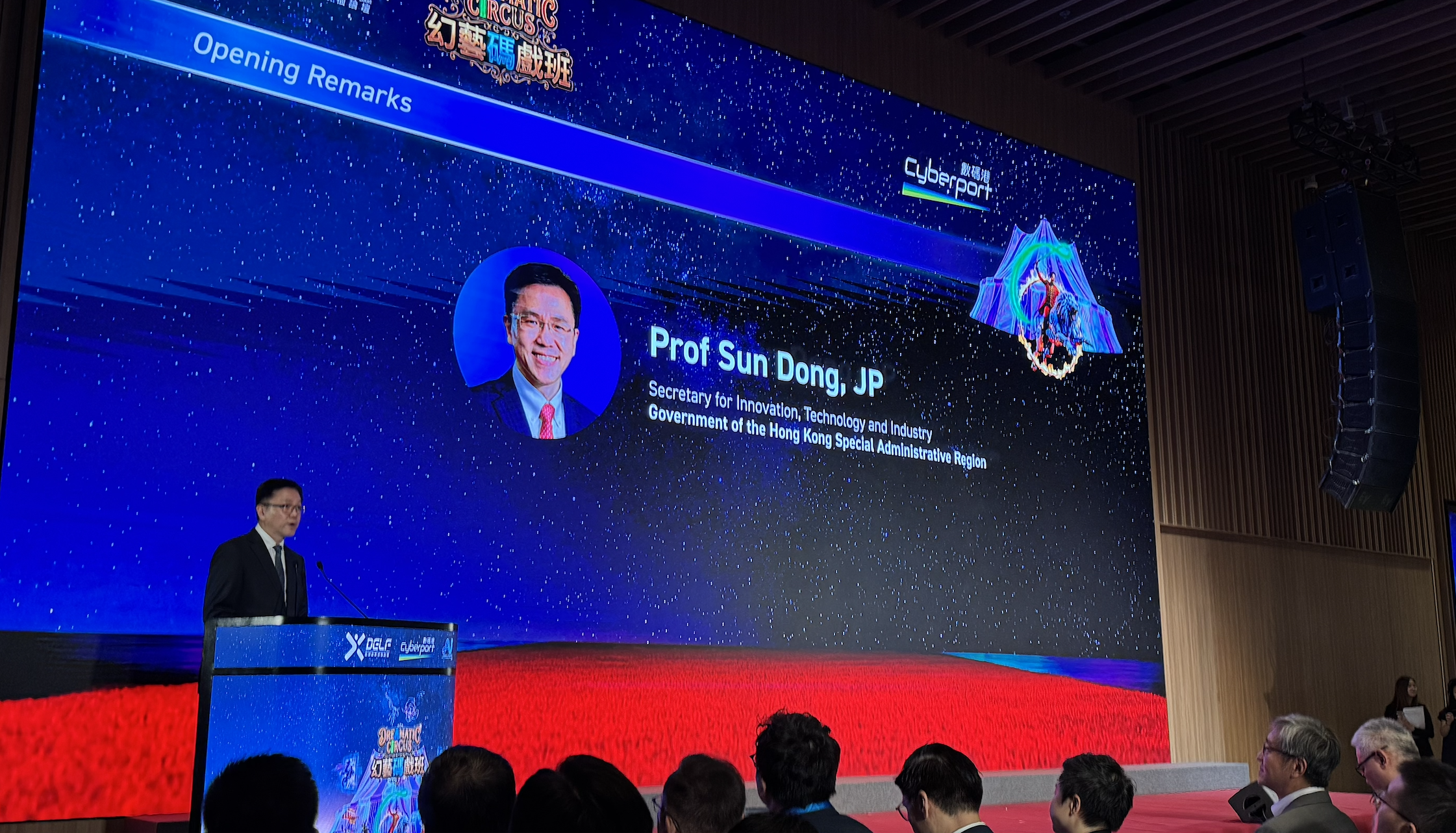
Hong Kong is transitioning from planning to actively executing its Artificial Intelligence strategy, with a strong emphasis on expanding infrastructure and fostering application-driven development. Secretary for Innovation, Technology and Industry, Professor Sun Dong, announced these advancements at the Digital Entertainment Leadership Forum (DELF 2026).
The committee on AI+ and Industry Development Strategy is established to empower industrial transformation through AI, with an initial focus on health technologies and embodied AI, extending to transportation, cultural and creative industries, and more.
A dedicated committee on AI+ and Industry Development Strategy has been formed to drive industrial transformation through AI. The initial focus will be on health technologies and embodied AI, with future extensions into transportation, and cultural and creative industries. Further bolstering this effort, the Hong Kong AI Research and Development Institute is set to launch later this year, aiming to bridge the gap between upstream research and practical, real-world applications.
Professor Dong highlighted the transformative power of AI in the digital entertainment industry, stating, "AI is transforming the digital entertainment industry, turning imagination into unprecedented experience." He stressed the importance of inclusive access, announcing the "AI for All Inclusive Program," a $50 million initiative. This program, managed by Cyberport, the Hong Kong Science and Technology Parks, and the Hong Kong Productivity Council, will offer awareness campaigns and practical training to diverse community sectors, enhancing AI literacy and professional competitiveness.
The Hong Kong AI Research and Development Institute will also come into operation later this year to translate upstream research into real-world applications.
The creative industry is already experiencing the impact of these AI advancements. Terry Lam, Dean of the School of Film and Television at The Hong Kong Academy for Performing Arts, noted a significant shift, observing that "even if you go to the most famous or high-ranking university in Hong Kong, in an engineering course or scientific course, they will still have a sub-topic called the creative industry." Lam also expressed enthusiasm for cross-cultural collaboration, particularly with arts institutions across Central Asia.
AI is transforming the digital entertainment industry, turning imagination into unprecedented experience.
Further demonstrating Hong Kong's commitment to technological innovation, an electric vertical take-off and landing (eVTOL) aircraft project, a collaboration between Cyberport, KC Smart Mobility, and EHang, successfully completed its inaugural test flight. This aligns with Hong Kong's growing ties with Eurasia, evidenced by recent cooperation agreements between Cyberport and innovation clusters in Kazakhstan and Uzbekistan.
And technology only serves its purpose when everyone can participate in it. That is why we launched the $50 million AI for All Inclusive Program
About this summary
Originally published by The Astana Times in English. Translated, summarized, and contextualized automatically by DistantNews, with a note on how the source frames the story. Not individually reviewed before publishing. How this works.
More Stories



From Our Blog

What Gets Lost (and Found) When News Is Translated

The Critical Role of Diaspora Media in Global News

What Travellers Should Know About Countries with Restricted Press

A Digital Nomad's Guide to Following Local News

How the Same Story Looks Different in Different Countries
