


Hong Myung-bo's Coaching Appointment: Examining Claims and KFA Selection Process
Translated from Korean, summarized and contextualized by DistantNews.
At a glance
Analysis
Named sources
Context piece
- A media report suggesting Jesse Marsch was overlooked for the South Korean national football team coach position due to Hong Myung-bo's influence is disputed.
- The report's claim that Marsch could have been hired but Hong's appointment blocked the opportunity is challenged by details from a Ministry of Culture, Sports and Tourism audit.
- The audit revealed Marsch withdrew due to domestic residency and tax issues, and the selection process involved multiple candidates and internal decision-making procedures.
A recent media report claimed that Jesse Marsch was a potential candidate for the South Korean national football team coach position but was overlooked due to the influence of Hong Myung-bo. However, this narrative is being contested, with details emerging from a Ministry of Culture, Sports and Tourism audit of the Korea Football Association (KFA) casting doubt on the report's accuracy.
The audit report indicates that the selection committee initially narrowed down 97 candidates to five foreigners. The committee chairman interviewed these candidates and identified Marsch as the top choice, with another coach as the second. Contrary to the media's portrayal, Marsch reportedly withdrew from consideration via email due to 'domestic residency and tax issues.' He subsequently accepted a coaching position with the Canadian national team. The second-choice candidate's contract also fell through due to disagreements over terms.
The KFA's administrative inexperience has become a burden for Hong, who has since taken the helm of the national team.
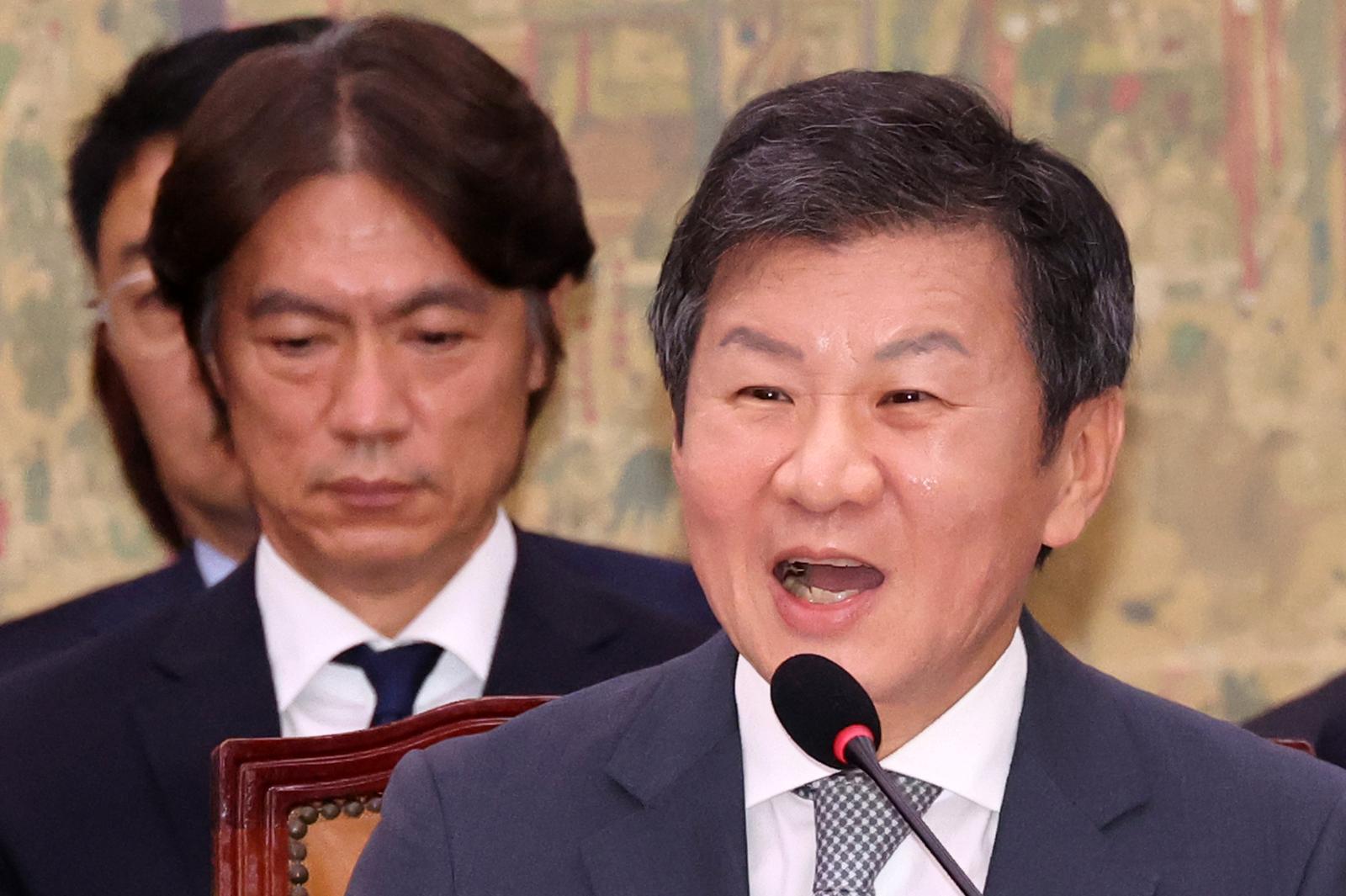
The notion of Hong being a 'backdoor candidate' (geosu) is also being re-examined. The KFA's final committee meeting involved selecting three candidates: Hong (7 votes), David Wagner (7 votes), and Gus Poyet (6 votes). The committee chairman was then delegated the authority to rank these candidates, ultimately choosing Hong as the first priority and reporting this to KFA President Chung Mong-gyu. The term 'geosu' refers to an internal decision-making method rather than a predetermined outcome favoring a specific individual.
While the Ministry's audit did label the KFA's selection process as 'opaque and unfair,' this was primarily due to procedural issues, such as a technical director, lacking the authority, acting on behalf of the committee chairman. This administrative oversight reportedly created difficulties for Hong upon his appointment. The article suggests that public discourse, often amplified by media and social media, should focus on constructive solutions for Korean football's development rather than emotional reactions or 'witch hunts.' It calls for a democratic and transparent system that ensures fair decision-making, regardless of who holds the position.
Football association reform cannot be made through venting anger. It is not something that can be solved by shouting in a hearing. What Korea needs is not a narrative of finding villains, but a democratic and transparent system where decisions cannot be made arbitrarily.
DistantNews Editorial
Originally published by Hankyoreh in Korean. Translated, summarized, and contextualized by our editorial team with added local perspective. Read our editorial standards.
More Stories

From Our Blog

What Gets Lost (and Found) When News Is Translated

The Critical Role of Diaspora Media in Global News

What Travellers Should Know About Countries with Restricted Press

A Digital Nomad's Guide to Following Local News

How the Same Story Looks Different in Different Countries
