


Hormuz, the New Battlefield: Iran Turns Navigation into a Strategic Weapon
Translated from Romanian, summarized and contextualized by DistantNews.
At a glance
News
Sources not specified
Ongoing story
- Iran is using the Strait of Hormuz as a geopolitical weapon to gain political concessions and influence nuclear negotiations.
- The US faces the challenge of maintaining freedom of navigation while preventing Hormuz from becoming a precedent for regional powers controlling global energy routes.
- Tensions escalated with drone attacks and retaliatory strikes, overshadowing a US-brokered maritime deal between Israel and Lebanon, which Hezbollah rejected.
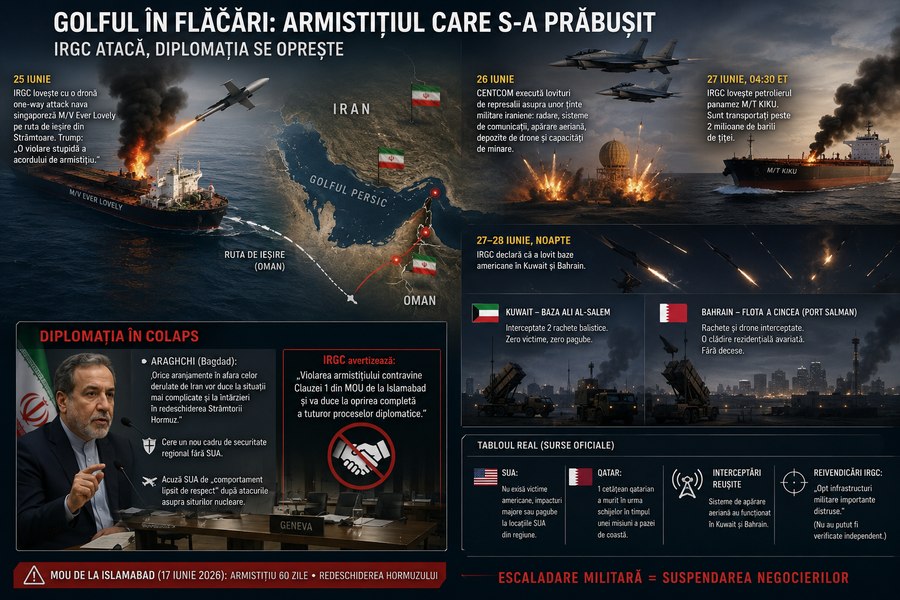
The Strait of Hormuz has become Iran's primary bargaining chip in regional diplomacy, with Tehran leveraging its control over maritime security to extract political concessions and influence international negotiations regarding its nuclear program. For the United States, the challenge extends beyond ensuring freedom of navigation; it involves preventing the strait from setting a precedent where a regional power can dictate access to a critical global energy artery.
The most important lesson from these days of confrontation is that the Strait of Hormuz has become Iran's main negotiating instrument.
Recent hostilities around the strait have overshadowed a US-brokered agreement between Israel and Lebanon, designed to establish peace between the two nations after nearly eight decades of technical war. Hezbollah, an Iran-backed militia designated a terrorist organization by the US, has rejected this accord, vowing to continue its fight against Israel. The group views the agreement as favoring Israel and being incompatible with Iran's strategy, especially while Israeli operations in Lebanon persist.
For the United States, the challenge is no longer just maintaining freedom of navigation, but also preventing Hormuz from becoming a precedent by which a regional power can condition access to one of the world's most important energy arteries.
Hezbollah's rejection signals its intent to maintain an open front against Israel, thus preserving one of the key theaters of the regional conflict. The US has proposed talks with Iran in Doha, Qatar, with details of the summit still being finalized. Should these negotiations materialize and establish a functional mechanism for managing incidents in Hormuz, a de-escalation of tensions could follow. However, any new attack on shipping could swiftly reignite military confrontation.
Hezbollah rejected the agreement because it considers it favorable to Israel, incompatible with Iran's strategy, and worthless as long as Israeli operations in Lebanon continue.
The current crisis marks the most significant military escalation since the US-Iran Memorandum of Understanding (MOU) on June 17, 2026, which extended a ceasefire for 60 days and reopened the Strait of Hormuz for commercial navigation. The escalation between June 25-28 saw Iran's IRGC strike a Singaporean vessel with a drone, prompting retaliatory strikes by CENTCOM against Iranian military targets. The IRGC then launched another drone attack on a Panamanian-flagged tanker.
Trump called the attack 'a stupid violation of the ceasefire agreement.'
DistantNews Editorial
Originally published by Adevărul in Romanian. Translated, summarized, and contextualized by our editorial team with added local perspective. Read our editorial standards.
More Stories
From Our Blog

What Gets Lost (and Found) When News Is Translated

The Critical Role of Diaspora Media in Global News

What Travellers Should Know About Countries with Restricted Press

A Digital Nomad's Guide to Following Local News

How the Same Story Looks Different in Different Countries
