

Horses for Morskie Oko undergo examinations; some excluded from work
Translated from Polish, summarized and contextualized by DistantNews.
At a glance
News
Named sources
Outcome reported
- Horses working on the route to Morskie Oko in Poland have undergone veterinary examinations, with some deemed unfit for work.
- Two horses were definitively excluded due to lameness, and one requires further examination.
- Despite these exclusions, the horses generally show good condition, with heart rates within safe limits during work.
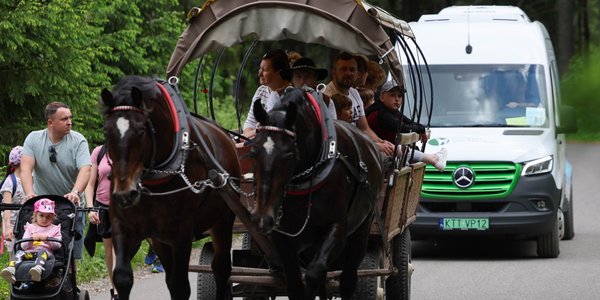
Horses used for tourist transport to Morskie Oko in Poland have undergone annual veterinary examinations, with some animals being excluded from work. The examinations, conducted by a commission appointed by the TPN (Tatra National Park), assess the horses' clinical, orthopedic, and cardiac health before the summer tourist season.
Each horse underwent a detailed assessment by the commission. We considered, among other things, the horse's gait, heart rate before and after exertion. Where any doubts arose, immediate decisions were made.
Two horses were definitively barred from working due to lameness, and another will undergo additional tests. Veterinarian Piotr Szpotański, who examined the horses, stated that where any doubts arose, immediate decisions were made. He noted that the horses working on the Morskie Oko route are under one of the country's most stringent veterinary supervision systems.
Two horses were definitively not allowed to work due to lameness, and one horse will undergo additional examinations.
Despite the exclusions, the horses are generally in good condition. Marek Tischner, the commission chairman and veterinarian, reported that heart rates typically do not exceed 130 beats per minute during work and average between 80-100 bpm. This indicates they are operating within safe aerobic limits, avoiding oxygen debt that could damage muscles. He also highlighted that most horses' heart rates return to resting levels within ten minutes of rest.
This means that the horses are working within safe aerobic limits and do not enter the so-called oxygen debt, which could lead to muscle damage.
Biochemical blood analyses, including lactic acid and creatine kinase levels, show no deviations from norms for healthy, regularly trained working horses. Tischner added that specialized clinical examinations, flexion tests, and radiological diagnostics have not revealed signs of chronic musculoskeletal strain in the working group. Any horse showing predispositions to orthopedic issues is immediately removed from licensed work. Additionally, monitoring of the horses' thermal load using the WBGT index has been in place since last season.
Already after ten minutes of rest, almost all examined horses have a heart rate below 60 beats per minute, i.e., to values close to resting.
DistantNews Editorial
Originally published by Rzeczpospolita in Polish. Translated, summarized, and contextualized by our editorial team with added local perspective. Read our editorial standards.
More Stories



From Our Blog

What Gets Lost (and Found) When News Is Translated

The Critical Role of Diaspora Media in Global News

What Travellers Should Know About Countries with Restricted Press

A Digital Nomad's Guide to Following Local News

How the Same Story Looks Different in Different Countries
