


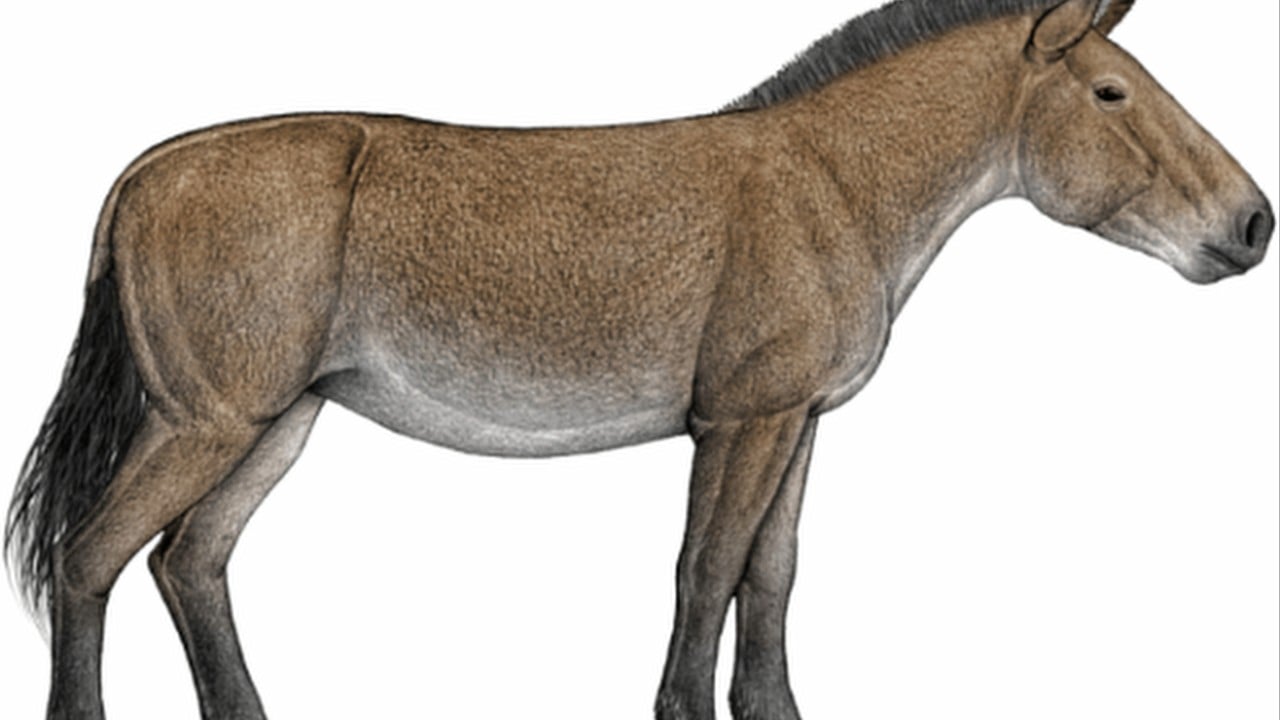
Horses Originated in America and Reached Europe Through China, Fossil DNA Reveals
Translated from English, summarized and contextualized by DistantNews.
At a glance
News
Named sources
Context piece
- Fossil DNA research suggests horses originated in North America millions of years ago.
- An extinct lineage, the Dalian horse from China, acted as a genetic intermediary, transferring North American ancestry to ancient horse populations in Siberia.
- This Chinese connection indicates that the bloodlines of modern European horses ultimately trace back to North American origins via this route.
A groundbreaking study utilizing fossil DNA has challenged the long-held belief that horses were introduced to the Americas by Spanish conquistadors. The research indicates that horses actually originated in North America millions of years ago and later reached Europe through an unexpected pathway involving China.
The study focused on an extinct lineage known as the Dalian horse, previously considered a local anomaly in northeastern China. Researchers discovered that this lineage possessed a distinct American ancestry. This genetic heritage was then passed on to ancient horse populations in Siberia, serving as a crucial link.
Dalian horses likely served as one route through which North American-related genetic ancestry entered Northeast Eurasian horse populations.
This gene flow suggests that the ancestors of modern European horses acquired their North American genetic roots through this Chinese intermediary. The findings position the Dalian horse as a pivotal lineage for understanding the evolution of equids in Northeast Asia during the late Pleistocene epoch and the dynamics of genetic exchange across the Bering Strait.
The findings position the Dalian horse as a key lineage for elucidating late Pleistocene equid evolution in Northeast Asia and the dynamics of trans-Beringian genetic exchange.
DistantNews Editorial
Originally published by South China Morning Post in English. Translated, summarized, and contextualized by our editorial team with added local perspective. Read our editorial standards.
More Stories


From Our Blog

Countries Without a Free Press: What You Need to Know

What Press Freedom Means for the News You Read

What Gets Lost (and Found) When News Is Translated

The Critical Role of Diaspora Media in Global News

What Travellers Should Know About Countries with Restricted Press
