


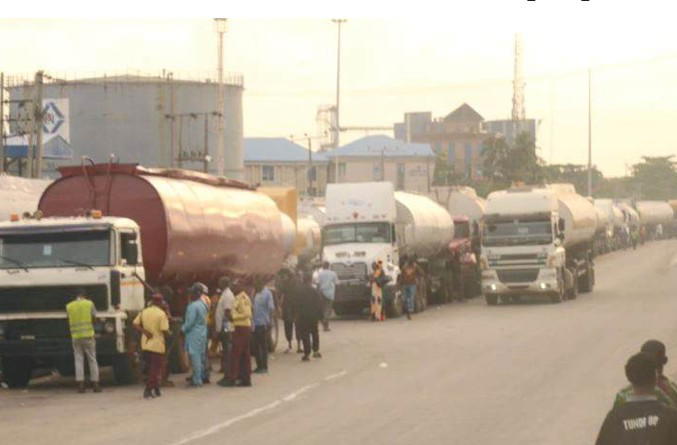
How idle tankers, inadequate parking bays keep Apapa, Kirikiri in constant gridlock
Summarized and contextualized by DistantNews.
At a glance
News
Named sources
Context piece
- Traffic gridlock persists in Lagos's Apapa and Kirikiri industrial areas due to indiscriminate tanker parking.
- Inadequate parking facilities at tank farms force hundreds of trucks to wait on major roads.
- Industry operators cite insufficient holding bays and the practice of dispatching trucks before securing loading allocations as key causes.
Lagos's vital industrial corridors of Apapa and Kirikiri remain plagued by persistent traffic gridlock, a problem industry stakeholders attribute to the haphazard parking of petroleum tankers and insufficient facilities at tank farms. While government efforts and an electronic call-up system have eased some of the chaos, hundreds of trucks continue to occupy major access roads instead of designated holding bays.
The situation is particularly acute along Kirikiri Road and routes leading to petroleum depots. Tanker owners often send their vehicles to these areas even without confirmed loading allocations, hoping to secure business once products become available. This practice results in a constant presence of empty or partially filled trucks lining road shoulders and service lanes, awaiting potential loading opportunities.
Most petroleum depots were originally built with limited parking space, providing only the minimum required to satisfy regulatory requirements. Developing a standard truck park in the Apapa area is highly capital-intensive because of the high cost of acquiring, reclaiming and concreting land.
Operators also point to a lack of adequate parking infrastructure at many tank farms. These facilities, often built decades ago for lower traffic volumes, struggle to accommodate the current influx of trucks. Many depots were constructed with only the minimum parking space required for regulatory approval, and these limited bays are frequently prioritized for company-owned vehicles. This forces independent tanker operators to queue on public roads, exacerbating the already severe congestion in Apapa and Kirikiri.
Mr. Lawal Kamaldeen, Vice President of the Oil and Gas Services Providers Association of Nigeria (OGSPAN), highlighted the capital-intensive nature of developing proper truck parks in Apapa due to high land costs. He explained that limited parking space often means third-party trucks are relegated to public roads, contributing significantly to the ongoing traffic nightmare that disrupts businesses and daily life in the area.
Consequently, the available parking facilities are often reserved for company-owned trucks or used as holding bays for tankers awaiting loading or preparing to depart after loading. As a result, many third-party trucks are forced to queue on public roads, contributing to the persistent traffic congestion in the Apapa and Kirikiri corridors.
DistantNews Editorial
Originally published by Vanguard. Summarized and contextualized by our editorial team with added local perspective. Read our editorial standards.
More Stories


From Our Blog

How the Same Story Looks Different in Different Countries

What Gets Lost (and Found) When News Is Translated

The Critical Role of Diaspora Media in Global News

What Travellers Should Know About Countries with Restricted Press

A Digital Nomad's Guide to Following Local News
