


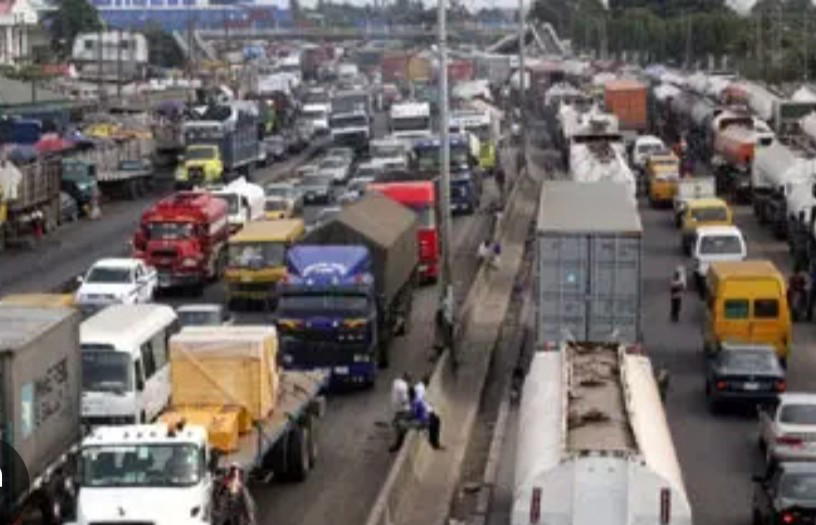
Lagos: How tankers keep bringing Apapa to standstill
Summarized and contextualized by DistantNews.
At a glance
News
Named sources
Context piece
- Persistent gridlock caused by petroleum tankers in Lagos highlights deep structural issues in Nigeria's fuel logistics.
- Inadequate infrastructure, poor planning, weak enforcement, and corruption drive the recurring traffic crisis.
- Over-reliance on road transport, coupled with underutilized pipelines and underdeveloped rail, exacerbates the problem.
Lagos faces a crippling standstill as petroleum tankers choke the Apapa and Kirikiri corridors, exposing long-standing structural flaws in Nigeria's fuel distribution network. Despite government efforts, the daily convergence of thousands of trucks carrying various petroleum products has created severe traffic congestion, disrupting businesses, port operations, and daily commutes.
The crisis extends beyond mere traffic management, fueled by insufficient infrastructure, flawed logistics planning, lax regulatory enforcement, and corruption. A critical issue is the scarcity of functional truck parks and loading bays, forcing hundreds of tankers to queue for kilometers on public roads, turning highways into makeshift parking lots. The concentration of numerous petroleum depots in the Apapa and Kirikiri areas intensifies competition for loading, even with the increased domestic supply from the Dangote Refinery.
Nigeria's continued reliance on road transportation for fuel distribution is a major contributing factor. Pipelines, once designed for efficient product transport, remain largely underutilized due to vandalism and neglect. Rail transport has also failed to emerge as a viable alternative. Consequently, road tankers dominate fuel distribution nationwide. Although some roads in Apapa and Kirikiri have been recently reconstructed, many connecting routes are too narrow for the growing volume of heavy-duty trucks servicing the ports and depots. This pressure intensifies as refining capacity and economic activity expand, leading to higher volumes of petroleum products needing transport.
DistantNews Editorial
Originally published by Vanguard. Summarized and contextualized by our editorial team with added local perspective. Read our editorial standards.
More Stories


From Our Blog

How the Same Story Looks Different in Different Countries

What Gets Lost (and Found) When News Is Translated

The Critical Role of Diaspora Media in Global News

What Travellers Should Know About Countries with Restricted Press

A Digital Nomad's Guide to Following Local News
