

How Russia’s drone war against Ukraine has changed, and why Budanov expects attacks to continue after legislative elections
Translated from Romanian and summarized by DistantNews. Read the original for the full story.
At a glance
Analysis
Documents & data
Ongoing story
- Russia has shifted from occasional mass drone attacks to near-continuous waves across Ukraine, with Kyiv and other cities facing repeated explosions since Aug. 27.
- The overall number of drones has remained broadly stable, but jet-powered drones that are harder to intercept now account for about half of launches.
- Ukrainian military intelligence chief Kyrylo Budanov says Moscow could maintain the pace until at least Russia’s September State Duma elections, while Ukrainian interception rates remain high.
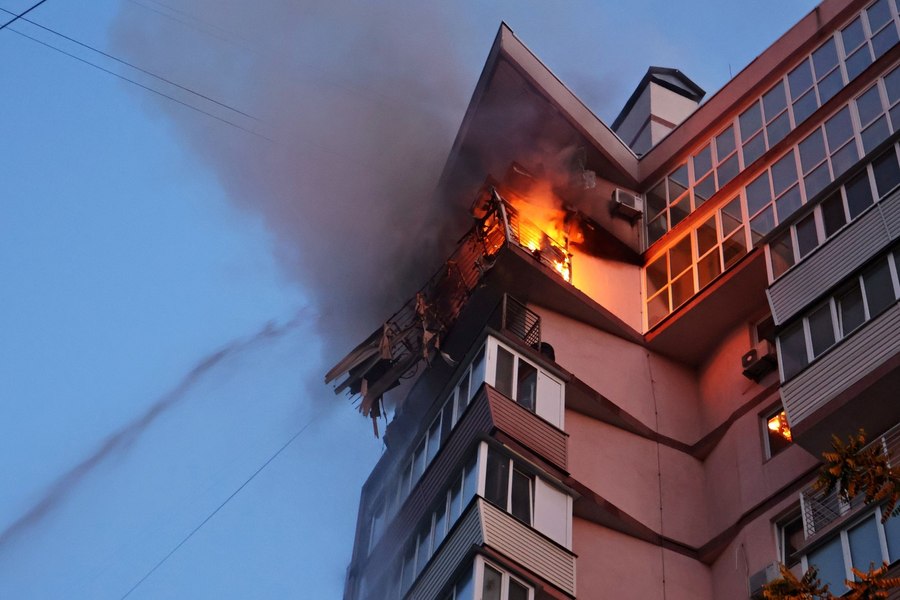
Kyiv is no longer facing the familiar pattern of massive Russian drone swarms arriving once or twice a week. Since Aug. 27, the attacks have come in almost uninterrupted waves, day and night, turning the Ukrainian capital and other cities into targets under constant pressure.
The shift has not necessarily brought a dramatic increase in the total number of drones. The more important change is the composition and timing of the attacks. Jet-powered drones, which are considerably harder to intercept, now make up about half of all launches, according to the figures examined by Kyiv Post.
Ukraine’s Air Force reported an average of about 188 drones launched each night between 6 p.m. and 8 a.m. from Aug. 27 to 31. That compares with nearly 160 per night during the same period in July. July figures ranged from 58 launches on July 21 to 496 on July 2. The Air Force has not provided clear figures for drones launched and intercepted during daytime hours, although warnings issued over the past week suggest that several dozen more may be launched each day.
The reported pace is placing pressure on activity across the country. Explosions have repeatedly sounded over Kyiv and other cities, while several major retail chains have increasingly become targets and business operations have been disrupted nationwide. The immediate positive sign for Ukraine is that interception rates remain high. The concern is that Russia may be able to sustain the campaign for an extended period.
Ukraine’s Defence Ministry said Russia launched 8,653 drones in July. Kyiv Post calculated a lower total of 4,955 from the Air Force’s morning briefings. Ukrainian military intelligence chief Kyrylo Budanov has warned that Moscow will maintain the current tempo at least until the State Duma elections in September.
About this summary
Originally published by Adevărul in Romanian. Translated, summarized, and contextualized automatically by DistantNews, with a note on how the source frames the story. Not individually reviewed before publishing. How this works.
More Stories
From Our Blog

What Gets Lost (and Found) When News Is Translated

The Critical Role of Diaspora Media in Global News

What Travellers Should Know About Countries with Restricted Press

A Digital Nomad's Guide to Following Local News

How the Same Story Looks Different in Different Countries
