

Humpback whale autopsy on Danish island concludes; female confirmed, cause of death unclear
Translated from German, summarized and contextualized by DistantNews.
At a glance
News
From a news agency
Outcome reported
- The autopsy of a humpback whale, nicknamed 'Timmy', on the Danish island of Anholt has concluded.
- Experts determined the whale was female and could not immediately identify a clear cause of death.
- The remains will be transported in the coming days after the examination.
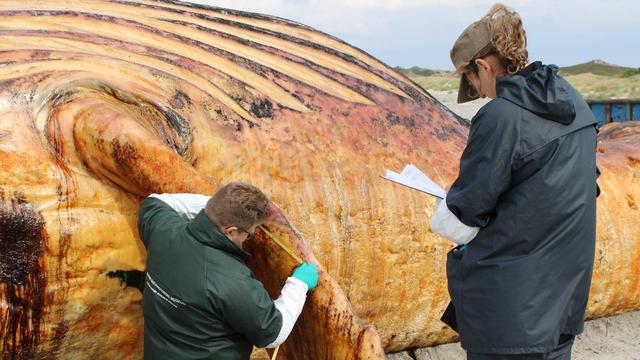
The autopsy of a humpback whale, affectionately known as 'Timmy', washed ashore on the Danish island of Anholt, has concluded. The examination, which lasted late into Thursday evening, revealed that the whale, despite its male nickname, was in fact female. However, experts were unable to pinpoint a definitive cause of death.
Specialized teams, clad in protective suits, began the meticulous process on Thursday afternoon. They first examined and measured the yellowish-brown carcass before using a long knife to release gas from the severely bloated animal. The whale was then opened and dissected, with organs and entrails temporarily laid out around the massive creature. Biologist Charlotte Bie Thøstesen, present at the autopsy, informed reporters late Thursday that a clear cause of death could not be immediately determined. This is not uncommon, according to veterinarian Tim Jensen from the University of Copenhagen, who noted that it is often very difficult to ascertain the cause of death in such decomposed carcasses.
We have taken tissue samples, and they will now be analyzed.
No obvious injuries were visible, though decomposition may have obscured them. While parasites were found, they were not deemed the cause of death. The discovery of the uterus confirmed the whale's female sex. It was also noted that the whale had not been pregnant in recent months. Jensen also reported that a search of the whale's mouth and stomach revealed no nets or other foreign objects. Tissue samples from organs like the kidneys and liver were collected for analysis, with results expected in the coming months. The whale's internal state had been significantly affected by weeks of decomposition, as depicted in images from the scene.
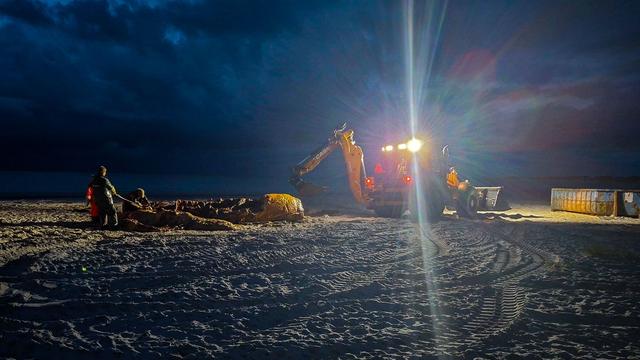
A digger assisted in moving the whale's parts into prepared containers as the team concluded their work and prepared to leave the island Friday morning. Biologist Thøstesen had previously described such procedures as standard but highly valuable for research. The final removal of the whale's remains is scheduled for the coming days.
We do not validate the occupations as an adequate form of mobilization.
DistantNews Editorial
Originally published by Die Zeit in German. Translated, summarized, and contextualized by our editorial team with added local perspective. Read our editorial standards.
More Stories



From Our Blog

What Gets Lost (and Found) When News Is Translated

How the Same Story Looks Different in Different Countries

The Critical Role of Diaspora Media in Global News

What Travellers Should Know About Countries with Restricted Press

A Digital Nomad's Guide to Following Local News
