


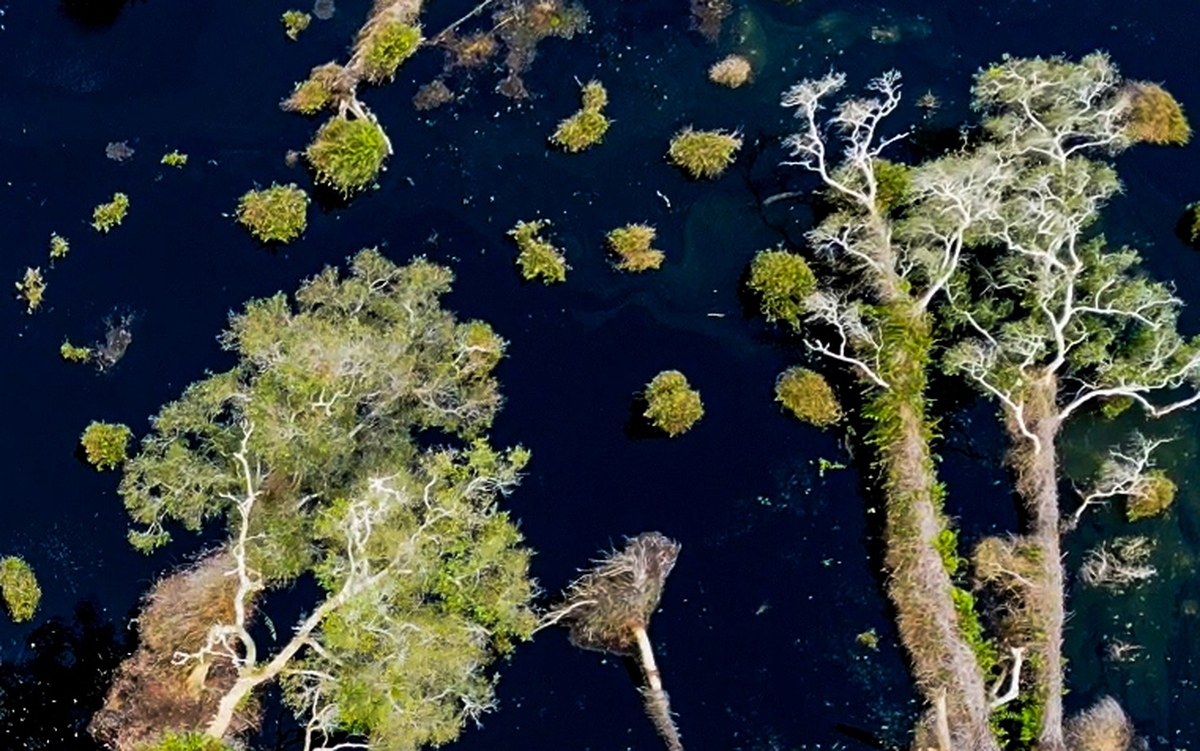
Hundreds of Hectares of Cajeput Forest in U Minh Ha National Park Degrade
Translated from Vietnamese, summarized and contextualized by DistantNews.
At a glance
News
Named sources
Context piece
- Hundreds of hectares of cajeput forest in U Minh Ha National Park in Vietnam's Ca Mau province are severely degraded.
- Causes include old, over-mature trees dying and falling, prolonged waterlogging, and acidic "red water" from peat soil hindering new growth.
- The park, a UNESCO World Biosphere Reserve, is experiencing a natural succession where the cajeput ecosystem is giving way to water-loving vegetation.
Hundreds of hectares of cajeput forest within Vietnam's U Minh Ha National Park are facing severe degradation, with some areas reduced to a few leaning trees surrounded by water. Officials acknowledge the serious decline, though full statistics are still being compiled.
The primary reasons cited for the forest's deterioration include the natural aging of the trees, leading to widespread death and collapse. Compounding this is the prolonged waterlogging in low-lying areas, with some sections submerged for over six months. Additionally, acidic "red water" seeping from the peat soil is inhibiting the natural regeneration of young cajeput trees by blocking sunlight needed for photosynthesis.
This ecological shift is particularly evident in areas with deep peat layers, which become unstable and porous during the dry season, causing ancient trees to lose their footing. The result is a landscape with sparse cajeput trees interspersed with ground cover. An estimated 200 to 300 hectares are currently affected, primarily in sub-zones 1 and 4.
Researchers observe that the loss of the cajeput canopy is initiating a natural succession, favoring the growth of water-based flora and fauna. The native cajeput ecosystem is gradually declining, making way for vegetation like grasses, reeds, and sedges. The park management plans to propose solutions to balance water levels to aid forest recovery and is collaborating with central agencies to assess the situation comprehensively.
U Minh Ha National Park, a vital wetland conservation site in the Mekong Delta and a core zone of the Mui Ca Mau World Biosphere Reserve, is characterized by its unique cajeput forest ecosystem. This area, with over 8,500 hectares in its core zone, is strictly protected as a primary forest, with natural processes allowed to unfold without human intervention.
Although there are not yet complete statistics, a serious forest decline phenomenon has appeared.
DistantNews Editorial
Originally published by Tuổi Trẻ in Vietnamese. Translated, summarized, and contextualized by our editorial team with added local perspective. Read our editorial standards.
More Stories



From Our Blog

What Gets Lost (and Found) When News Is Translated

The Critical Role of Diaspora Media in Global News

What Travellers Should Know About Countries with Restricted Press

A Digital Nomad's Guide to Following Local News

How the Same Story Looks Different in Different Countries
