


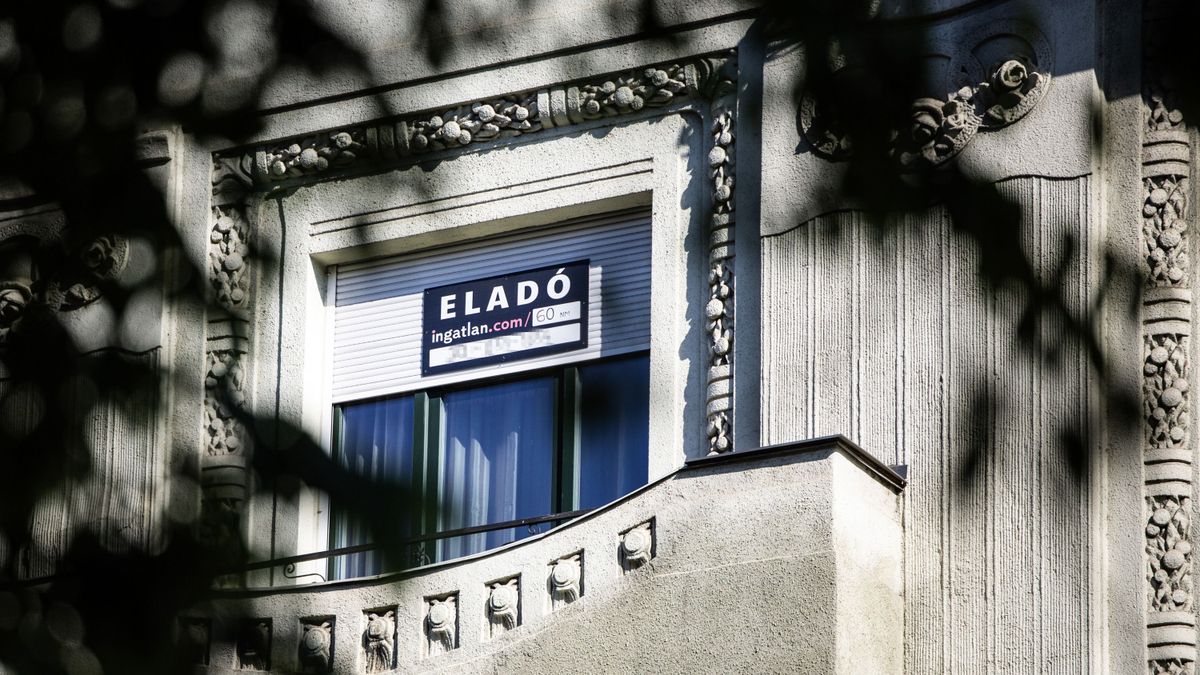
Hungarian Real Estate Market Sees Regional Price Shifts, Apartments Outpace Houses in Budapest
Translated from Hungarian, summarized and contextualized by DistantNews.
TLDR
- Hungary's real estate market has seen a shift, with regions outside Budapest now showing more significant price increases than the capital's apartment sector.
- The type of property and its location influence price changes, with houses in Budapest seeing a slight decrease while apartments rose nearly 40% year-on-year.
- Nationally, apartment prices accelerated in March, with a 2% monthly increase, though the annual price growth rate remains stronger outside Budapest.
The Hungarian real estate market is undergoing a notable transformation, as detailed by insights from ingatlan.com and analyzed by Magyar Nemzet. While Budapest has long been the epicenter of property value, recent trends indicate a dynamic shift, with areas beyond the capital now experiencing more robust price appreciation. This divergence highlights a crucial point for prospective buyers: location and property type are increasingly critical factors in determining value and investment potential.
The price movement and the trends are quite similar.
Across the country, the demand and pricing for different property types have evolved over the past year. In Budapest, a significant trend has been the rise in apartment prices, surging by nearly 40% annually. This contrasts with a slight decrease in house prices, a phenomenon partly explained by the larger average size of houses compared to apartments, even if their per-square-meter cost is lower. This dynamic suggests a growing preference or investment in urban living spaces within the capital.
Beyond Budapest, in villages and county seats, the market presents a more nuanced picture. While house prices have seen modest fluctuations, similar to the national trend, the apartment market in county seats has mirrored Budapest's surge. Notably, even within villages, the price movements vary by property type, with row houses becoming cheaper while traditional mud-brick houses (vályogházak) have seen their values increase substantially. This granular detail underscores the complexity of the Hungarian property market, where broad national trends are shaped by diverse local conditions and property specifics.
In Budapest, overall, house prices have slightly decreased in annual comparison – it should be noted that the price per square meter of houses is smaller than that of apartments, but their floor area is larger. In contrast, apartments (including all types) have significantly increased in price, by almost forty percent in a year.
From a Hungarian perspective, these shifts are not merely economic indicators but reflect changing lifestyle preferences and investment strategies. The increased demand and price growth in regions outside the capital could signal a move towards more affordable living, greater space, or perhaps a response to urban congestion. Magyar Nemzet's reporting emphasizes the importance of understanding these localized trends, offering a vital resource for those navigating this evolving landscape. The data suggests that while national averages provide a general overview, a deeper dive into regional and property-specific data is essential for informed decisions in Hungary's dynamic real estate sector.
In March, the rise in apartment prices accelerated again in Hungary: according to the ingatlan.com apartment price index, prices nationwide increased by 2 percent in monthly comparison, which means a significant acceleration compared to the 0.8 percent rate in February.
DistantNews Editorial
Originally published by Magyar Nemzet in Hungarian. Translated, summarized, and contextualized by our editorial team with added local perspective. Read our editorial standards.
More Stories

From Our Blog

Countries Without a Free Press: What You Need to Know

What Press Freedom Means for the News You Read

What Gets Lost (and Found) When News Is Translated

The Critical Role of Diaspora Media in Global News

What Travellers Should Know About Countries with Restricted Press
