



IAEA chief warns of serious proliferation concern over Iran’s nuclear program
Translated from English and summarized by DistantNews. Read the original for the full story.
At a glance
News
Named sources
Ongoing story
- IAEA Director General Rafael Grossi said Iran has not provided information about the status of its nuclear facilities or material, preventing the agency from carrying out safeguards verification.
- Grossi said the agency has lost continuity of knowledge over previously declared inventories of uranium enriched up to 60% since military attacks in June 2025.
- He urged Iran to resume constructive engagement and said diplomacy remains essential to addressing the nuclear dispute.
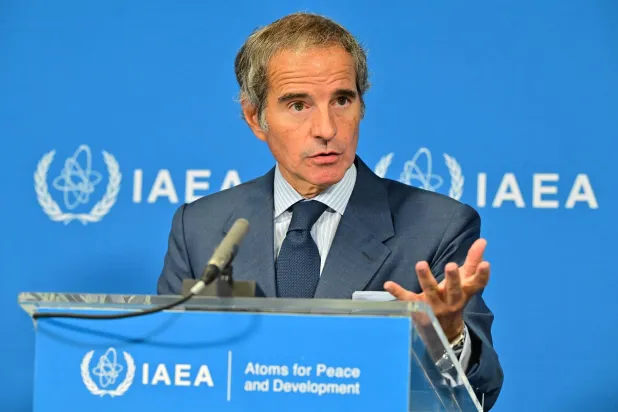
The International Atomic Energy Agency says it has been left without information about Iran’s nuclear facilities and material, creating what Director General Rafael Grossi called a serious proliferation concern.
The best, shortest way for a positive outcome is for Iran to engage with us.
Speaking after the opening of the IAEA Board of Governors’ quarterly meeting in Vienna, Grossi said the agency had received no information from Iran about its declared nuclear material or facilities. It also has not been allowed access to those sites for in-field verification, leaving it unable to fulfill its safeguards responsibilities under the Nuclear Non-Proliferation Treaty.
“The best, shortest way for a positive outcome is for Iran to engage with us,” Grossi told reporters. But he added that “there’s no engagement” at present, saying Tehran has indicated it will not cooperate until a broader political agreement is reached. Grossi said the IAEA did not accept that position because Iran’s obligations under the treaty do not disappear.
there's no engagement
Grossi said the agency had lost continuity of knowledge for more than a year over previously declared inventories of low-enriched uranium and highly enriched uranium containing up to 60% uranium-235 at facilities affected by military attacks in June 2025. He said Iran had still not supplied information about damage to the sites or changes to its nuclear inventory after the attacks.
We do not subscribe to this logic.
He urged Tehran to work constructively with the agency so safeguards could be fully and effectively implemented. Grossi also called a return to diplomacy and negotiations imperative, saying the IAEA was ready to support those efforts. He rejected claims by Iran, Russia and China that inspector safety made verification impossible, describing safety as an obstacle that could be overcome.
The situation regarding Iran’s nuclear program has implications for the global nonproliferation regime.
About this summary
Originally published by Asharq Al-Awsat in English. Translated, summarized, and contextualized automatically by DistantNews, with a note on how the source frames the story. Not individually reviewed before publishing. How this works.
More Stories
From Our Blog

News in Translation: What Gets Lost, and How We Keep the Framing

Diaspora Media: How Communities Follow News From Home

Traveling Where the Press Is Not Free: How to Read the News There

The Digital Nomad's Guide to Local News

The Same Story, Different Countries: How Coverage Changes at the Border
