

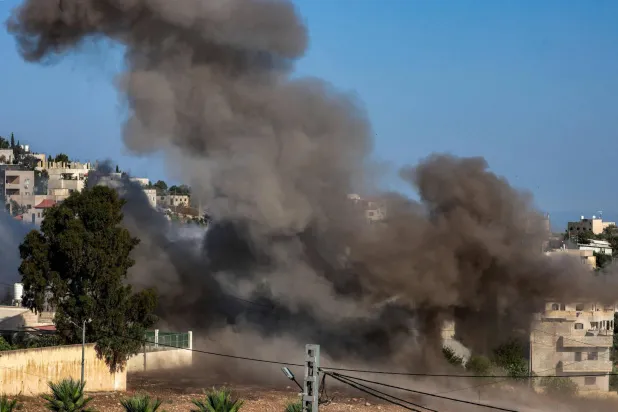

IAEA to Remove Nuclear Material from Secret Syrian Site After Diplomatic Deal
Translated from English, summarized and contextualized by DistantNews.
At a glance
News
Named sources
Outcome reported
- The IAEA is set to remove nuclear material from a clandestine site in Syria following a diplomatic agreement involving the US and Syria.
- The material, stored at "Site 99," is residue from the Assad regime's past nuclear program and could potentially be used for a dirty bomb.
- The resolution of this issue is seen as validating the Trump administration's approach to Syria and aiding the new Syrian government's rehabilitation efforts.
The International Atomic Energy Agency (IAEA) is preparing to remove nuclear material from a secret site in Syria, a move facilitated by diplomatic understandings reached between the Trump administration, Syria, and Israel. This development addresses concerns over material linked to the Assad regime's former clandestine nuclear activities.
The US official said the material included yellowcake, a powder from uranium ore that can later be further processed and eventually enriched as part of a nuclear fuel cycle.
According to Israeli and US officials, the material is stored at a facility known as "Site 99." It consists of residue, including yellowcake, from the Al-Kibar nuclear reactor project. While not sufficient for a nuclear weapon, officials stated it could be used to construct a "dirty bomb" – a device that disperses radioactive material using conventional explosives.
The resolution of this sensitive issue involved months of behind-the-scenes diplomacy. US officials indicated that the successful negotiation validates President Trump's strategy in Syria, leveraging close ties with the new Syrian government to avert a potential crisis. The agreement allows the IAEA access to secure and remove the material.
While the material at the site can't be used for a nuclear weapon, it can be used for a “dirty bomb” - a conventional explosive device that disperses radioactive material to contaminate an area rather than produce a nuclear explosion.
Following Israel's 2007 bombing of the Al-Kibar reactor, Syria's nuclear program was largely dismantled, but research and storage sites remained. After the fall of the Assad regime, the IAEA engaged with the new Syrian government to address these inherited issues. Syrian officials are reportedly eager to resolve such sensitive files, including nuclear and chemical weapons, to improve the country's international standing and facilitate rehabilitation efforts.
Syria's new government is eager to resolve sensitive issues inherited from the Assad regime, including its nuclear and chemical weapons files, that could damage its efforts to rehabilitate the country's international standing.
DistantNews Editorial
Originally published by Asharq Al-Awsat in English. Translated, summarized, and contextualized by our editorial team with added local perspective. Read our editorial standards.
More Stories

From Our Blog

What Gets Lost (and Found) When News Is Translated

The Critical Role of Diaspora Media in Global News

What Travellers Should Know About Countries with Restricted Press

A Digital Nomad's Guide to Following Local News

How the Same Story Looks Different in Different Countries
