


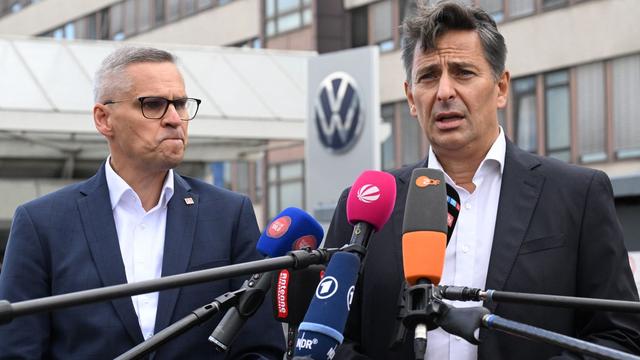
IG Metall prepares for confrontation over Volkswagen’s Hanover plant
Translated from German and summarized by DistantNews. Read the original for the full story.
At a glance
Newswire
Named sources
Ongoing story
- IG Metall threatened resistance to possible cuts at Volkswagen’s Hanover plant after a non-public meeting attended by about 5,500 workers.
- The union demanded implementation of a 2024 agreement covering job security through 2030, investment and future prospects for sites.
- Volkswagen said it needed to reduce capacity for about 500,000 vehicles across Europe and could not economically keep all German plants fully occupied.
The dispute over Volkswagen’s Hanover plant has moved closer to open confrontation, with IG Metall warning that workers will resist possible cuts. About 5,500 employees attended a non-public meeting at the commercial-vehicle factory, according to the works council.
“The employees have delivered and continue to deliver, and now it is the board’s turn to deliver,” said IG Metall district head Thorsten Gröger. He demanded viable long-term prospects for the sites and said a 2024 agreement must be implemented. The agreement includes job security through 2030, investment in sites and products, and concessions by employees, according to the union.
The employees have delivered and continue to deliver, and now it is the board’s turn to deliver.
Works council chief Stavros Christidis said workers wanted to fight for their jobs. He reported applause and boos directed at Volkswagen’s board and accused the company of strategic mistakes and inadequate communication. For Hanover, he called for the commercial vehicle to be built at the site again after 2031, as contractually agreed.
We do not seek conflict, but if the board remains on what we consider the wrong course, we will not shy away from it.
Volkswagen finance chief Arno Antlitz said the company did not have enough volume to keep all European plants fully utilized. From today’s perspective, he said, four German sites had no economically viable successor production when current products expire in the early 2030s, including Hanover. Volkswagen needs to remove capacity for about 500,000 vehicles across Europe, he said, or face a lasting annual cost disadvantage of about 1.5 billion euros.
Antlitz cited U.S. tariffs, falling sales in China and growing competition from Chinese manufacturers in Europe. He said Hanover’s factory costs remained significantly higher than at other European plants. Plant closures, he added, were Volkswagen’s most expensive and last resort, while all sites should receive an equal chance to develop new employment and industrial production prospects.
Plant closures are Volkswagen’s most expensive and last resort.
About this summary
Originally published by Die Zeit in German. Translated, summarized, and contextualized automatically by DistantNews, with a note on how the source frames the story. Not individually reviewed before publishing. How this works.
More Stories

From Our Blog

What Gets Lost (and Found) When News Is Translated

How the Same Story Looks Different in Different Countries

The Critical Role of Diaspora Media in Global News

What Travellers Should Know About Countries with Restricted Press

A Digital Nomad's Guide to Following Local News
