


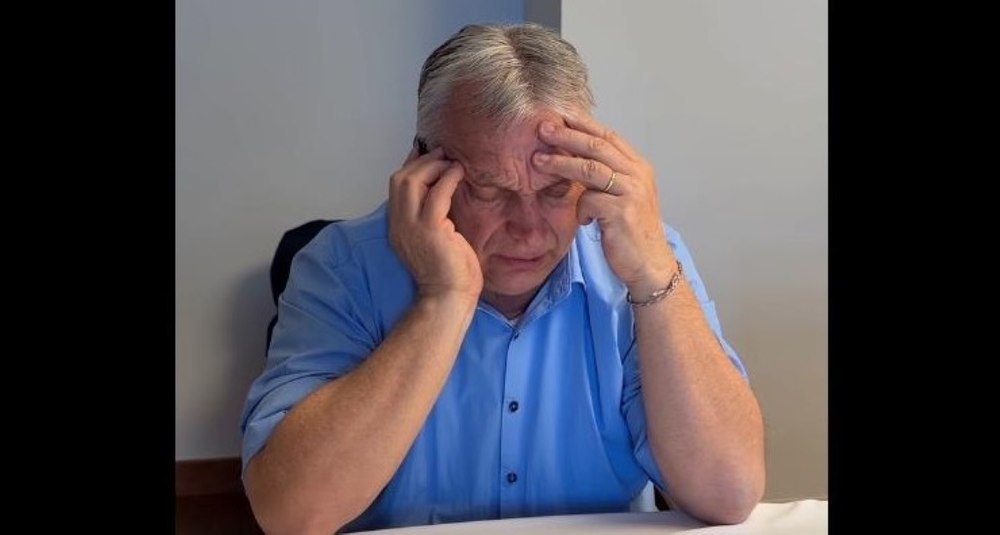
Immediate Consequences of Orbán's Defeat for Bucharest Politics
Translated from Romanian, summarized and contextualized by DistantNews.
TLDR
- The defeat of Viktor Orbán and FIDESZ in Hungary has immediate consequences for Romanian politics, potentially opening avenues for disguised pro-Russian sentiment within the EU.
- A government crisis in Romania, possibly instigated by the PSD, could have devastating electoral consequences for them and pave the way for a new political movement.
- Romania risks becoming an unstable factor in the region if political instability becomes the norm.
The recent political upheaval in Hungary, marked by the significant defeat of Viktor Orbán and his FIDESZ party, is sending shockwaves far beyond Budapest, with immediate and profound implications for Romania's political landscape and its standing within the European Union. This is not merely a regional ripple effect; it's a seismic shift that could reshape the very foundations of Romanian politics.
The defeat of Orbán's influence in Bucharest creates a vacuum, a political space that could be exploited by forces seeking to advance a veiled pro-Russian agenda, cleverly disguised within a discourse of European values and national sovereignty. This presents a dangerous scenario where internal political maneuvering in Romania could become a tool with geopolitical reverberations, potentially undermining the EU's strategic coherence from within.
Furthermore, the article speculates on the potential for a government crisis in Romania, potentially orchestrated by the PSD. Such a crisis, especially if it leads to the removal of Prime Minister Ilie Bolojan, could trigger a political 'tsunami,' with devastating consequences for the PSD in the upcoming electoral cycles. This could, in turn, catalyze the emergence of a significant political movement, perhaps centered around the PNL and allied with USR and other civic groups, advocating for radical change: the elimination of privileges, the correction of systemic injustices, and a deep reform of the state.
In this volatile context, Ilie Bolojan is positioned as a potential reformist leader, an honest and authentic figure capable of harnessing public discontent and forging a solid political alternative. This scenario transcends a mere electoral competition; it suggests a fundamental reset of the political paradigm, driven by national mobilization and a discourse of rupture, encapsulated by slogans like "Now or never," "Enough," and "This can't go on."
However, Romania also faces the risk of becoming the "new problem of the East" if political instability becomes endemic and opportunistic alliances with extremist factions replace responsible governance. Without a clear pro-European direction, Bucharest's external credibility could erode rapidly, diminishing its capacity to act as a stabilizing force in the region. This would transform Romania from a reliable partner into a source of uncertainty. In this light, Nicușor Dan's political maneuvering is scrutinized, with a warning that strategic ambiguity and flirtations with sovereignist and anti-reformist elements are no longer sustainable. His stance towards Ilie Bolojan, beyond general support for a pro-European coalition, is crucial for maintaining his political capital and his perception in Brussels.
DistantNews Editorial
Originally published by Adevărul in Romanian. Translated, summarized, and contextualized by our editorial team with added local perspective. Read our editorial standards.
More Stories


From Our Blog

What Gets Lost (and Found) When News Is Translated

The Critical Role of Diaspora Media in Global News

What Travellers Should Know About Countries with Restricted Press

A Digital Nomad's Guide to Following Local News

How the Same Story Looks Different in Different Countries
