


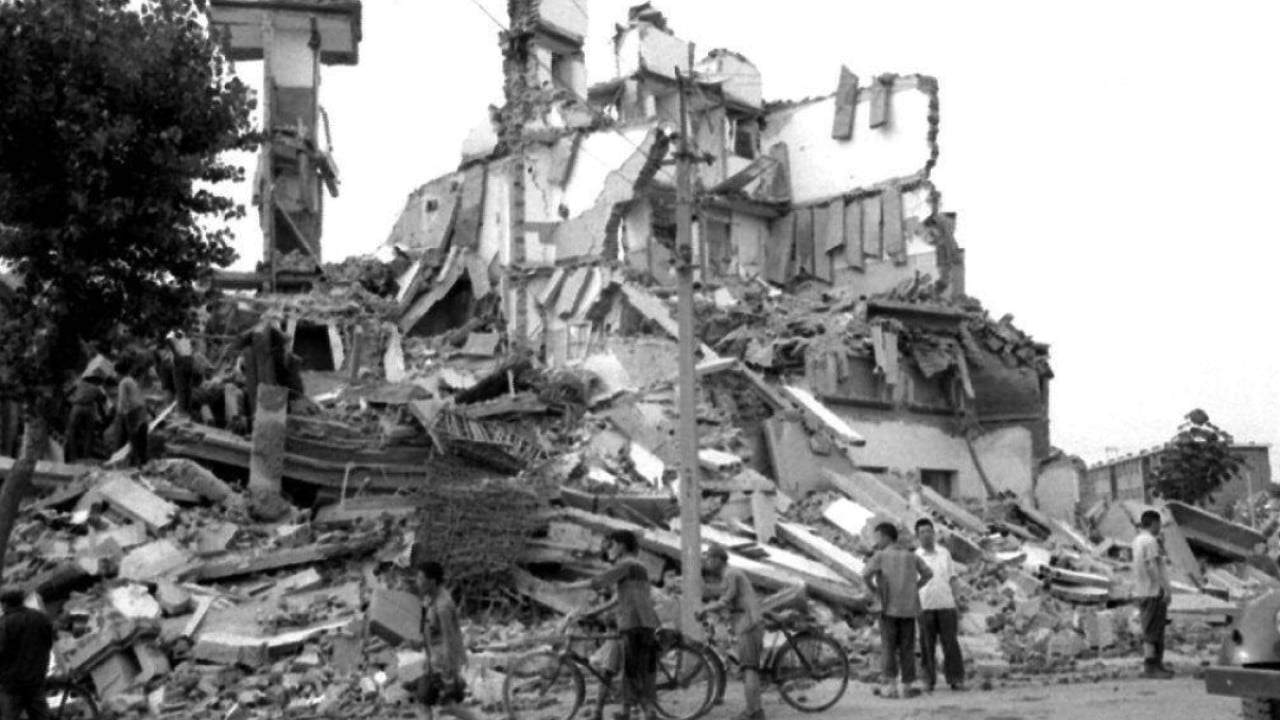
In 1976, earthquake in China’s Tangshan kills over 240,000 people – SCMP archive
Summarized and contextualized by DistantNews.
At a glance
News
Sources not specified
Outcome reported
- A powerful earthquake struck northern China's Hopei Province on July 28, 1976, causing widespread damage and feared heavy casualties.
- The initial tremor was followed by a strong aftershock 16 hours later, exacerbating the destruction in the industrial region.
- Foreign nationals, including a Japanese businessman and a Frenchwoman, were reported among the casualties in Tangshan, near the epicenter.
Northern China's industrial belt was struck by a powerful earthquake early on July 28, 1976, raising fears of extensive casualties and severe damage to infrastructure. The tremor, the strongest in 12 years, hit Hopei Province and was followed by a series of aftershocks. Sixteen hours after the initial quake, an aftershock of nearly equal intensity struck the same area, intensifying the destruction and potential loss of life.
Confirmed dead was a Japanese businessman in Tangshan, which was close to the epicentre of the tremor, about 90 miles east-southeast of Peking. Six other Japanese were injured and were receiving treatment in a Peking hospital last night.
Tangshan, a city located approximately 90 miles east-southeast of Peking and close to the epicenter, is believed to have suffered significant impact. A Japanese businessman in Tangshan was confirmed dead, and six other Japanese nationals were injured and receiving treatment in a Peking hospital. French sources in Peking reported that a Frenchwoman, around 30 years old, was killed in the same city.
A Frenchwoman aged about 30 was reported by French sources in Peking to have been killed in the same city.
Former Australian Prime Minister Gough Whitlam, who had recently visited Tientsin, told reporters in Peking that his Chinese hosts had informed him of some deaths in Tientsin. He also noted what appeared to be "an awful lot of damage" in that municipality. The full extent of the devastation and casualties across the region remained unclear in the immediate aftermath of the disaster.
And the visiting former Australian Prime Minister, Mr Gough Whitlam, who spent a night in Tientsin, told reporters in Peking before flying to Japan last night that he had been told by his Chinese hosts that there were some dead in Tientsin. There also appeared to be “an awful lot of damage” in that municipality, he added.
DistantNews Editorial
Originally published by South China Morning Post. Summarized and contextualized by our editorial team with added local perspective. Read our editorial standards.
More Stories

From Our Blog

Countries Without a Free Press: What You Need to Know

What Press Freedom Means for the News You Read

What Gets Lost (and Found) When News Is Translated

The Critical Role of Diaspora Media in Global News

What Travellers Should Know About Countries with Restricted Press
