


In Bhotekoshi’s Wake, Experts and Activists Question AI’s Environmental Cost
Translated from English and summarized by DistantNews. Read the original for the full story.
At a glance
Analysis
Named sources
Context piece
- Nepal’s Bhotekoshi flash floods have prompted debate about the Himalayan climate crisis and the environmental footprint of artificial intelligence.
- Experts say data centres consume large amounts of electricity and fresh water, but reject unsupported claims that a Chinese underground AI facility directly caused the floods.
- As Nepal considers establishing data centres, specialists urge authorities to assess their environmental costs and develop technology for disaster response.
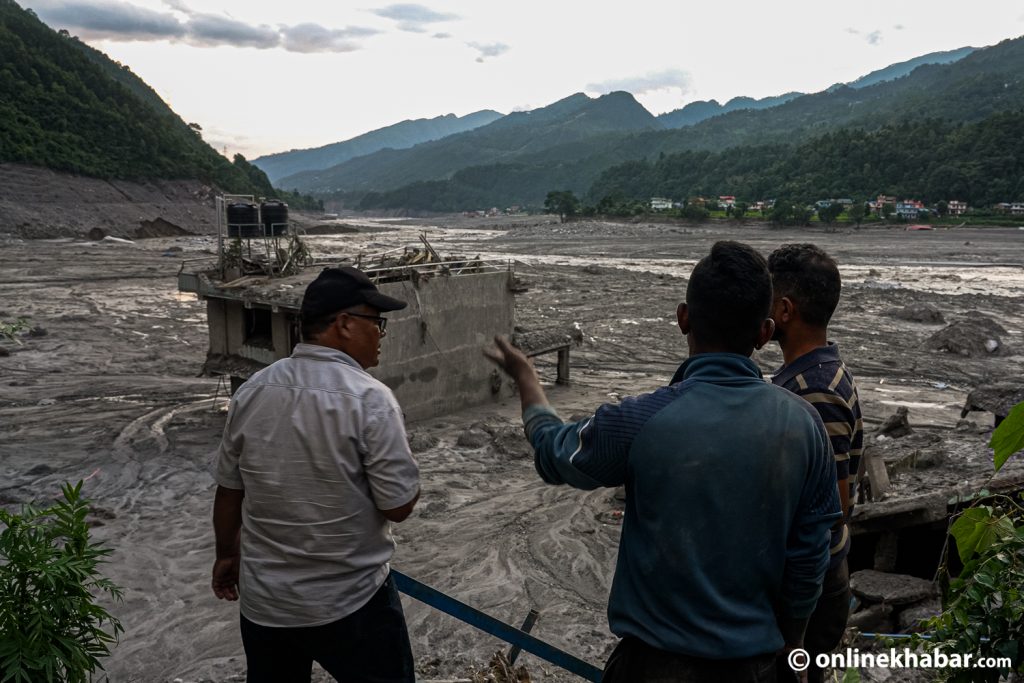
The devastation left by the August 26 Bhotekoshi flash floods has opened an unlikely debate in Nepal: what responsibility does modern technology bear for the environmental pressures facing the Himalayas?
The floods began after a massive glacial bedrock collapse dammed the Lhende river upstream. When the blockage suddenly burst, water tore through settlements downstream, sweeping away homes, roads and power projects. The scale of the destruction led experts and social media users in Nepal and abroad to connect the disaster to the wider climate crisis, and indirectly to artificial intelligence’s growing environmental footprint.
They point to the vast quantities of electricity and fresh water required to operate data centres. Mahesh Kushwaha, an expert in diplomacy and international relations, shared an AI-generated infographic on Facebook to make the point sarcastically. It traced a grim chain from rising global demand for AI to greater data-centre consumption, increased carbon emissions, warming in high-altitude areas, faster glacial melting, unstable mountain terrain and, ultimately, catastrophic flash floods.
Whether it is agentic AI [one that can act autonomously] or any other form, if technology is truly useful, now is the appropriate time to deploy it on the ground for real-time data analysis and rescue operations.
Development expert Ashutosh Tiwari also questioned AI’s absence during disasters. “Whether it is agentic AI [one that can act autonomously] or any other form, if technology is truly useful, now is the appropriate time to deploy it on the ground for real-time data analysis and rescue operations,” he said. Tiwari argued that Nepal’s AI discussions often remain limited to seminars on subjects such as agriculture, transportation and child care instead of producing practical crisis tools.
Online rumours have gone further, claiming that China built an underground AI server farm beneath a glacier and that heat from the facility melted the ice. Experts reject that claim as unsubstantiated. Journalist Karin Kloosterman wrote in Green Prophet that data-centre energy use and greenhouse-gas emissions contribute to global warming, but the specific allegations about Chinese data centres causing the flood are “purely rumours.” On X, Nigerian user Oyogbolahan Raphael questioned whether the pursuit of robots and technological advancement is coming at the expense of environmental stability. The debate carries added weight as Nepal considers setting up data centres of its own.
purely rumours
About this summary
Originally published by Kathmandu Post in English. Translated, summarized, and contextualized automatically by DistantNews, with a note on how the source frames the story. Not individually reviewed before publishing. How this works.
More Stories


From Our Blog

What Gets Lost (and Found) When News Is Translated

The Critical Role of Diaspora Media in Global News

What Travellers Should Know About Countries with Restricted Press

A Digital Nomad's Guide to Following Local News

How the Same Story Looks Different in Different Countries
