


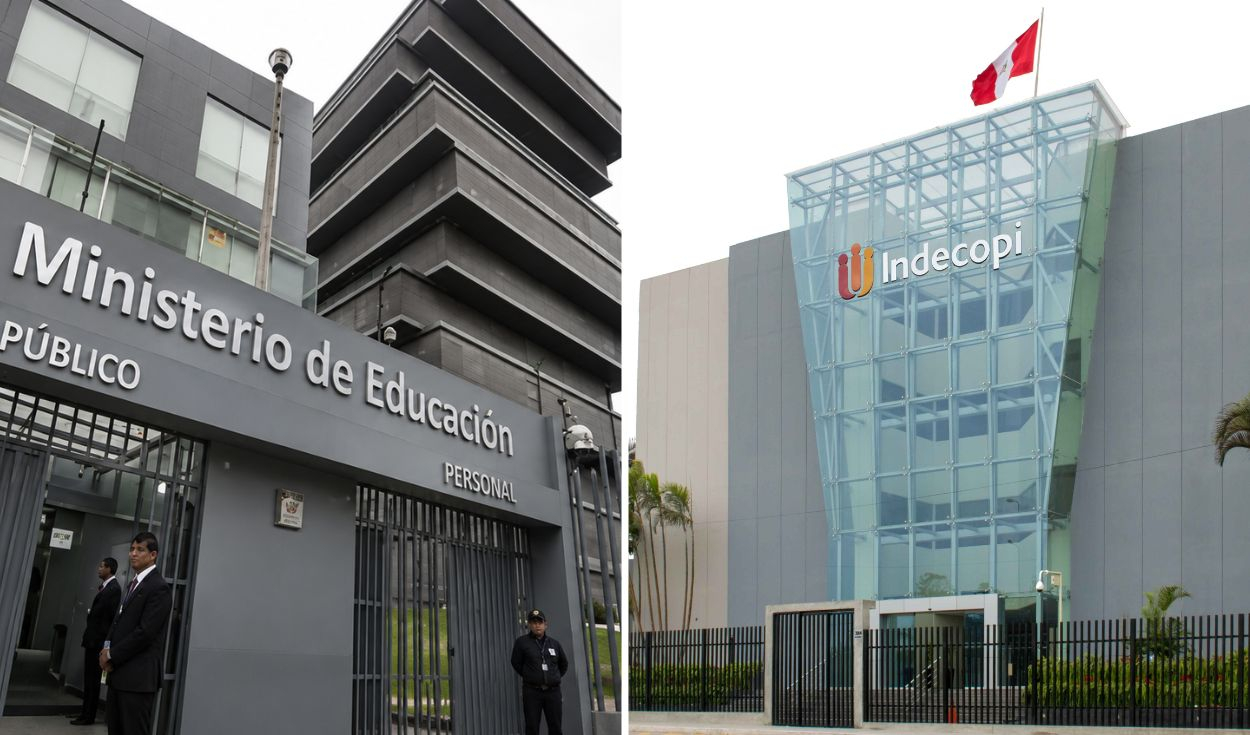
Indecopi Declares Ministry of Education's Seven-Year Regulatory Omission Illegal
Translated from Spanish, summarized and contextualized by DistantNews.
At a glance
News
Named sources
Outcome reported
- Peru's National Institute for the Defense of Competition and Intellectual Property (Indecopi) declared an omission by the Ministry of Education illegal.
- The ministry failed for over seven years to approve quality standards for private Technical-Productive Education Centers (CETPROs).
- This ruling benefits all private CETPROs nationwide, aiming to provide clearer regulations for their operations.
Lima, Peru – Peru's consumer protection agency, Indecopi, has ruled that the Ministry of Education committed an illegal omission by failing to approve necessary quality standards for private Technical-Productive Education Centers (CETPROs) for over seven years. The decision aims to remove bureaucratic barriers hindering these educational institutions.
The Ministry of Education incurred an illegal omission by not approving for more than seven years the necessary regulations to establish the basic quality conditions of private Technical-Productive Education Centers (CETPROs).
The Specialized Chamber for the Elimination of Bureaucratic Barriers confirmed Indecopi's previous findings. The lack of clear regulations created difficulties for private CETPROs in procedures such as institutional licensing, opening new branches, and authorizing specific educational programs. This uncertainty affected predictability in administrative processes and created ambiguity regarding compliance requirements.
This situation affected the predictability of procedures and generated uncertainty about the requirements these institutions had to meet.
Indecopi's analysis revealed that while the General Education Law required CETPROs to submit a sworn statement on quality standards, the Ministry of Education failed to issue the necessary guidelines, technical norms, and implementation timelines. Consequently, private centers lacked clear parameters to meet the government's expectations, violating principles of administrative procedure and impacting the freedom of private enterprise.
The resolution orders the general inapplicability of this bureaucratic barrier, which means the measure applies to all private CETPROs in the country and not just to a specific case.
The resolution mandates the general application of this decision, meaning it extends to all private CETPROs across Peru, not just the specific case that prompted the review. Indecopi clarified that its ruling does not usurp the Ministry of Education's regulatory functions but reaffirms the ministry's obligation to issue the pending regulations. This action is expected to provide greater legal certainty and predictability for educational institutions.
Its decision does not replace the regulatory functions of the Ministry of Education. On the contrary, it seeks to reaffirm the entity's obligation to issue the pending provisions so that the administered parties clearly know the applicable rules for their procedures.
DistantNews Editorial
Originally published by La República in Spanish. Translated, summarized, and contextualized by our editorial team with added local perspective. Read our editorial standards.
More Stories



From Our Blog

What Gets Lost (and Found) When News Is Translated

The Critical Role of Diaspora Media in Global News

What Travellers Should Know About Countries with Restricted Press

A Digital Nomad's Guide to Following Local News

How the Same Story Looks Different in Different Countries
