

India Urges UN Security Council to Mitigate Humanitarian Fallout of Conflicts
Translated from English, summarized and contextualized by DistantNews.
At a glance
News
Named sources
Context piece
- India urged the UN Security Council to prioritize mitigating the humanitarian impact of conflicts, which pose a severe threat to global food security.
- Ambassador P. Harish stated that regional conflicts create ripple effects, disrupting energy, fertilizer, transport, and trade, disproportionately burdening developing nations.
- He emphasized that while national governments are primarily responsible for food security, the council must ensure its measures, including sanctions, do not hinder humanitarian aid or legitimate trade.
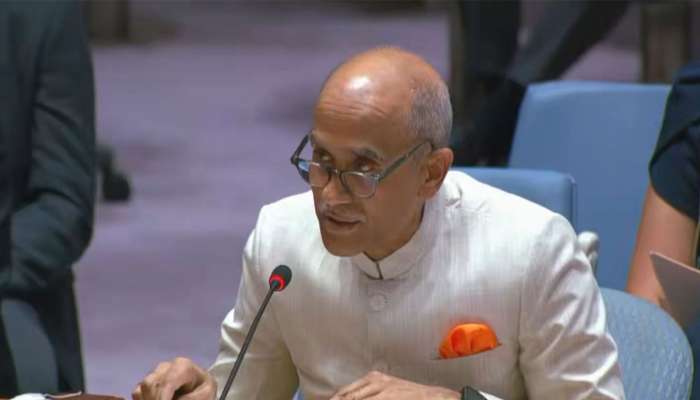
India has called for immediate action from the United Nations Security Council to address the humanitarian consequences of conflicts, highlighting their severe threat to global food security. Addressing a Council open debate on "Food Under Fire," India's Permanent Representative P. Harish asserted that conflicts increasingly generate widespread ripple effects far beyond their immediate locations.
Today's conflicts increasingly generate ripple effects far beyond the immediate theatre of hostilities.
Harish explained that disruptions to energy markets, fertilizer supplies, maritime transport, humanitarian logistics, and agricultural trade demonstrate how regional conflicts can jeopardize food security worldwide. He noted that developing nations, often heavily reliant on imports, bear a disproportionate burden from these disruptions. Therefore, he stressed, the Council's immediate priority must be to facilitate safe, rapid, and unimpeded humanitarian access and support de-confliction arrangements.
Furthermore, the Indian envoy urged the Security Council to ensure its measures, including sanctions, do not inadvertently impede humanitarian assistance or legitimate food and agricultural trade. However, Harish also underlined that building resilient, food-secure societies remains primarily the responsibility of national governments, with support from the UN development system and Rome-based agencies, rather than the Security Council.
Disruptions to energy markets, fertiliser supplies, maritime transport, humanitarian logistics and agricultural trade have demonstrated how regional conflicts can threaten food security across the world.
Highlighting India's domestic achievements, Harish pointed to sustained investments that have positioned New Delhi as a key contributor to global food stability. He cited the National Food Security Act, which provides statutory entitlement to subsidized food grains, and direct benefit transfers to over 110 million farming households under the PM-KISAN program, strengthening the economic resilience of small producers. India's promotion of the International Year of Millets in 2023 also galvanized global focus on climate-resilient crops as a sustainable model for diversified food security.
The Council's immediate priority should be to mitigate the humanitarian consequences of conflict. This requires facilitating safe, rapid and unimpeded humanitarian access, supporting de-confliction arrangements.
While discussing the risks to food security from disruptions in commercial shipping lanes and maritime trade routes, Harish did not explicitly name specific conflict zones. In contrast, UN Secretary-General Antonio Guterres directly identified the Black Sea, the Strait of Hormuz, and the Red Sea as major geopolitical flashpoints jeopardizing global food supplies, noting the impact of the war in Ukraine on grain and energy exports.
The war in Ukraine is affecting grain and energy exports in the Black Sea, both from Ukraine and Russia.
DistantNews Editorial
Originally published by Times of Oman in English. Translated, summarized, and contextualized by our editorial team with added local perspective. Read our editorial standards.
More Stories

From Our Blog

What Gets Lost (and Found) When News Is Translated

The Critical Role of Diaspora Media in Global News

What Travellers Should Know About Countries with Restricted Press

A Digital Nomad's Guide to Following Local News

How the Same Story Looks Different in Different Countries
