

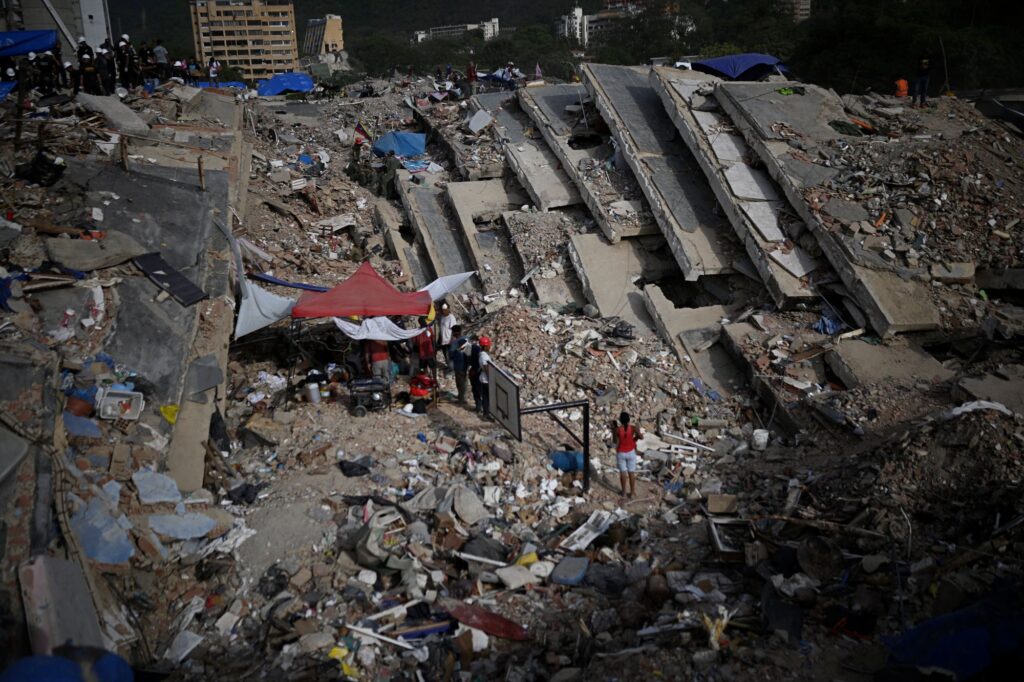

Indonesia earthquake aftershocks could last years, Malaysia's MetMalaysia warns
Translated from Malay, summarized and contextualized by DistantNews.
At a glance
News
Named sources
Context piece
- Aftershocks from Indonesia's recent earthquake could persist for days, weeks, or even years, according to Malaysia's Meteorological Department.
- The strength of tremors felt in Malaysia depends on the earthquake's magnitude, distance, depth, and local soil conditions.
- Malaysia's Meteorological Department monitors seismic activity and tsunami threats 24/7, advising the public to rely on official channels for information.
Aftershocks from a significant earthquake in Indonesia could continue for an extended period, potentially lasting for days, weeks, or even years, according to Malaysia's Meteorological Department (MetMalaysia).
Dr. Mohd Hisham Mohd Anip, Director-General of MetMalaysia, explained that strong earthquakes are typically followed by a series of aftershocks in the same fault zone until seismic activity stabilizes. These aftershocks are expected to be of lower magnitude than the main quake. He cited the example of a 7.9 magnitude earthquake in southern Mindanao, Philippines, on June 8, 2026, which continues to produce aftershocks to this day.
Gecrans from major earthquakes in Sumatra, the Philippines, and Sulawesi can often be felt in various parts of Malaysia, particularly on the west coast of Peninsular Malaysia and eastern Sabah. The intensity of these tremors in Malaysia is influenced by several factors, including the earthquake's magnitude, its distance and depth, and the soil conditions in the affected areas. Shallower earthquakes, less than 100 kilometers deep, generally produce stronger tremors than deeper ones. Soft soil can also amplify seismic waves.
MetMalaysia has a history of recording tremors in eastern Sabah due to earthquakes in Sulawesi, Indonesia, and the Philippines. However, Dr. Mohd Hisham stressed that earthquakes cannot be predicted in terms of their exact location, strength, or timing. The department maintains its National Early Warning System for Earthquakes and Tsunamis (SAATNM) on high alert, operating 24/7 to monitor seismic activity and potential tsunami threats to the country. The public is advised to remain calm and obtain information only from official MetMalaysia channels.
DistantNews Editorial
Originally published by Utusan Malaysia in Malay. Translated, summarized, and contextualized by our editorial team with added local perspective. Read our editorial standards.
More Stories


From Our Blog

What Gets Lost (and Found) When News Is Translated

The Critical Role of Diaspora Media in Global News

What Travellers Should Know About Countries with Restricted Press

A Digital Nomad's Guide to Following Local News

How the Same Story Looks Different in Different Countries
