



Indonesia’s disaster agency accelerates recovery from four crises, from Sumatra floods to Anak Krakatau
Translated from Indonesian and summarized by DistantNews. Read the original for the full story.
At a glance
News
Official statement
Ongoing story
- Indonesia’s disaster agency is accelerating recovery efforts after an earthquake in Nusa Tenggara, the Anak Krakatau eruption, forest and land fires, and flash floods in Sumatra.
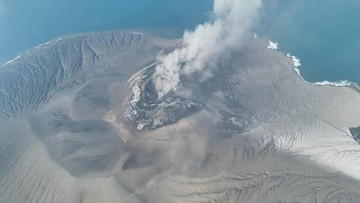
- No deaths had been reported from the eruption, and the Geological Agency said Anak Krakatau’s current morphology did not indicate a collapse large enough to trigger a tsunami like the one in 2018.
- BNPB reported 98,986 damaged homes after the Nusa Tenggara earthquake and 72,009.10 hectares of burned land in six priority provinces, with 939.45 hectares still burning as of Sept. 6.
Indonesia’s National Disaster Management Agency is concentrating on speeding recovery across four emergencies: the Nusa Tenggara earthquake, the Anak Krakatau eruption, forest and land fires, and flash floods in Sumatra. BNPB chief Lt. Gen. Suharyanto said the agency had sent an advance team to monitor Anak Krakatau directly.
No deaths had been reported from the eruption. None of the affected district or provincial governments had declared an emergency status, Suharyanto said, but the absence of such a declaration had not stopped aid deliveries. BNPB was communicating continuously with the head of the Meteorology, Climatology and Geophysical Agency and receiving direct guidance from the president.
We also continue communicating minute by minute with the head of BMKG, while receiving direct guidance from the president.
The agency prepared a hybrid weather-modification operation to help disperse volcanic ash. When clouds are available, officials stimulate rainfall. When clouds are absent, they spray water mist to break up and bind ash particles and hazardous pollutants. Suharyanto said the operation, running from Tuesday through the night, was expected to accelerate the ash’s removal.
The Geological Agency also said its latest morphological assessment found that Anak Krakatau was not currently at risk of collapsing on a scale capable of triggering a tsunami like the 2018 event.
It is hoped that the weather-modification operation carried out from today until tonight can help accelerate the dispersal of volcanic ash.
For the Nusa Tenggara earthquake, BNPB was verifying damage reports. Preliminary data counted 98,986 damaged homes at varying levels. The agency planned stimulus payments of 15 million rupiah for lightly damaged homes and 30 million rupiah for moderately damaged homes. Severely damaged homes would receive temporary accommodation or housing-waiting funds before replacement type-36 homes were built. BNPB also set up emergency tents as temporary schools so children could continue attending classes.
Forest and land fires remained a major challenge. By Sept. 6, fires had affected 72,009.10 hectares across six priority provinces, with 939.45 hectares still unextinguished. Suharyanto cited difficult terrain, access, weather and water availability as the main obstacles. Fires in peatlands can persist below the surface, requiring further cooling and monitoring. The supplied article ends while describing the need for water-bombing support in areas that are difficult to reach by land.
The main obstacles are the nature of the terrain, access, weather and the availability of water sources.
About this summary
Originally published by CNN Indonesia in Indonesian. Translated, summarized, and contextualized automatically by DistantNews, with a note on how the source frames the story. Not individually reviewed before publishing. How this works.
More Stories


From Our Blog

News in Translation: What Gets Lost, and How We Keep the Framing

Diaspora Media: How Communities Follow News From Home

Traveling Where the Press Is Not Free: How to Read the News There

The Digital Nomad's Guide to Local News

The Same Story, Different Countries: How Coverage Changes at the Border
