

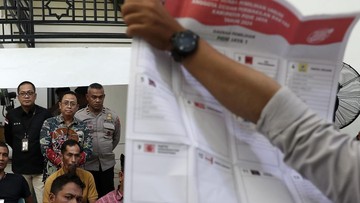

Indonesian Civil Society Criticizes State as 'Electoral Machine' After Film Screening
Translated from Indonesian and summarized by DistantNews. Read the original for the full story.
At a glance
News
Named sources
Context piece
- Indonesian civil society figures criticize the state for becoming an "electoral machine" rather than a tool for prosperity and justice.
- They argue that public policies and appointments are manipulated for electoral gain, not public service, citing environmental damage and budget allocation as examples.
- High political financing costs are seen as driving exploitative practices, where politicians repay donors with favors, further corrupting the system.
A recent screening of the film “Pesta Babi” (Pig Feast) in Jakarta served as a backdrop for a sharp critique from Indonesian civil society figures regarding the current state of governance. Their central argument is a damning one: the state, which should be an instrument for distributing prosperity and ensuring justice for all its citizens, has devolved into a mere "electoral machine." This transformation, they contend, is driven by the insatiable political ambitions and greed of the elite, who manipulate public policy and official appointments to serve electoral interests rather than the public good.
There is an acute symptom, the state was originally a tool for distributing prosperity and creating justice, reduced to an electoral machine.
Sudirman Said, head of the Institut Harkat Negeri, articulated this concern, highlighting the "acute symptoms" of a corrupted orientation of power. He pointed to the allocation of the state budget (APBN) and the appointment of officials as prime examples, suggesting these actions are deliberately engineered for electoral advantage, not for genuine public service. The film's depiction of environmental destruction in Papua, for instance, is framed not as an isolated incident but as a consequence of this electoral calculus, where resources are exploited for political gain. This perspective, as reported by Republika, underscores a deep-seated disillusionment with institutions like the DPR (House of Representatives) and political parties, which are seen as largely paralyzed and complicit.
Why is there environmental destruction in Papua like in the film “Pesta Babi”? Electoral. Why is there MBG? Electoral. Why is there KDMP? Electoral. The APBN is divided, but not for all the people. Officials are appointed, not to serve the people.
Annisa Nur Agustyati, former executive director of Perludem, further elaborated on the mechanics of this decay, focusing on the exorbitant costs of political financing. She explained how the need to repay substantial funding from business elites compels politicians to engage in "exploitative-extractive" methods. This creates a vicious cycle where political promises are essentially transactional, benefiting those who finance campaigns rather than the broader populace. For us, this isn't just about abstract political theory; it's about the tangible impact on the lives of ordinary Indonesians. The call for civil society and the younger generation to "organize themselves" and "prepare themselves" is a wake-up call to resist this systemic rot and reclaim the state's original purpose. The stark contrast between the ideal of a just and prosperous nation and the reality of an "electoral machine" is a uniquely Indonesian struggle that demands urgent attention.
We can see electorally how political elites get funding. Because of the high cost of our politics, exploitative-extractive methods are used. Political funds from businessmen that are not free are returned as services by politicians to those who finance them.
About this summary
Originally published by Republika in Indonesian. Translated, summarized, and contextualized automatically by DistantNews, with a note on how the source frames the story. Not individually reviewed before publishing. How this works.
More Stories


From Our Blog

News in Translation: What Gets Lost, and How We Keep the Framing

Diaspora Media: How Communities Abroad Follow Home

Traveling Where the Press Is Not Free: How to Read the News There

The Digital Nomad's Guide to Local News

The Same Story, Different Countries: How Coverage Changes at the Border
