


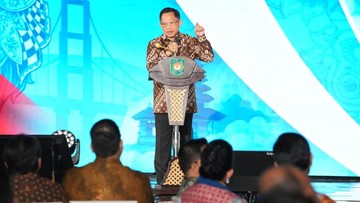
Indonesian Minister Vows Objective Assessment for Regional Government Awards
Translated from Indonesian, summarized and contextualized by DistantNews.
At a glance
News
Named sources
New plan
- Indonesia's Home Affairs Minister assures that the Regional Government Achievement Award (Apresiasi Pemda Berprestasi) 2026 will be assessed objectively based on quantitative data.
- The evaluation covers key areas like poverty reduction, stunting, creative financing, inflation control, and unemployment.
- The award aims to encourage regional innovation and recognize diligent regional leaders amidst scrutiny of some officials.
Indonesia's Minister of Home Affairs, Muhammad Tito Karnavian, has pledged that the 2026 Regional Government Achievement Award (Apresiasi Pemda Berprestasi) will be conducted with strict objectivity. He emphasized that the assessment process will rely entirely on quantitative data and measurable performance indicators, ensuring fairness and transparency for all competing regions.
The assessment team is truly under my supervision. And I state that this is the credibility of the Ministry of Home Affairs.
The evaluation criteria encompass critical national issues, including poverty alleviation, stunting reduction, innovative financing strategies, inflation control, and the decrease in open unemployment. Tito stated that the assessment teams are under his direct supervision, reinforcing the credibility of the Ministry of Home Affairs (Kemendagri). He assured that the data used is quantitative, transparent, and accountable, with weekly updates for inflation figures.
The data used is quantitative, open, and accountable. The indicators used are issues that have been the government's attention, such as poverty, unemployment, stunting, and inflation.
To ensure a proportional and equitable competition, the award process is divided into six regional clusters: Sumatra, Kalimantan, Maluku-Nusa Tenggara, Java-Bali, Sulawesi, and Papua. This regional approach allows areas to compete within their respective capacities. Beyond the award ceremony, Minister Tito also engaged in strategic discussions in Yogyakarta concerning public housing programs and a coordination meeting for regional leaders (Forkopimda) in the Java-Bali region, linking housing issues directly to poverty and unemployment.
This regional scheme is applied so that the competition runs more proportionally and provides equal opportunities for regions according to their respective capacities.
Minister Tito views the award program as a crucial message to the public. While acknowledging that some regional heads face legal challenges, he stressed that "there are quite a lot of regional heads who care about their people." The program aims to highlight and encourage the many regional leaders who are performing well, demonstrating innovation, and making a tangible positive impact on their communities by effectively managing poverty, unemployment, and inflation.
At the same time, this event is to send a message to the public that apart from the fact that there are several regional heads who may be facing legal problems, [but] there are quite a lot of regional heads who care about their people. They achieve, they can handle poverty, unemployment, then inflation.
DistantNews Editorial
Originally published by CNN Indonesia in Indonesian. Translated, summarized, and contextualized by our editorial team with added local perspective. Read our editorial standards.
More Stories


From Our Blog

What Gets Lost (and Found) When News Is Translated

The Critical Role of Diaspora Media in Global News

What Travellers Should Know About Countries with Restricted Press

A Digital Nomad's Guide to Following Local News

How the Same Story Looks Different in Different Countries
