


Indonesian Presidential Advisor Vows to Uphold 8% Ride-Hailing Fee Cap for Drivers
Translated from Indonesian, summarized and contextualized by DistantNews.
At a glance
News
Sources not specified
New plan
- Indonesian President's Special Advisor for Labor and Worker Welfare, Said Iqbal, pledged to oversee the implementation of a new ride-hailing driver-app owner revenue split.
- The policy mandates that drivers receive 92 percent of the fare, with app platforms capped at 8 percent.
- Iqbal plans to meet with ride-hailing drivers to gather input and address concerns about the policy's implementation.
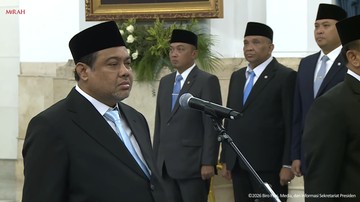
Said Iqbal, newly appointed Special Advisor to Indonesian President Prabowo Subianto for Labor and Worker Welfare, has vowed to ensure the effective implementation of a new ride-hailing fare policy. This policy dictates a 92 percent share for drivers and a maximum of 8 percent for the application platforms.
So is the implementation of the applicator cut only 8 percent on online motorcycle taxis. The complaints from our online motorcycle taxi colleagues have not yet proceeded as hoped.
Iqbal stated that the ride-hailing fare split is a key labor issue he will focus on. He expressed concern that the 8 percent cap on platform fees is not yet fully realized, based on complaints from drivers. "In the near future, we will gather with ride-hailing colleagues. The principle is that I will go down to the field more to absorb input," Iqbal said following his inauguration in Jakarta.
In the near future, we will gather with ride-hailing colleagues. The principle is that I will go down to the field more to absorb input.
This initiative is part of a broader agenda to improve worker welfare, which Iqbal intends to present to the President. His focus areas include job security, income security, and social security for all workers, both formal and informal. He noted that the government has already addressed some of the 11 issues raised by the Indonesian Confederation of Trade Unions (KSPI), such as the protection of household workers and the ride-hailing fare distribution.
The principle is that I will go down to the field more to absorb input.
While acknowledging his role is advisory and not executive, Iqbal emphasized his ability to provide recommendations and analysis to the President. He plans to consult with various ministers to discuss these labor and welfare issues, aiming to influence policy through persuasion and evidence-based suggestions.
Of course, I will visit several ministers to discuss because the President's advisor cannot make decisions, is not an executor. But we can convince.
DistantNews Editorial
Originally published by CNN Indonesia in Indonesian. Translated, summarized, and contextualized by our editorial team with added local perspective. Read our editorial standards.
More Stories


From Our Blog

What Gets Lost (and Found) When News Is Translated

The Critical Role of Diaspora Media in Global News

What Travellers Should Know About Countries with Restricted Press

A Digital Nomad's Guide to Following Local News

How the Same Story Looks Different in Different Countries
