


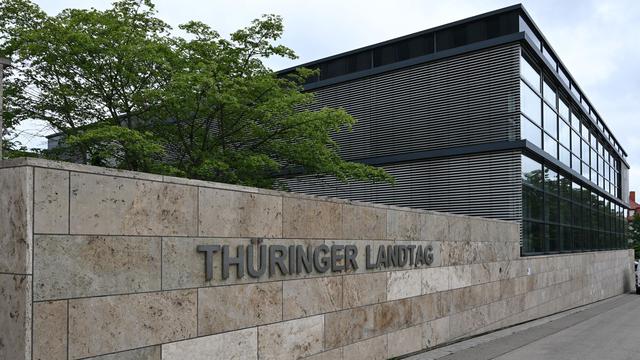
Inquiry examines how Thuringia intelligence agency classified AfD
Translated from German and summarized by DistantNews. Read the original for the full story.
At a glance
Newswire
Named sources
Under investigation
- A former department head told a Thuringian parliamentary inquiry that the state intelligence agency used an internal directive when it classified the AfD as a case for review.
- He outlined the three-stage process that led to the party being designated a suspected extremist case in March 2020 and a confirmed far-right extremist organization in March 2021.
- The inquiry is examining whether intelligence chief Stephan Kramer breached legal or civil-service duties, including political neutrality, and whether his office was used for political purposes.
A former department head told Thuringia’s parliamentary inquiry that an internal directive guided the state intelligence agency’s initial classification of the AfD, but offered little practical instruction on how to handle such cases.
The witness said the agency had a service directive called “Evaluation.” In his view, the category of a case for review received only cursory treatment and very few rules. He described the agency’s known three-stage process as a case for review, a suspected case, and finally a designation as a confirmed far-right extremist organization.
The Thuringian AfD became a suspected case in March 2020. One year later, in March 2021, the state branch received the confirmed far-right extremist designation. The former official stressed that he had left the agency in June 2019 and could not testify about the classifications themselves.
The committee’s formal mandate includes examining the conduct of state intelligence chief Stephan Kramer and other officials. It is investigating whether Kramer violated legal or civil-service obligations, met the political neutrality expected of an intelligence chief, or misused his office for political purposes. Kramer has led the agency since 2015.
The AfD state parliamentary group, led by Björn Höcke, initiated the inquiry. During questioning, a former official said Kramer had indicated in several interviews before taking office that he could imagine placing the AfD under observation. “That is certainly a pointer at a time when the question, we are talking about 2015, certainly was not yet being discussed with the same intensity,” he said. Left Party lawmaker Katharina König-Preuss argued that the case showed the intelligence service was unsuitable as an early-warning system, since studies had already identified the AfD’s right-wing and partly far-right character in 2014. Kramer attended the public hearing and followed the testimony.
That is certainly a pointer at a time when the question, we are talking about 2015, certainly was not yet being discussed with the same intensity.
About this summary
Originally published by Die Zeit in German. Translated, summarized, and contextualized automatically by DistantNews, with a note on how the source frames the story. Not individually reviewed before publishing. How this works.
More Stories

From Our Blog

What Gets Lost (and Found) When News Is Translated

How the Same Story Looks Different in Different Countries

The Critical Role of Diaspora Media in Global News

What Travellers Should Know About Countries with Restricted Press

A Digital Nomad's Guide to Following Local News
