


'Integrity': Purifying the apparatus, unlocking resources
Translated from Vietnamese, summarized and contextualized by DistantNews.
At a glance
Analysis
Sources not specified
Context piece
- The article discusses the importance of 'Liêm' (integrity) as a crucial virtue for public officials in Vietnam, complementing 'Cần' (diligence) and 'Kiệm' (thrift).
- It emphasizes that integrity prevents corruption, self-interest, and the suppression of talented individuals, aligning with Hồ Chí Minh's teachings.
- The piece highlights how the recent administrative mergers in Vietnam present new challenges and potential risks for maintaining integrity among officials managing increased responsibilities and resources.
In Vietnam's public service, the virtue of 'Liêm,' meaning integrity or incorruptibility, is presented as the essential condition for an effective government apparatus, building upon the necessary foundations of 'Cần' (diligence) and 'Kiệm' (thrift). This integrity acts as a vital filter, safeguarding purity, eradicating self-serving thoughts, and upholding public trust. It is framed as a defense against internal threats and a critical component of the relationship between diligence, thrift, and integrity.
Liêm is purity, not greed.
President Hồ Chí Minh defined 'Liêm' as "purity, not greed." He expanded this concept beyond the traditional feudal understanding of officials to encompass all strata of society, stating, "Everyone must be 'Liêm.'" According to Hồ Chí Minh, "dishonesty" extends beyond corruption and embezzlement to include the more insidious harm of "suppressing talented people to maintain one's position" and cowardice in the face of danger. At its core, dishonesty is rooted in individualism, prioritizing personal gain over collective or national interests.
Everyone must be 'Liêm.'
The article argues that achieving 'Liêm' necessitates 'Kiệm' (thrift), as "greed arises from extravagance." Therefore, integrity must go hand-in-hand with thrift, just as thrift is linked to diligence. While diligence drives efficiency and thrift optimizes resources, a lack of integrity, a failure of the "moral brakes", can lead to the self-destruction of the system. Without diligence and thrift, resources dwindle; but condoning dishonesty allows collective efforts to dissipate like water into a "bottomless bucket." Extravagance and selfishness can lead officials down a path of moral decay, eventually causing them to betray their honor and pervert justice.
greed arises from extravagance.
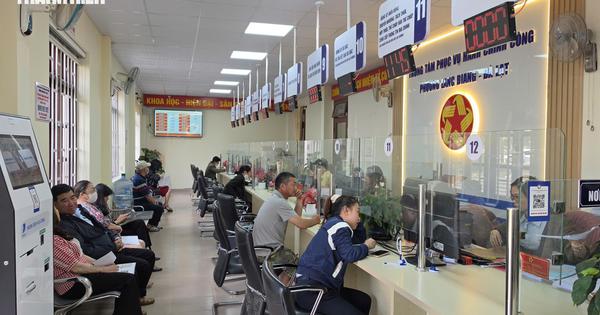
The recent administrative mergers in Vietnam, consolidating government units and concentrating public assets, land, and large projects, have placed increased management responsibilities on officials. This situation presents a breeding ground for the very risks Hồ Chí Minh warned about: "High levels have great power, low levels have little power. Whether great or small, if one has power but lacks conscience, there is an opportunity for embezzlement, bribery, and using public office for private gain." The handling of surplus assets and land valuation post-merger, if lacking integrity, can ignite greed and foster special interest groups seeking to divide national resources. Personnel decisions are particularly scrutinized, acting as a "microscope" to reveal dishonesty. The question remains whether leaders will impartially select talented and virtuous individuals or succumb to parochialism and factionalism, deliberately "suppressing talented people to maintain their position." In this new phase, the principle of 'Liêm' is not merely a slogan but a decisive measure of the new apparatus's effectiveness.
High levels have great power, low levels have little power. Whether great or small, if one has power but lacks conscience, there is an opportunity for embezzlement, bribery, and using public office for private gain.
DistantNews Editorial
Originally published by Thanh Niên in Vietnamese. Translated, summarized, and contextualized by our editorial team with added local perspective. Read our editorial standards.
More Stories
From Our Blog

What Gets Lost (and Found) When News Is Translated

The Critical Role of Diaspora Media in Global News

What Travellers Should Know About Countries with Restricted Press

A Digital Nomad's Guide to Following Local News

How the Same Story Looks Different in Different Countries
