

Intense clashes erupt between Iranian forces and Kurdish groups amid US-Iran tensions
Translated from Romanian, summarized and contextualized by DistantNews.
At a glance
News
Named sources
Ongoing story
- Intense clashes are occurring between Iranian forces and Kurdish groups in Iran's western regions, amid a broader war of attrition between Tehran and Washington.
- The Iranian Revolutionary Guard Corps has deployed special units, artillery, drones, and missiles, indicating preparations for significant military confrontations along the border with Iraqi Kurdistan.
- An Iranian-Jewish doctor, Omid Souresrafil, shared his experiences treating wounded combatants and civilians in the conflict zones, noting the fragmentation of the Kurdish separatist movement.
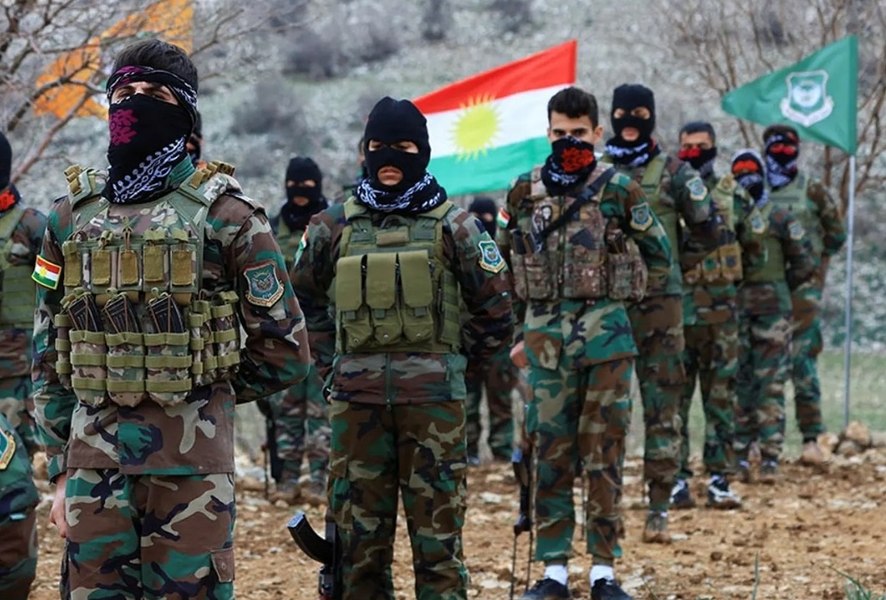
Heavy fighting has intensified between Iranian forces and Kurdish groups in Iran's western regions, escalating tensions within the broader war of attrition between Tehran and Washington. The conflict zones, particularly near the border with Iraqi Kurdistan, are witnessing significant military mobilization by Iran.
The Iranian Revolutionary Guard Corps has deployed elite units, including the Saberin brigade, along with artillery, drones, and advanced weaponry such as Zulfiqar armored vehicles and modernized T-72 tanks. The use of Shahed, Meraj, and Mohajer drones, alongside Fateh and Emad missiles, and electronic warfare systems, signals preparations for large-scale military operations. These movements are complicated by the seasonal migration of livestock in the mountainous areas, affecting military operations.
I work for the Red Crescent and, in this capacity, I was sent as a doctor to the conflict zones in Iran, near the border with Iraqi Kurdistan. I treated wounded combatants, but also civilians, victims of gunfire or mines. In some difficult cases, it was necessary to organize the transport of the wounded to Tehran. There were also wounded among those in the uprising, but I did not have the opportunity to participate in their treatment, as they are transported to military hospitals, where they are treated as prisoners.
Omid Souresrafil, an Iranian-Jewish cardiologist based in Sydney and a volunteer with the Red Crescent, described his recent experiences in the conflict zones. He recounted treating both wounded combatants and civilians affected by gunfire and mines. Souresrafil noted that while he treated wounded rebels, those among the uprising were taken to military hospitals as prisoners, limiting his involvement in their care.
Souresrafil's firsthand account highlights the harsh realities faced by villagers caught in the crossfire. The article also mentions Iranian military movements in the southern province of Khuzestan and the province of Baluchistan, indicating a wider security posture. The narrative suggests that the U.S. and Israeli objective of creating a foothold for separatist forces may not be succeeding.
In general, I have experience in similar situations, as I worked as a doctor
DistantNews Editorial
Originally published by Adevărul in Romanian. Translated, summarized, and contextualized by our editorial team with added local perspective. Read our editorial standards.
More Stories



From Our Blog

What Gets Lost (and Found) When News Is Translated

The Critical Role of Diaspora Media in Global News

What Travellers Should Know About Countries with Restricted Press

A Digital Nomad's Guide to Following Local News

How the Same Story Looks Different in Different Countries
