

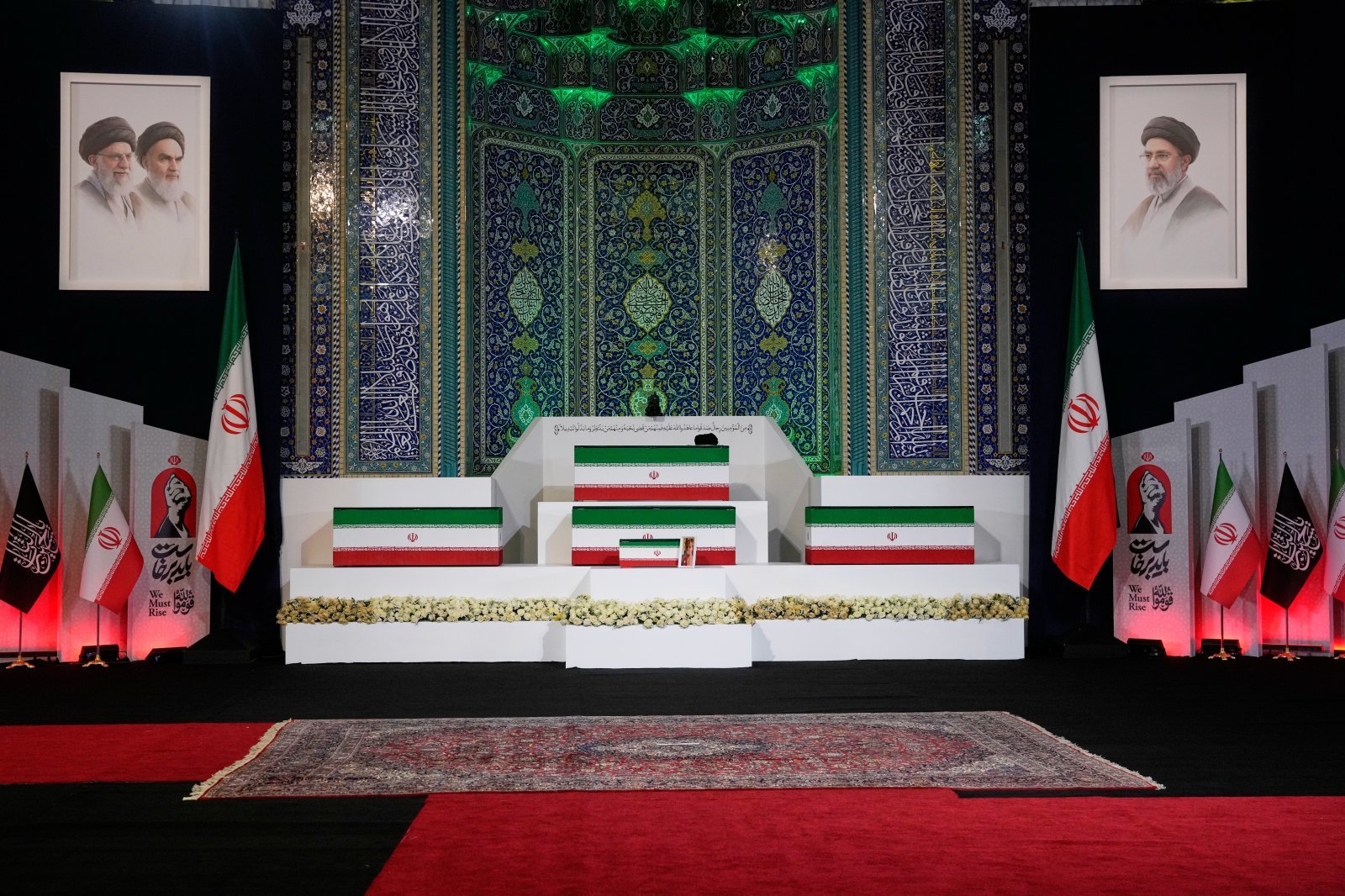

Iran begins funeral for former Supreme Leader Khamenei amid political display
Translated from Korean, summarized and contextualized by DistantNews.
At a glance
News
Named sources
New plan
- Iran began funeral rites for former Supreme Leader Ayatollah Ali Khamenei on July 4, following his death on February 28 from a targeted strike.
- The ceremony in Tehran's Grand Mosalla was attended by President Masoud Pezeshkian, foreign envoys, and military officials, with millions expected to pay respects.
- The large-scale event appears intended to project Iran's resilience amid U.S. tensions, with the funeral date coinciding with American Independence Day.
Iran commenced funeral ceremonies for its former Supreme Leader Ayatollah Ali Khamenei on July 4, a day after his coffin was displayed in Tehran's Grand Mosalla. Khamenei died on February 28 from a targeted strike, which also killed 12 family members at his residence.
The official mourning period began with a ceremony attended by President Masoud Pezeshkian, Parliament Speaker Mohammad Bagher Ghalibaf, and Revolution Guard Commander Ahmad Vahidi. Envoys from Pakistan, Saudi Arabia, and Afghanistan also paid their respects. State media captured images of the president weeping and the commander seated by the coffin, highlighting the significance of these figures in Iran's political and military landscape.
Millions of Iranians are expected to file past Khamenei's coffin over two days. His remains will then be taken to holy sites in Iraq before a final burial on July 9 at the Imam Reza shrine in Mashhad, his hometown. Authorities anticipate up to 35 million people will participate in mourning events across Iran and Iraq.
The government has encouraged widespread participation, with Parliament Speaker Ghalibaf calling for a "cry for revenge" to echo globally. This extensive funeral display is seen as an effort to demonstrate Iran's strength and stability, particularly in its ongoing standoff with the United States. The choice to begin the funeral on July 4, America's Independence Day, is interpreted as a deliberate political statement aimed at the U.S.
Attention is also focused on the current Supreme Leader, Mojtaba Khamenei, Ayatollah Khamenei's son, who has not appeared publicly since his election in March. Speculation suggests he may avoid public appearances due to security concerns, especially after Israeli Defense Minister Israel Katz labeled him a "target."
The nation's cry for revenge must echo around the world.
DistantNews Editorial
Originally published by Hankyoreh in Korean. Translated, summarized, and contextualized by our editorial team with added local perspective. Read our editorial standards.
More Stories

From Our Blog

What Gets Lost (and Found) When News Is Translated

The Critical Role of Diaspora Media in Global News

What Travellers Should Know About Countries with Restricted Press

A Digital Nomad's Guide to Following Local News

How the Same Story Looks Different in Different Countries
