

Iran's Hardliners Warn of 'Coup' as Truce with U.S. Under Pressure
Translated from Greek, summarized and contextualized by DistantNews.
At a glance
News
Sources not specified
Context piece
- Tensions flared during the funeral of Iran's Supreme Leader Ali Khamenei, with hardliners warning of a "coup" against the Islamic Republic.
- President Masoud Pezeshkian and diplomat Abbas Araghchi faced hostile crowds chanting slogans against compromise and perceived "soft coups" by leaders negotiating with Washington.
- Hardline factions view negotiations with the U.S. as a betrayal of revolutionary values and accuse the current leadership of consolidating power, bypassing parliament and the Supreme Leader's directives.
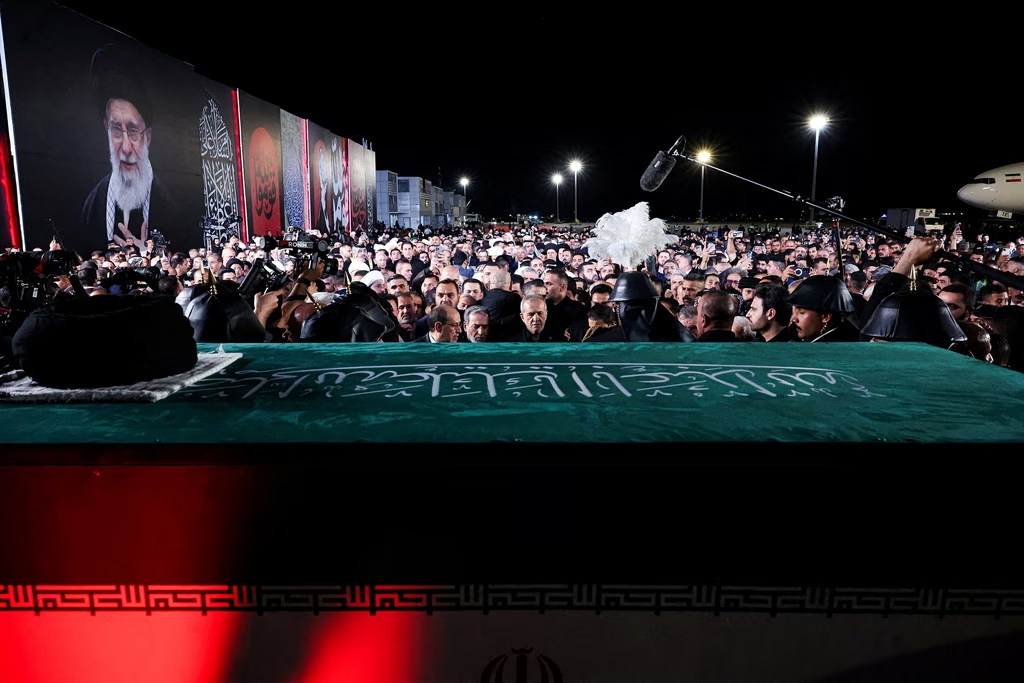
Scenes of tension at the funeral of Iran's Supreme Leader Ali Khamenei in Tehran revealed deep rifts within the Iranian regime. President Masoud Pezeshkian walked beside the coffin amidst chants of "Death to the compromiser," while top diplomat Abbas Araghchi was forced to leave after an angry crowd confronted him.
The hostile reception for senior officials fuels a theory circulating in hardline circles: that leaders who signed a deal with Washington are attempting a "soft coup" against the Islamic Republic and its revolutionary ideals. This theory gains traction as the new Supreme Leader, Mojtaba Khamenei, remains largely unseen, attributed to security concerns or, as some suggest, an inability to wield power.
Hardline groups consider negotiations with the U.S. a betrayal of revolutionary values and accuse the government of failing to retaliate for Khamenei's assassination. They also allege the leadership is consolidating power, circumventing parliament and the Supreme Leader's directives. The funeral itself became a display of strength for hardliners demanding retribution through renewed conflict with the United States.
This fragile truce shattered when the Revolutionary Guards attacked ships in the Strait of Hormuz, prompting U.S. retaliation. Anger also erupted over a cleric's threat to President Pezeshkian: "Mr. President, if the leader's terms are not met, then we, the blade and your neck." This threat drew widespread condemnation but no known legal consequences.
Accusations of a "political coup" intensified when hardline lawmaker Mahmoud Nabavian was removed from parliament's National Security Committee. Nabavian, a former negotiator, had accused the government of exceeding the Supreme Leader's "red lines." He belongs to the Stability Front (Jebhe-ye Paydari), a group that positions itself as guardian of the 1979 Islamic Revolution's values. Researchers note the current leadership aims to marginalize such groups, deeming them detrimental to the regime's stability.
Despite their small numbers, the ultra-hardliners hold influential positions, particularly in parliament and the state broadcaster IRIB. In the 2024 elections, former National Security Council chief Saeed Jalili garnered over 13 million votes, indicating a strong support base. Analysts believe that despite internal disputes, the Iranian leadership remains united on one goal: [Article cuts off here]
DistantNews Editorial
Originally published by Ta Nea in Greek. Translated, summarized, and contextualized by our editorial team with added local perspective. Read our editorial standards.
More Stories
From Our Blog

What Gets Lost (and Found) When News Is Translated

The Critical Role of Diaspora Media in Global News

What Travellers Should Know About Countries with Restricted Press

A Digital Nomad's Guide to Following Local News

How the Same Story Looks Different in Different Countries
