


Iran's 'Mosquito Fleet': A Shadow Threat in the Strait of Hormuz
Translated from Vietnamese, summarized and contextualized by DistantNews.
TLDR
- Iran's Islamic Revolutionary Guard Corps (IRGC) Navy operates a 'mosquito fleet' of small, fast boats, distinct from its regular navy.
- This fleet, along with shore-based drones and missiles, poses a significant threat to maritime traffic in the Strait of Hormuz.
- The IRGC's asymmetric tactics, developed partly in response to past confrontations with the U.S., are designed for rapid, unpredictable engagements.
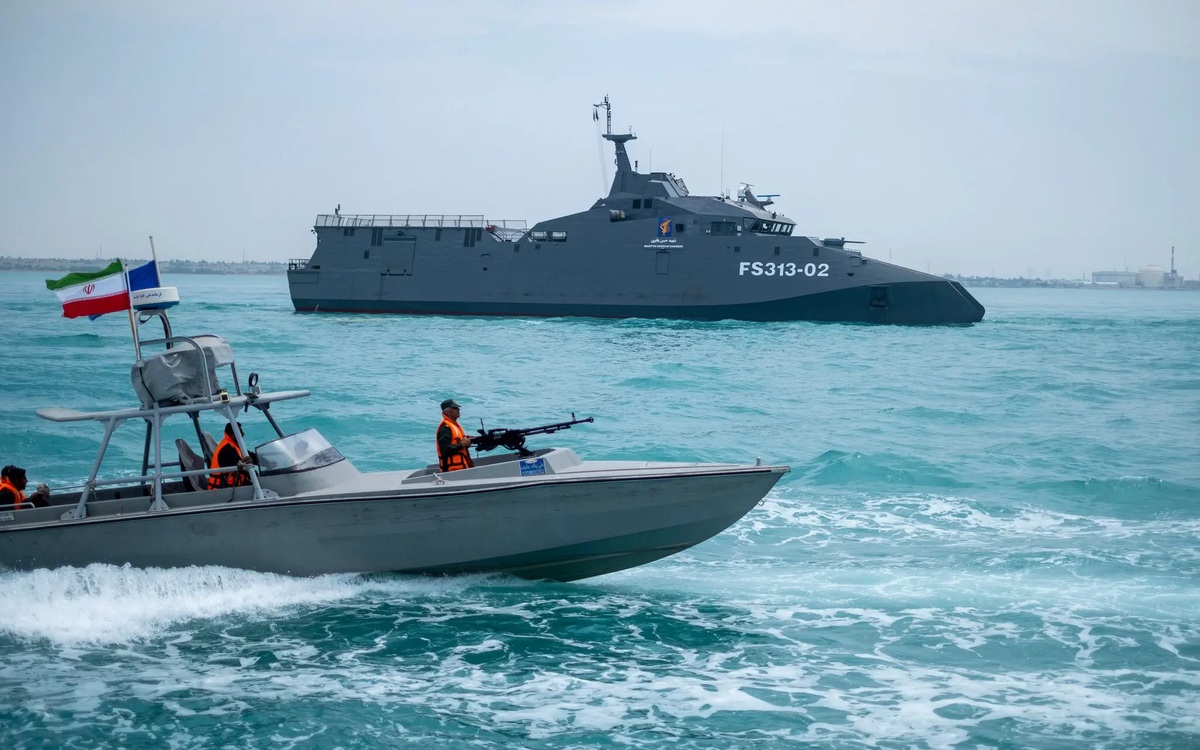
Iran's 'mosquito fleet,' a core component of the Islamic Revolutionary Guard Corps (IRGC) Navy, represents a unique and formidable challenge to maritime security in the strategic Strait of Hormuz. Unlike conventional navies relying on large warships, the IRGC employs a swarm of small, agile, and fast-moving vessels, often operating from coastal caves and capable of rapid deployment.
This asymmetric strategy, as described by experts like political science professor Saeid Golkar, is a deliberate choice to counter potential adversaries. Instead of engaging in traditional naval warfare, the IRGC focuses on hit-and-run tactics, leveraging the element of surprise and the difficulty of tracking these small craft via satellite. This approach is particularly effective in the confined waters of the Persian Gulf and the Strait of Hormuz, where Iran can exert significant influence.
Instead of relying on large warships and classic naval battles, this force uses hit-and-run tactics.
The origins of this strategy can be traced back to Iran's experiences during the Iran-Iraq War and subsequent confrontations with the United States. Facing a technologically superior U.S. Navy, Iran realized the limitations of direct confrontation. The IRGC Navy was established and honed its tactics to maximize its strengths—speed, maneuverability, and the ability to blend into the coastal environment—while mitigating its weaknesses.
From a Vietnamese perspective, understanding Iran's naval strategy offers insights into how smaller nations can project power and deter larger forces through innovative tactics. The 'mosquito fleet' is a testament to strategic adaptation, turning perceived disadvantages into operational strengths. While Western media might focus on the geopolitical implications and the potential for escalation, from a regional viewpoint, this fleet is a critical element of Iran's defense doctrine, designed to protect its interests and maintain a degree of strategic leverage in a volatile region. The IRGC's ability to operate with relative impunity in these vital waterways underscores the complex security dynamics at play in the Persian Gulf.
This is still a 'significant disruptive force' and it is very difficult to ascertain the true intentions of these vessels.
DistantNews Editorial
Originally published by Tuổi Trẻ in Vietnamese. Translated, summarized, and contextualized by our editorial team with added local perspective. Read our editorial standards.
More Stories


From Our Blog

What Gets Lost (and Found) When News Is Translated

The Critical Role of Diaspora Media in Global News

What Travellers Should Know About Countries with Restricted Press

A Digital Nomad's Guide to Following Local News

How the Same Story Looks Different in Different Countries
