

Iran's Underground Defense: Architecture Sustaining Military Capacity Amidst Attacks
Translated from English, summarized and contextualized by DistantNews.
TLDR
- Iran has developed extensive underground military infrastructure, including tunnels and buried facilities, to protect its military capacity against potential US-Israeli attacks.
- This subterranean network reorganizes space for logistics, storage, and command, adapting to a mode of warfare that targets the visible world.
- The strategy extends to critical infrastructure like desalination plants, integrating them into the conflict zone and highlighting the shift of warfare into systems sustaining daily life.
In the face of relentless pressure and threats from adversaries like the United States and Israel, Iran has strategically deepened its defense capabilities, quite literally, by constructing a formidable underground military architecture. This isn't merely about hiding; it represents a fundamental reorganization of space and strategy, a response to a new era of warfare where the surface world is increasingly vulnerable to constant interruption and attack. As evidenced by the recent conflict in the Gulf, which saw intense fighting before a fragile ceasefire, the battleground itself is being reshaped.
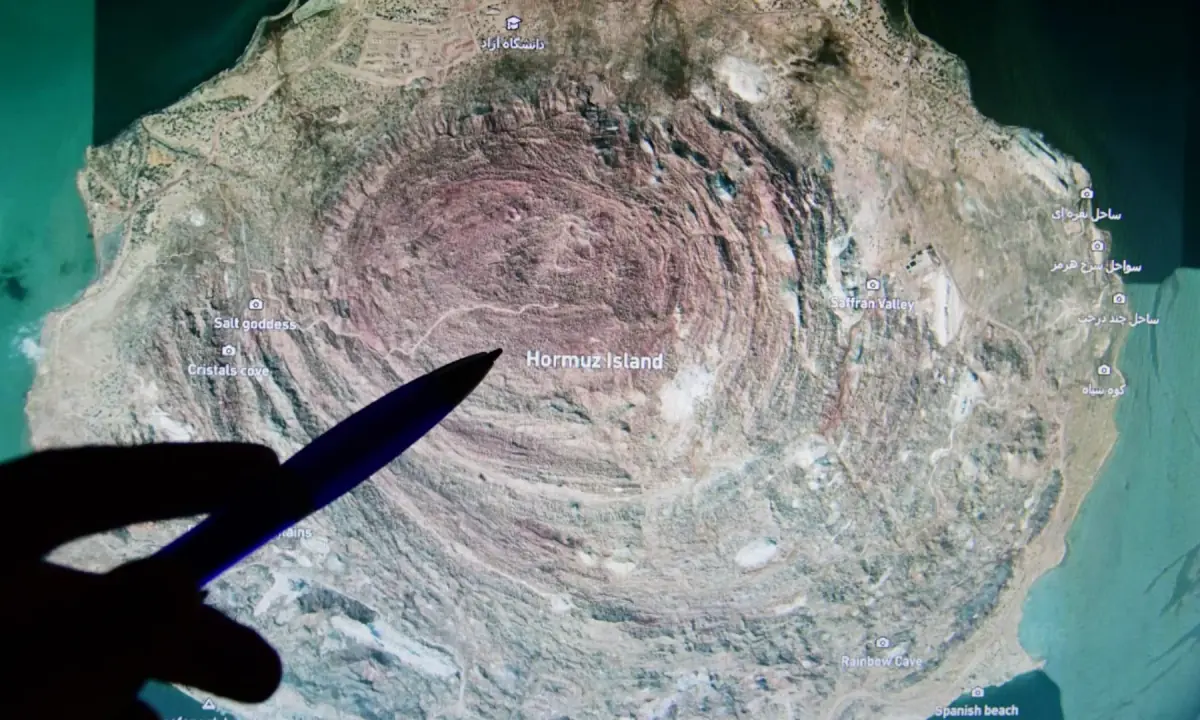
This subterranean network, extending from Qeshm Island to hardened facilities like Fordow, integrates geology, logistics, and strategic power. It's a testament to Iran's resilience and its determination to maintain its military capacity despite sanctions and aerial threats. The targeting of civilian infrastructure, such as the freshwater desalination plant on Qeshm Island, underscores how the conflict has expanded beyond traditional military sites to encompass the very systems that sustain everyday life, including vital energy corridors and water supplies.
The movement downward is not merely concealment, but a reorganisation of space forced by a mode of war that seeks to make the visible world fully vulnerable to interruption.
From the perspective of Iranian defense strategists, this underground expansion is not a secondary tactic but a primary adaptation. It allows for the protected movement, storage, communication, and production necessary to sustain political and military life under conditions of siege and continuous threat. While Western media might focus on missile interceptions or diplomatic developments, this buried geography represents a crucial, often overlooked, dimension of regional security, demonstrating Iran's commitment to safeguarding its interests and ensuring its strategic depth in an increasingly volatile environment.
War is no longer confined to distinct military sites; it unfolds across the systems that sustain everyday life.
DistantNews Editorial
Originally published by Dawn in English. Translated, summarized, and contextualized by our editorial team with added local perspective. Read our editorial standards.
More Stories

From Our Blog

What Gets Lost (and Found) When News Is Translated

The Critical Role of Diaspora Media in Global News

What Travellers Should Know About Countries with Restricted Press

A Digital Nomad's Guide to Following Local News

How the Same Story Looks Different in Different Countries
