


Iran Strikes First, Widening Middle East Conflict
Translated from Korean, summarized and contextualized by DistantNews.
At a glance
News
Named sources
Context piece
- Iran launched ballistic missiles at U.S. military facilities in the Middle East, including an air base in Jordan, marking a shift from retaliating to initiating attacks.
- The U.S. responded with airstrikes on dozens of Iranian sites, escalating a conflict that is drawing in regional players like Iraqi militias and Yemen's Houthis.
- The conflict is expanding horizontally across the Middle East, with Iran aiming to seize initiative and force the U.S. and Israel onto the defensive.
The conflict between the United States and Iran has escalated beyond bilateral retaliation, drawing in neighboring countries and igniting a series of military clashes across the Middle East. A significant development is Iran's proactive stance, initiating attacks rather than merely responding to U.S. actions.
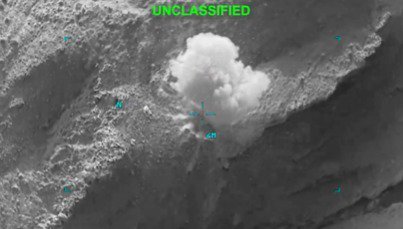
Iran's Islamic Revolutionary Guard Corps launched ballistic missiles targeting U.S. military facilities, including the Muwaffaq-Salti Air Base in Jordan, on Jan. 28. The U.S. retaliated the following day with airstrikes on dozens of Iranian command centers and missile and drone facilities. Analysts interpret Iran's move as a message that it will no longer wait for the U.S. or Israel to dictate the timing of attacks, aiming to seize the initiative or at least push its adversaries onto the defensive.
Iran wants to show that it will not wait for the U.S. or Israel to decide when to attack. It wants to seize the initiative or at least put the U.S. and Israel on the defensive.
Historically, the U.S. has leveraged its overwhelming military power to pressure Iran, emphasizing its "escalation dominance." Iran, in turn, has employed asymmetric strategies, using relatively inexpensive drones and missiles, threatening the Strait of Hormuz, and mobilizing allied forces like Iraqi militias, Yemen's Houthis, and Hezbollah in Lebanon. This strategy aims to broaden the battlefield and increase costs for the U.S. through "horizontal escalation."
Recent events illustrate this widening conflict. Iraqi pro-Iranian militias have repeatedly attacked Saudi Arabian oil facilities, prompting a joint U.S.-Saudi airstrike on militia sites in Iraq, drawing Saudi Arabia into direct military intervention. In the Red Sea, Houthi rebels claimed responsibility for attacking a Saudi oil tanker after declaring a blockade on Saudi shipping. Fires broke out at a U.S.-owned floating natural gas storage facility off the coast of Damietta, Egypt, and a Greek-owned vessel. While British maritime security firms suggested drone attacks, Egyptian authorities have not confirmed the cause or perpetrators. If confirmed as Iranian or Iran-aligned actions, this would mark the first expansion of the conflict to Egyptian and Mediterranean energy facilities.
The U.S. has been pressuring Iran by emphasizing its 'escalation dominance,' based on overwhelming military power. Iran has countered with an asymmetric strategy, mobilizing relatively inexpensive drones and missiles, threatening the Strait of Hormuz, and utilizing allied forces like Iraqi militias, Yemen's Houthis, and Hezbollah in Lebanon.
The Lebanese front is also showing renewed instability. Israel claims Hezbollah initiated an attack with a drone on Israeli forces, potentially undermining the fragile ceasefire that has held since late last month. The simultaneous intensification of attacks by Iran-backed groups across Iraq, the Red Sea, and Lebanon suggests a coordinated effort. Experts note that while former President Trump may have believed he could control the conflict's outset, Iran has significantly broadened the battlefield, forcing the U.S. to defend a much wider area.
However, it remains unclear whether Iran's attack on U.S. military bases was a coordinated action between its government and the Revolutionary Guard. U.S. officials suggested the group responsible was distinct from those Iran has been negotiating with, and that the negotiating party had already apologized. Reports also indicate that Iran's Foreign Minister expressed surprise at the news of the attack. If true, this could suggest the Revolutionary Guard acted independently of diplomatic channels.
What they did for us two days ago, they are the ones who helped us rescue those people who were kidnapped along the Ora-Yetoro axis. They have been doing enough security and intelligence work for us, and we are happy for that.
DistantNews Editorial
Originally published by Hankyoreh in Korean. Translated, summarized, and contextualized by our editorial team with added local perspective. Read our editorial standards.
More Stories

From Our Blog

What Gets Lost (and Found) When News Is Translated

The Critical Role of Diaspora Media in Global News

What Travellers Should Know About Countries with Restricted Press

A Digital Nomad's Guide to Following Local News

How the Same Story Looks Different in Different Countries
