


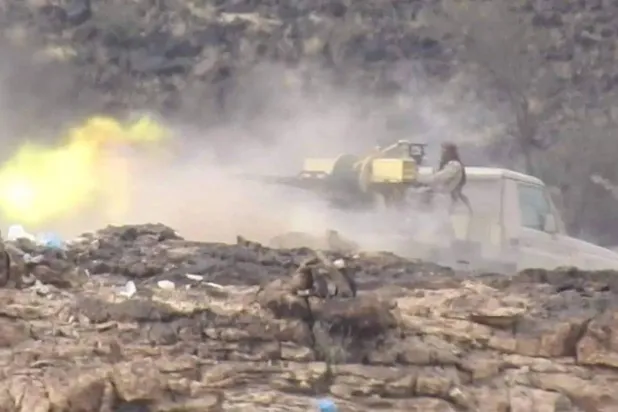

Iraq’s Coordination Framework and armed factions hit deadlock in talks
Translated from English and summarized by DistantNews. Read the original for the full story.
At a glance
News
Named sources
Ongoing story
- Iraq’s Shiite Coordination Framework has failed to persuade armed factions to surrender their weapons as the Sept. 30 deadline for the final U.S. withdrawal approaches.
- Groups including Kataib Hezbollah and Harakat al-Nujaba reject a fixed timetable, saying their weapons are ideological and not limited to Iraq’s borders.
- The standoff threatens government plans to mark the U.S. departure and transfer of factional weapons to state control as “Sovereignty Day.”
Talks between Iraq’s Shiite Coordination Framework and armed factions have reached an impasse, with the Sept. 30 deadline for the final U.S. withdrawal approaching. The deadlock has cast doubt on government plans to celebrate the date as “Sovereignty Day.”
A three-member committee formed by the Framework has so far failed to secure a breakthrough. The government of Prime Minister Ali al-Zaidi had hoped Sept. 30 would mark both the departure of U.S. forces and the transfer of factional weapons to government control. The armed groups now reject demands to hand over their arsenals by that date.
preserving the Popular Mobilization Forces as a national body that cannot be compromised
Harakat al-Nujaba, along with former Prime Minister Nouri al-Maliki and Badr Organization leader Hadi al-Amiri, has said there is no final or fixed deadline for handing over, restricting, disarming or freezing weapons held outside state control. Kataib Hezbollah and Harakat al-Nujaba have previously rejected any timetable, saying their weapons are ideological and not confined within national borders.
Ali al-Asadi, head of Harakat al-Nujaba’s Political Council, said the movement would defend what he called the “sanctity” of the resistance’s weapons against regional risks and threats. In a post on X, he said he had met leading figures in the Framework’s political process and reaffirmed the importance of preserving the Popular Mobilization Forces as a national body that could not be compromised.
This approach is what keeps us alongside our people, experiencing what they experience, carrying their concerns and working to fulfill their demands.
Asadi also repeated Nujaba’s refusal to participate in the political process. “This approach is what keeps us alongside our people, experiencing what they experience, carrying their concerns and working to fulfill their demands,” he said. He added that the responsibility would continue until comprehensive change secured sovereignty, security and prosperity, freed the economy from American domination and stabilized Iraq’s domestic situation.
The government has responded through Sabah al-Numan, spokesperson for the commander-in-chief of the armed forces. He said no force or regional circumstance could break a state whose people rallied around its institutions, and warned of what he called alarmism from platforms financed with suspicious funds as the deadline approaches.
No force in the world and no regional circumstances can break a state whose people, in all their components and communities, rally around its institutions.
About this summary
Originally published by Asharq Al-Awsat in English. Translated, summarized, and contextualized automatically by DistantNews, with a note on how the source frames the story. Not individually reviewed before publishing. How this works.
More Stories

From Our Blog

News in Translation: What Gets Lost, and How We Keep the Framing

Diaspora Media: How Communities Follow News From Home

Traveling Where the Press Is Not Free: How to Read the News There

The Digital Nomad's Guide to Local News

The Same Story, Different Countries: How Coverage Changes at the Border
