

Israel Attacks Gaza Mosque Allegedly Used by Hamas for Weapons Storage
Translated from Malay, summarized and contextualized by DistantNews.
At a glance
News
Named sources
Ongoing story
- The Israeli army stated it attacked a mosque in the Gaza Strip, claiming it was used by Hamas for weapons storage.
- Palestinian residents were seen sifting through rubble after the attack, which occurred during a fragile ceasefire.
- The Israeli military asserted that prior warnings were issued to civilians before the strike.
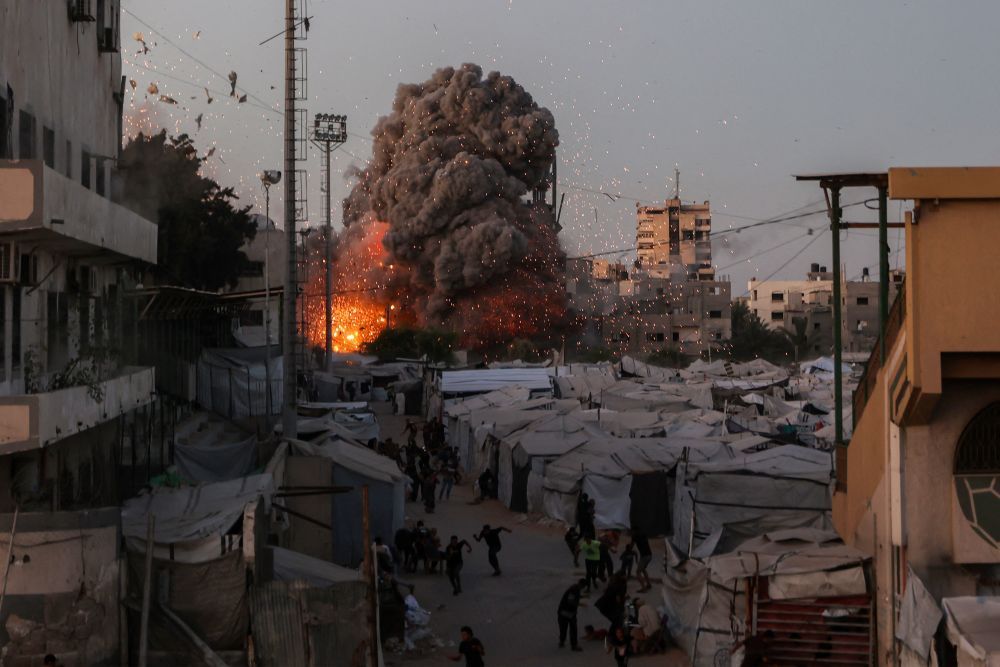
The Israeli military announced on Wednesday that it had struck a mosque in the Gaza Strip, alleging it was utilized by Hamas as a weapons storage facility. Images from Gaza City on Tuesday depicted flames and thick plumes of smoke rising above tents housing displaced Gazan residents during the attack on the Al-Muttaqin Mosque.
Palestinian residents were observed searching through large piles of debris in the aftermath of the strike. "Over the past week, (the Israeli military) has attacked and destroyed several Hamas weapons storage facilities in the central and northern Gaza Strip," the Israeli army stated. "One of these storage facilities was built inside a mosque in the northern Gaza Strip," it added, noting that initial warnings were provided to civilians.
A fragile ceasefire remains in effect between Israel and the Palestinian militant group Hamas. However, it has not halted the violence in the Gaza Strip, where 1,207 people have been killed since the ceasefire began in October 2025. Israeli gunfire continues to frequently target Palestinians, whom the Israeli military identifies as combatants, while efforts to reach a lasting agreement to end the war remain stalled. AFP footage showed dozens of Palestinians evacuated from the area before the mosque was attacked.
Over the past week, (the Israeli military) has attacked and destroyed several Hamas weapons storage facilities in the central and northern Gaza Strip. One of these storage facilities was built inside a mosque in the northern Gaza Strip.
DistantNews Editorial
Originally published by Utusan Malaysia in Malay. Translated, summarized, and contextualized by our editorial team with added local perspective. Read our editorial standards.
More Stories



From Our Blog

What Gets Lost (and Found) When News Is Translated

The Critical Role of Diaspora Media in Global News

What Travellers Should Know About Countries with Restricted Press

A Digital Nomad's Guide to Following Local News

How the Same Story Looks Different in Different Countries
