

Israel's Daring Entebbe Hostage Rescue: Newly Revealed Documents Detail Decision-Making
Translated from German, summarized and contextualized by DistantNews.
At a glance
News
Named sources
Outcome reported
- Israel launched a daring hostage rescue operation at Entebbe Airport in Uganda on July 4, 1976, to free Air France Flight 139 passengers.
- The hijacking, carried out by Palestinian and German extremists, targeted Israeli passengers, separating them from others.
- Newly released documents from the Israeli state archives reveal the internal debates and decisions leading up to the historic military mission.
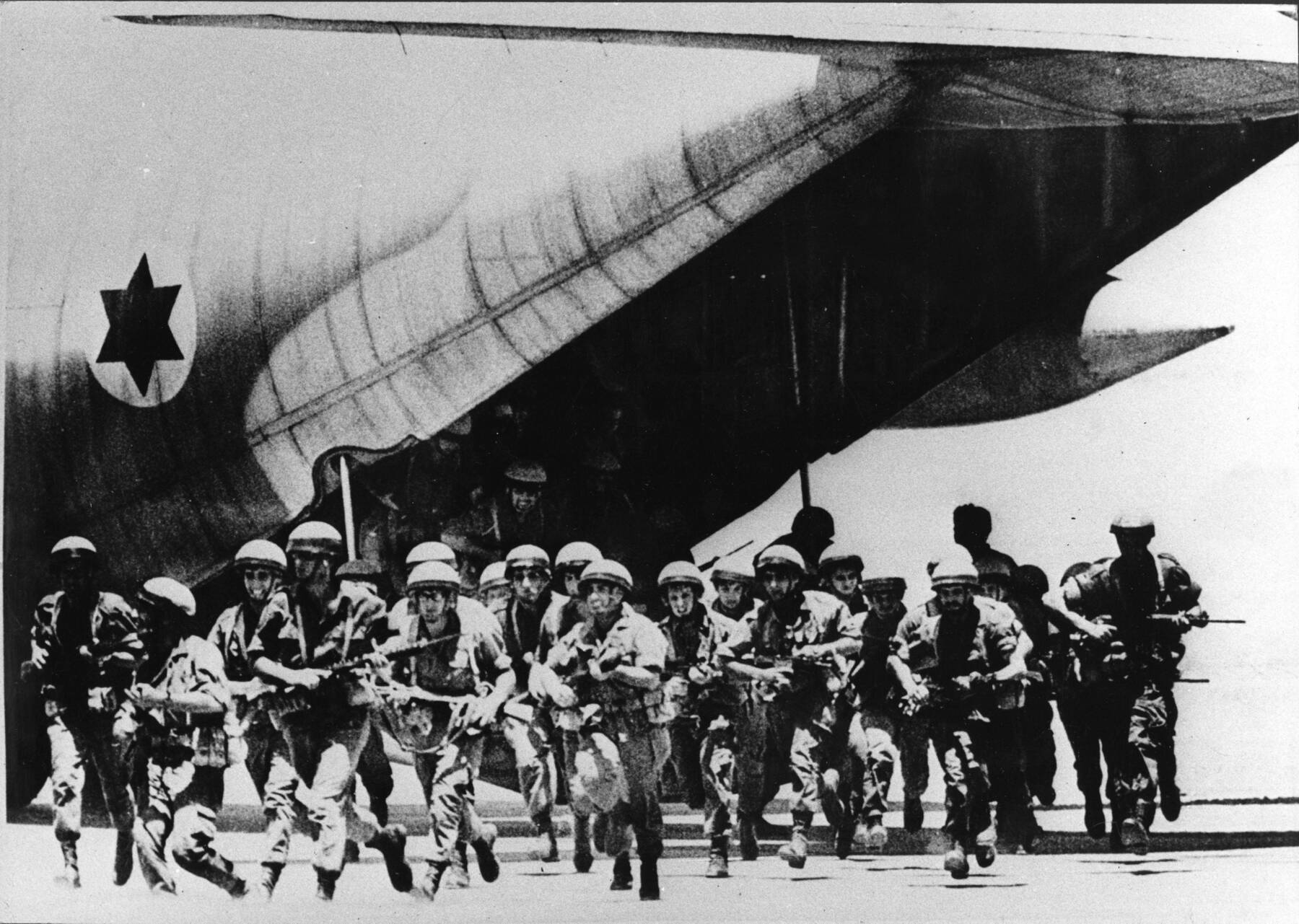
On July 4, 1976, Israeli forces executed one of their boldest operations, the Entebbe hostage rescue. The mission aimed to free passengers of Air France Flight 139, hijacked on June 27 and diverted to Uganda. The hijackers, a mix of Palestinian and German extremists, demanded the release of Palestinian prisoners held in Israel and Germany.
Nobody will stand by us. We have no one to turn to except ourselves, and the decision will be made nowhere else in the world but by the Israeli government.
Upon landing in Entebbe, the hijackers, identified as two members of the Popular Front for the Liberation of Palestine and two German left-wing extremists from the Revolutionary Cells, Wilfried Böse and Brigitte Kuhlmann, received support from Ugandan dictator Idi Amin. They separated passengers with Israeli passports and those with Jewish-sounding names, while releasing others. The Air France crew notably refused to leave until all passengers were safe.
Before we continue, I have an announcement. Contact with an Air France plane has been lost. It has apparently been hijacked. There are about 83 Israelis on board. At this point, everything is speculation.
Newly declassified documents from the Israeli state archives shed light on the critical deliberations within Prime Minister Yitzhak Rabin's government. The archives include meeting protocols, phone call recordings, photographs, and handwritten notes from politicians. These documents reveal the intense debate between negotiating with the hijackers or launching a high-risk rescue mission. The decision to proceed with the military operation, described by then-Defense Minister Shimon Peres as "one of Israel's boldest operations," was ultimately made by the Israeli government itself, underscoring a sense of self-reliance in the face of the crisis.
I am not a Nazi, I am an idealist.
DistantNews Editorial
Originally published by Die Presse in German. Translated, summarized, and contextualized by our editorial team with added local perspective. Read our editorial standards.
More Stories



From Our Blog

What Gets Lost (and Found) When News Is Translated

The Critical Role of Diaspora Media in Global News

What Travellers Should Know About Countries with Restricted Press

A Digital Nomad's Guide to Following Local News

How the Same Story Looks Different in Different Countries
